১৫ আশ্বিন ১৪৩৩



Myanmar Recognizes Over 308,000 Rohingya in Bangladesh as Former Rakhine Residents
17 August 2026 05:08 AM
NEWS DESK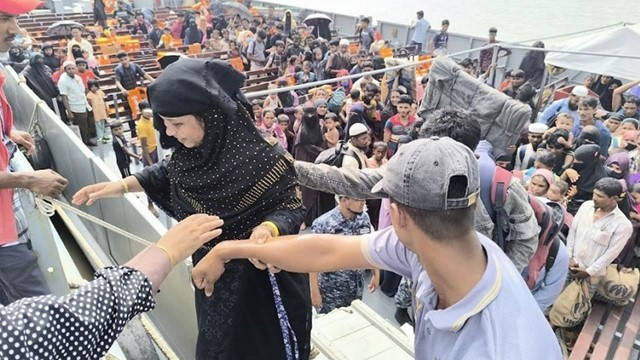
Myanmar's military-backed government has said that 308,797 Rohingya refugees living in camps in Bangladesh have been identified as former residents of Rakhine State and could be repatriated once security conditions in the region improve.
The announcement was made in a statement issued by Myanmar's Ministry of Foreign Affairs, despite Bangladesh having previously submitted a list of 828,824 Rohingya refugees for verification.
The statement comes as the Rohingya refugee crisis enters its ninth year. In August 2017, Myanmar's military launched a large-scale crackdown in Rakhine State following attacks on security posts by a Rohingya insurgent group. The operation forced more than 700,000 Rohingya to flee to neighboring Bangladesh, joining hundreds of thousands who had escaped earlier waves of violence.
The 2017 military campaign drew widespread international condemnation, with the United Nations and other international bodies accusing Myanmar of ethnic cleansing and genocide. Myanmar has consistently rejected those allegations and continues to deny the Rohingya recognition as one of the country's 135 officially recognized ethnic groups, referring to them instead as "Bengalis" to suggest they are migrants from Bangladesh.
According to the Foreign Ministry, Myanmar has verified the identities of 426,545 people from the list submitted by Bangladesh as of July this year. Among them, 308,797 were confirmed as former residents of Rakhine State.
The ministry also claimed that it could not verify the identities of 113,507 individuals. In addition, it alleged that 4,241 people were involved in what it described as "terrorist activities." However, the statement did not provide evidence or explain the criteria used to reach those conclusions.
Myanmar said it would continue working with Bangladesh on the repatriation of the verified former residents once the security situation in Rakhine becomes more stable. Although the statement signals a willingness to accept more than 308,000 Rohingya, it does not provide a timeline and makes any return conditional on future security improvements.
The ministry also rejected claims that more than one million people were displaced from Rakhine, asserting instead that just over 540,000 people crossed into Bangladesh after the 2017 violence, while more than 200,000 remained in northern Rakhine.
Bangladesh and Myanmar agreed on a two-year repatriation framework in 2018, but the initiative never materialized. The security situation worsened further after Myanmar's military overthrew the elected government of Aung San Suu Kyi in 2021, triggering widespread armed resistance across the country and stalling multiple repatriation efforts.
In 2023, renewed fighting between Myanmar's military and the Arakan Army over control of Rakhine State displaced more civilians and forced additional people to flee to Bangladesh and other neighboring countries. The Arakan Army has since taken control of large parts of the state, making the region's security and administrative situation even more complex.
Meanwhile, deteriorating conditions in Rohingya refugee camps in Bangladesh, significant cuts in international humanitarian assistance, and the lack of prospects for safe return have prompted increasing numbers of Rohingya to undertake dangerous sea journeys in overcrowded boats toward Malaysia and Indonesia.
In late July, Malaysian Prime Minister Anwar Ibrahim said Myanmar had agreed to accept around 5,000 Rohingya under a repatriation program. However, a Myanmar Foreign Ministry official later clarified that the arrangement applied only to verified Myanmar nationals held in Malaysian detention centers and denied reports that Myanmar had broadly agreed to repatriate Rohingya refugees.
Myanmar's latest statement represents a notable shift by officially recognizing 308,797 Rohingya in Bangladesh as former residents of Rakhine State and expressing its intention to receive them. However, with repatriation tied to improved security conditions and no specific timetable announced, the implementation of the plan remains uncertain.