১ অগ্রহায়ণ ১৪৩৩



US Loses Measles-Free Status After More Than a Year of Continuous Local Transmission
14 November 2026 18:11 PM
NEWS DESK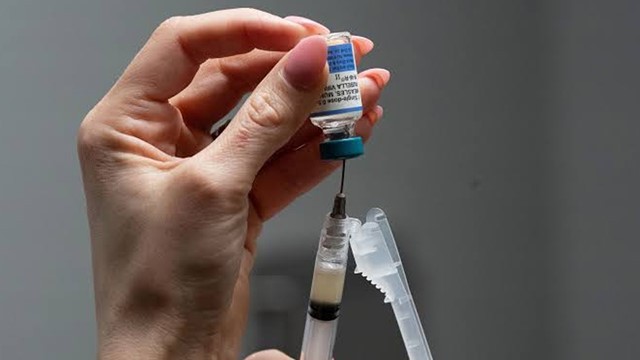
The United States has lost its status as a measles-free country after experiencing more than a year of continuous local transmission of the highly contagious disease.
The Pan American Health Organization (PAHO), the regional office of the World Health Organization (WHO) for the Americas, has withdrawn the country's measles elimination status, 26 years after it was first achieved in 2000.
Reuters reported the development on Friday, citing a report by The Wall Street Journal.
According to Reuters, the United States is experiencing its worst measles outbreak in more than three decades. Since 2025, approximately 7,500 people have been infected with the disease in the country, with 13 reported deaths.
As of Thursday, 5,182 measles cases had been identified this year across 45 US states, New York City and the District of Columbia. The country recorded 2,289 cases throughout 2025.
Health experts attribute the resurgence partly to a significant decline in vaccination rates and growing public scepticism about vaccines.
US Health and Human Services Secretary Robert F. Kennedy Jr. has also faced criticism for repeatedly raising doubts about measles vaccine safety over the years without scientific evidence, experts say.
In its assessment, PAHO reviewed epidemiological and laboratory data provided by the US Centers for Disease Control and Prevention (CDC).
Under international criteria, a country loses its measles elimination status if continuous transmission of the same measles virus strain persists locally for 12 months or longer.
Although the United States has withdrawn from the World Health Organization, it remains a member of PAHO.
Canada, Spain and the United Kingdom have also recently lost their measles elimination status for similar reasons.
Noel Brewer, a professor of public health at the University of North Carolina and head of an independent advisory panel on measles, described the development as deeply concerning.
"This is an entirely preventable disease. Such a high level of measles transmission is unacceptable," he said.
William Moss, a professor at the Johns Hopkins Bloomberg School of Public Health, said losing the status was a major blow to the United States' reputation in public health and could discourage other countries working to eliminate the disease.
However, CDC Director Erica Schwartz said the agency would continue working with state authorities to encourage vaccination programmes, as it had done previously.
Public health experts say achieving vaccination coverage of at least 95 per cent of the population is essential for establishing herd immunity and preventing the spread of measles.
Two doses of the measles vaccine provide approximately 97 per cent protection against the disease.
Measles can cause serious complications, including blindness, hearing loss, brain damage and even death.
Analysts warn that losing the elimination status highlights the continuing risk of large-scale measles outbreaks in the United States.
To regain its measles elimination status, the country will need to stop continuous local transmission and remain free of an outbreak for at least 12 consecutive months.