[email protected]
শনিবার, ১২ সেপ্টেম্বর ২০২৬
২৮ ভাদ্র ১৪৩৩
২৮ ভাদ্র ১৪৩৩

Saturday, 12th September 2026


Sheikh Hasina’s December Return: Political Strategy or Real Possibility?
12 September 2026 21:09 PM
NEWS DESK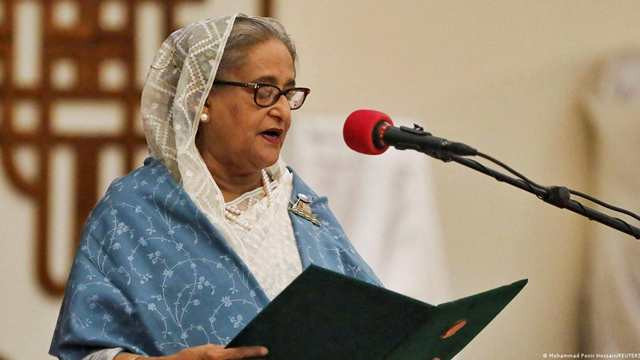
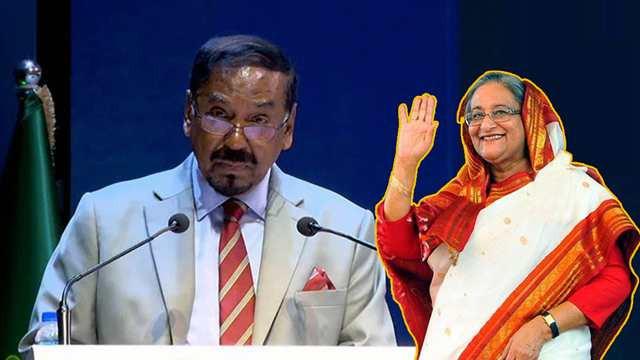
Former Prime Minister Sheikh Hasina, who was ousted in the student-led mass uprising of August 5, 2024, and subsequently left for India, has announced that she plans to return to Bangladesh in December.
Hasina, the president of the now-banned Awami League, has remained in India since leaving Bangladesh following the collapse of her 15-year rule. Her announcement of a possible return has once again triggered speculation across Bangladesh’s political landscape.
Political analysts say both a return and a failure to return by December could have significant implications for the country’s politics. At the same time, questions are being raised over whether her recent statements indicate genuine preparations to come back or are primarily an attempt to keep party supporters motivated and exert political pressure.
Under the current circumstances, however, returning to Bangladesh would not be easy for Hasina. She would have to confront significant legal and political risks. On the other hand, failing to return after publicly announcing a specific timeframe could undermine her credibility among party activists and supporters and potentially create a serious leadership crisis within the Awami League.
Observers argue that Hasina’s December announcement is more than a routine political statement and carries considerable political significance. They also point to the risks involved. If she fails to return by December 31, her political leadership could face a major challenge from January 1, potentially making any future announcement about her return less credible.
The government has maintained a firm position that Hasina should return to face legal proceedings. At the same time, she has publicly said that she is willing to face trial.
Dhaka University political science professor Mohammad Ainul Islam described Hasina’s periodic statements about returning to Bangladesh as political “stunts” aimed primarily at keeping Awami League activists energized.
He said that if Hasina returns, she will have to face the legal process. Given her age and the current political circumstances, he questioned whether she would be prepared to fight the legal battles and confront the broader realities facing the country.
Ainul Islam said that if Hasina does not return by December, she may offer new explanations for her absence, potentially citing issues such as travel documents or permission for an aircraft to land. However, he argued that such explanations would not be enough to restore any political credibility she might lose.
Political analyst Altaf Parvez told Jugantor that whether Hasina will actually return remains uncertain. He said there is still insufficient evidence to conclude that a final decision has been made by her camp.
According to Parvez, the decision ultimately rests with Hasina herself. If she does return, however, her arrival would likely generate significant political tension. It could energize Awami League activists while also triggering renewed debate and confrontation over the verdicts in cases against her and their implementation.
Political observers also argue that the conditions for Hasina’s return have not yet been established. She has already been sentenced to death in one case, while activities of the Awami League have been banned.
Another major factor is the broad political opposition to Hasina among forces associated with the July uprising. Despite disagreements between the current government and opposition parties on various issues, observers say there is considerable common ground among these groups on the question of Hasina.
As a result, a return would potentially put her in confrontation not only with the government but also with opposition parties and other political forces associated with the July movement.
BNP Chairman’s Advisory Council member Advocate Syed Moazzem Hossain Alal said Hasina had no moral basis for returning to Bangladesh.
Alal said that after the deaths during the July uprising, Hasina’s first responsibility should have been to apologize to the people and express remorse. Instead, he argued, her statements continue to reflect a willingness to use force and a confrontational attitude.
He dismissed the idea that Hasina could return and reorganize the Awami League under the current circumstances as an unrealistic dream.
Alal also referred to Hasina’s reported remarks about handing responsibility to Sheikh Selim as part of her political legacy. He said that if Selim had the courage to take up that role, he could return to Bangladesh, as no one was preventing him from doing so.
He added that the Awami League’s political activities had been banned through a government gazette notification, while a writ petition challenging the ban had already been filed with the High Court. Since the matter is now before the judiciary, he said it would be difficult to comment further on the issue.
Gazi Monawar Hossain Tamim, a prosecutor at Bangladesh’s International Crimes Tribunal, said Hasina faces multiple pending cases in Bangladesh and has already been convicted in one case before the tribunal.
He said the prosecution expects India to arrest Hasina under the bilateral extradition framework and return her to Bangladesh.
Tamim further claimed that if Hasina enters Bangladesh, she would be arrested at the airport and that the sentence against her would then be implemented.
He also said that under the International Crimes Tribunal law, an appeal cannot be filed after 30 days from the date the judgment is received. According to him, that period has already expired and Hasina therefore no longer has an opportunity to appeal the death sentence.
With December approaching, the question of whether Sheikh Hasina will actually return to Bangladesh remains unresolved. Whatever the outcome, political observers expect her decision—or failure to follow through on her announcement—to have significant consequences for the future of the Awami League and Bangladesh’s wider political landscape.
Advertisement