২৭ আশ্বিন ১৪৩৩



Kolkata’s Eid Prayers Shift from Red Road to Brigade Ground
29 May 2026 09:05 AM
NEWS DESK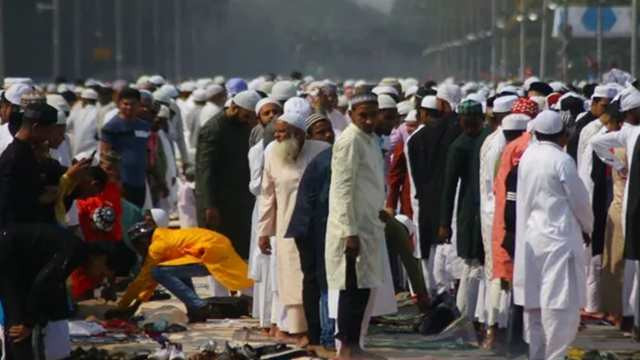
“For years, I came to Red Road with my father for Eid prayers. I must have been around 10 years old then. Brigade has much more space, but you know, offering Eid prayers at Red Road had become a tradition,” said Mohammad Sahabuddin, a resident of Kolkata in India’s West Bengal state.
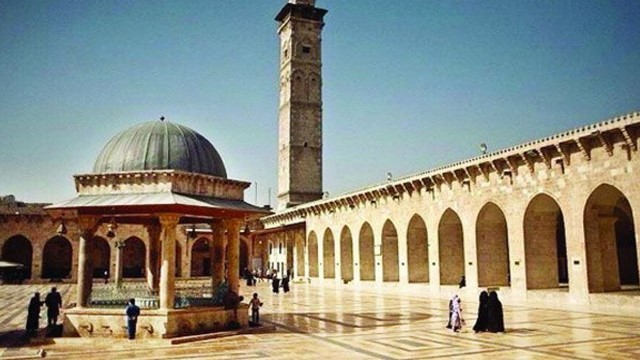
This year, Eid-ul-Azha prayers in Kolkata were held at Brigade Parade Ground instead of the city’s iconic Red Road.
Before the prayers began at exactly 8:30 a.m. on Thursday, Sahabuddin and his friend Mohammad Shahid sat resting in the shade, reflecting on the change.
Following a major political shift in West Bengal, the state’s new BJP government has introduced several policy measures, including relocating Eid congregational prayers from Red Road to the nearby Brigade Parade Ground.
The government has also moved to strictly enforce the 1950 Livestock Act and ban religious gatherings that block public roads.
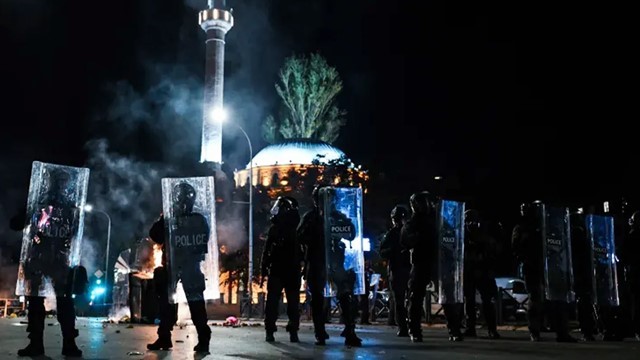
Heavy police deployment was visible across Kolkata and other parts of the state during Eid celebrations.
The 1950 Livestock Act includes restrictions on the slaughter of cows, buffaloes, bulls, and oxen, requiring health and age certificates, slaughtering only at government-designated facilities, and prohibiting public slaughter.
Ahead of Eid-ul-Azha, many people had expressed concern about the government’s measures, fearing they would affect cattle trading and religious observances.
In reality, cattle sales declined significantly this year. Both traders and buyers said many people avoided participating in cattle trade out of fear or uncertainty.
The government’s decision to stop religious events from occupying roads also drew criticism from sections of the public. Demonstrations were held in Kolkata opposing restrictions on public Eid prayers.
Against this backdrop, Eid-ul-Azha was observed on Thursday under a noticeably different atmosphere.
One of the biggest visible changes was the relocation of the main Eid congregation from Red Road to Brigade Parade Ground. Similar restrictions on road prayers were seen in districts across the state.
During the previous Trinamool Congress government, then-Chief Minister Mamata Banerjee was regularly seen attending Eid gatherings at Red Road, particularly during Eid-ul-Fitr. From the stage, she often delivered messages of communal harmony alongside political remarks.
This year, however, no senior political leaders or ministers were seen at the Eid gathering at Brigade Parade Ground.
A Change of Venue
Preparations for the Eid congregation at Brigade Parade Ground had begun well in advance. Adequate police personnel and volunteers were present to manage the event.
Some worshippers welcomed the move, while others expressed nostalgia for Red Road. One of them was Mohammad Sohel.
“I moved to Kolkata from Jharkhand 25 years ago. Since then, I used to come to Red Road every Eid morning for prayers,” he said.
“There is definitely more space here at Brigade, which is helpful for large gatherings and traffic management. But I felt sad hearing that Eid prayers would no longer be held at Red Road,” he added.
Sohel, a resident of Taltala, eventually offered prayers at a mosque near his home this year.
“I wasn’t sure how things would turn out, so I prayed at my local mosque instead,” he said.
Like him, New Market businessman Mohammad Farooq had also planned to pray at a neighborhood mosque.
“I came to Brigade just to see how things were arranged. If everything goes smoothly, I may come again next year. One major advantage here is that there’s no need to worry about finding space for prayers. Earlier, people had to arrive at Red Road very early to secure a spot, and traffic movement was heavily affected,” he said.
The Indian Army had objected to Eid prayers being held at Red Road last year, as the road and surrounding areas, including Brigade Ground, fall under military jurisdiction.
Following intervention by then-Chief Minister Mamata Banerjee, permission had eventually been granted for the prayers at Red Road.
This year, Kolkata Police informed organizers — the Calcutta Khilafat Committee — to look for an alternative venue in advance.
Considering the large turnout, the historic Brigade Parade Ground was selected, with approval from the army authorities.
Mohammad Khalil of the committee told BBC Bangla, “For many years, prayers were held at Red Road. Before that, they were held near the Monument grounds (now Shahid Minar). But due to waterlogging there during rains, the congregation was shifted to Red Road.”
“Compared to previous years, fewer people attended this time. Some feared there could be problems at the new venue, while others left the city because they thought restrictions might prevent them from performing animal sacrifice,” he added.
Many attendees also spoke about the changing political atmosphere in the state.
Hussain, a young man from Picnic Garden, said, “We are celebrating Eid and offering prayers according to the rules. I hope religious events of other communities will also stop blocking roads.”
Meanwhile, Nigerian PhD student Usman Sheku and his wife, who attended the Brigade prayers, said they were unaware of the political controversies surrounding the event.
“I’m pursuing a PhD in Physics at an educational institution in Kolkata. I’ve been offering Eid prayers here for the last three years. Seeing so many people gather together feels wonderful,” Sheku told BBC Bangla.
Reduced Political Presence
After coming to power, Mamata Banerjee regularly attended Eid events, except during the COVID-19 pandemic. Along with messages of communal harmony, she often used the platform for political commentary, sometimes triggering controversy with remarks directed at opposition parties.
In recent years, her nephew and Trinamool Congress leader Abhishek Banerjee also began appearing alongside her at these gatherings.
No such tradition existed during the Left Front government from 1977 to 2011.
This year’s Eid gathering in Kolkata presented a different picture.
Both the current and former chief ministers extended Eid greetings through social media, but the Brigade event itself remained largely free from overt political symbolism.
Trinamool Congress leader and Calcutta Khilafat Committee president Javed Ahmed Khan attended the gathering and told reporters, “Brigade has plenty of space. All arrangements were made according to regulations. Everything was completed peacefully and smoothly.”
Although some participants reportedly raised political slogans against a worshipper they identified as pro-BJP, organizers repeatedly urged attendees to keep the event strictly religious.
Heavy Police Presence Across Mosques
Authorities maintained strict security arrangements across West Bengal to preserve law and order during Eid celebrations.
A large number of police officers were deployed outside Kolkata’s Tipu Sultan Mosque.
Mahiyuddin Laskar, a resident of Narendrapur, told BBC that he had never before seen such heavy police deployment outside local mosques.
“Not just police, but many CRPF personnel armed with weapons were stationed outside our local mosque. The area was completely peaceful, so I couldn’t understand why they were deployed,” he said.
Mohammad Hussain, who had gone out with his son after Eid prayers to Kolkata’s Mallik Bazar area, described a different atmosphere this year.
“There’s no crowd or traffic on the roads today, but something feels missing. It’s not like before,” he said.
Asked why, he replied, “There are too many restrictions this time.”
Families Displaced Before Eid
For many residents around the Talikhola Mosque area in Topsia, this year’s Eid was particularly painful.
Recently, a fire in a leather bag factory operating inside a residential building killed two workers and injured three others.
Authorities later alleged that the building and factory had been operating illegally. The government ordered the demolition of the structure and adjacent buildings, asking residents to vacate beforehand.
Although the Calcutta High Court later temporarily halted the demolition, many residents had already been forced to leave their homes.
Mohammad Junaid, who runs a perfume shop beneath the now-abandoned building, said, “Many families lived in that building. I don’t know where they are now or how they’re surviving.”
Compared to previous years, the area around Topsia appeared noticeably quieter during Eid.
“Usually these roads would be packed with people during Eid, but this year there are far fewer,” Junaid said.
A local rickshaw puller added, “Until a few days ago, there was heavy police security and media presence here. Today everything seems calm, but what will happen to the people who lost their homes?”