১৫ আশ্বিন ১৪৩৩



India's ₹70,000 Crore Project 75(I) Submarine Program Nears Approval
17 August 2026 04:08 AM
NEWS DESK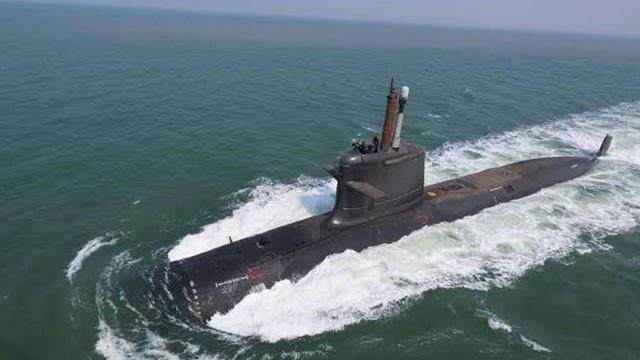
India's long-delayed Project 75(I) submarine program appears to be nearing a major breakthrough, with the proposal expected to be placed before the Cabinet Committee on Security (CCS) for final approval in the coming days, according to unnamed sources cited by NDTV.
The mega defence project, estimated to cost ₹70,000 crore, aims to build six next-generation conventional submarines for the Indian Navy. The submarines will be constructed in India by Mazagon Dock Shipbuilders Limited (MDL) in partnership with Germany's Thyssenkrupp Marine Systems (TKMS).
Negotiations over commercial terms and technical specifications have stalled several times over the years. Approval from the CCS would clear the way for the signing of the contract and the commencement of construction.
German Firm Expands Indian Partnerships
Even before the final approval, TKMS has been quietly expanding its industrial footprint in India, signaling a long-term commitment to the country's submarine warfare capabilities rather than a single defence contract.
The German company has signed a memorandum of understanding with Hyderabad-based VEM Technologies to manufacture, assemble, integrate, and eventually upgrade heavyweight torpedoes. TKMS subsidiary ATLAS ELEKTRONIK is also involved in the collaboration, with VEM expected to handle torpedo integration and testing in India.
The partnership has since evolved into a teaming agreement that includes technology transfer and local production under the Indian government's "Make in India" initiative.
TKMS has also partnered with Mumbai-based CFF Fluid Control for anti-submarine warfare systems and is reportedly exploring collaborations with several other Indian defence firms, including the Defence Research and Development Organisation (DRDO).
Beyond Buying Submarines
For India, Project 75(I) is about far more than acquiring six submarines. The broader objective is to strengthen the country's domestic defence manufacturing ecosystem by developing capabilities in submarine design, construction, maintenance, modernization, and future indigenous development.
The proposed submarines are expected to feature Air-Independent Propulsion (AIP) technology, allowing them to remain submerged significantly longer than conventional diesel-electric submarines. They are also likely to be equipped with advanced sensors, heavyweight torpedoes, missile systems, and sophisticated electronic warfare capabilities.
However, Indian officials continue to debate whether the project will provide genuine technological self-reliance or merely result in local assembly of foreign technology. The long-term success of the program will depend on whether Indian shipyards and defence companies can fully absorb, master, and eventually improve the transferred technologies.
Strategic Importance
The urgency of Project 75(I) has increased as the Indian Navy faces a shortage of conventional submarines while China's underwater presence in the Indian Ocean Region continues to expand.
The six new submarines are expected to significantly enhance India's underwater endurance, stealth, surveillance, and strike capabilities. Their Air-Independent Propulsion systems would enable extended underwater patrols, making them particularly valuable for long-range operations and securing vital sea lanes across the Indian Ocean.
India previously built six Kalvari-class submarines at MDL with French assistance. The first entered service in 2017, while the sixth, INS Vaghsheer, was commissioned in January 2025.
The Indian Navy has also operated German-designed Type 209/1500 Shishumar-class submarines for several decades, several of which were built at MDL during the 1980s. The renewed partnership between TKMS and MDL builds on this longstanding relationship, with a stronger emphasis on indigenous production, technology transfer, and the development of a comprehensive domestic submarine industry.
If the Cabinet Committee on Security grants approval, the next phase will involve signing the contract and beginning construction. The final agreement is expected to define production timelines, work-sharing arrangements among the government, MDL, and TKMS, the scope of technology transfer, and long-term maintenance and lifecycle support responsibilities.