২৮ ভাদ্র ১৪৩৩



Fresh Concerns Over Chinese Activity Along India-China Border
12 September 2026 20:09 PM
NEWS DESK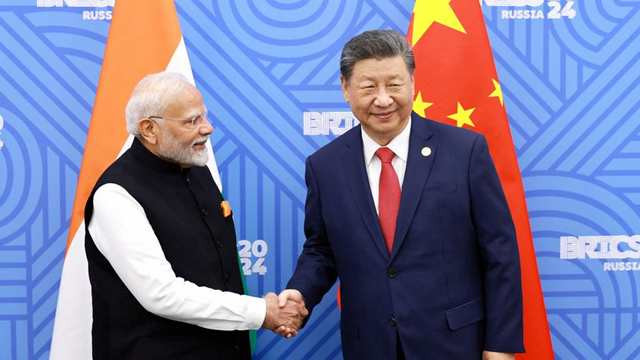
Fresh concerns have emerged over increased Chinese military activity in remote areas along the disputed India-China border, with local residents alleging that they are being forced to abandon ancestral grazing grounds and hunting areas.
The concerns come as satellite imagery has revealed new Chinese infrastructure—including buildings, paved roads and helipads—along and near the disputed border in India’s Arunachal Pradesh.
An analysis of satellite images obtained by the British newspaper The Independent by international open-source intelligence firm Janes found clear evidence of recent construction in at least two areas near the town of Zhari, north of Lhunzê County in Tibet. Some of the infrastructure lies within territory claimed by both India and China.
The findings emerged as Chinese President Xi Jinping was visiting India to attend the BRICS summit. Xi arrived in New Delhi on Saturday and was expected to meet Indian Prime Minister Narendra Modi. It was Xi’s first visit to New Delhi since the deadly 2020 clash in the Galwan Valley.
Analyzing satellite imagery supplied by Vantor, Janes analysts identified recent construction and infrastructure changes at several locations in the Upper Subansiri Valley, where the village of Gelmo is located.
According to Janes, construction began at a site south of Zhari in early 2019, with the first structures appearing in August that year. Construction has continued since then, with evidence of land clearance, engineering vehicles and a cement production facility. Analysts said the possibility that the site could be used for military purposes could not be ruled out.
Another construction site inside the town could also potentially serve a military purpose, according to the analysts. A nearby road has been widened and steep slopes have been reduced, improvements that analysts said are typically designed to facilitate the movement of heavy military equipment.
South of Lhunzê, two smaller helipads have been replaced by a larger one, while another new helipad has been built farther south.
The latest satellite imagery from August 2026 shows that construction of at least one building has been completed to the roofing stage. Based on the building’s design, the presence of vehicles resembling military equipment and an adjacent training area, analysts have identified it as a possible military base. A new road connecting the site to the town was also constructed between February and May 2026.
Speaking to The Independent from a remote village about 20 kilometers from the Arunachal Pradesh border, local resident Takok Mra accused Chinese forces of taking over ancestral land used by local communities for food and livelihoods.
China claims the entire Indian state of Arunachal Pradesh as part of its territory and refers to it as “Zangnan,” or “South Tibet.” Mra said Chinese forces had moved deep into territory claimed by India. Although he could not specify the exact area allegedly occupied, he said a substantial stretch of land had been taken.
Growing anger over Chinese activity has prompted two independent fact-finding teams to visit the villages of Gelmo and Taksing, around 15 to 20 kilometers from the India-China border in the eastern Himalayas.
An eight-member team led by Tadak Pakba, president of the All Tagin Students’ Union, conducted a three-day field investigation from August 11 to 13. The team gathered information from local residents, members of indigenous communities and army porters.
Pakba claimed that the scale of Chinese incursions currently being reported had never been seen before. He said the situation was no longer merely a source of fear for border communities but had become a harsh reality on the ground.
He also alleged that Indian troops were withdrawing while Chinese forces were moving forward.
According to the team’s findings, Chinese forces had entered several areas where Indian troops had previously conducted regular patrols, including hunting grounds and yak-grazing areas traditionally used by villagers.
Pakba said local residents had now been prohibited from entering some of these areas, creating fear and prompting some people to leave the border region. He claimed the incidents began in June this year.
The fact-finding team submitted a report to the Upper Subansiri deputy commissioner and the chief minister’s office, calling for immediate intervention to halt the alleged presence and activities of China’s People’s Liberation Army in the Taksing-Gelmo border area. The report urged authorities to treat the matter as a strategic and national security issue rather than simply a development concern.
The Nah Welfare Society had earlier submitted a memorandum to the Upper Subansiri deputy commissioner raising similar concerns. The organization alleged that the PLA had constructed roads, bridges and military camps in traditional grazing grounds, hunting areas and forest-resource collection zones used by local communities.
The group described the pace and purpose of Chinese activity around Taksing as “extremely concerning,” saying local residents were losing their land “inch by inch.”
Mra said his family’s connection to the land dates back to the period following the 1962 India-China war. The 38-year-old described himself as a patriot and called on local residents to be prepared to defend their land and country.
He also said indigenous communities living in remote border areas quickly report signs of military movement to Indian forces. According to Mra, villagers were the first to alert the Indian military about the presence of Chinese troops in the area in early June, after which the army increased its activity.
Mra also expressed frustration over the lack of basic facilities such as electricity, roads, healthcare and schools in border villages. He said there was a stark contrast between infrastructure development on the Chinese side of the border and conditions in Indian territory.
He said residents of Gelmo often felt isolated from the rest of the world and that a lack of basic services was forcing people to move to district headquarters in search of livelihoods. As border settlements become increasingly depopulated, he warned, Chinese forces could find it easier to advance.
A separate four-member delegation from the People’s Party of Arunachal also visited the border region. The delegation included Kapa Bengia, the organization’s chief adviser and a former state minister.
The group visited Taksing, Gelmo and Maja, one of the villages closest to the border. Bengia claimed that Chinese forces had already advanced and that Indian patrol teams were being prevented from entering areas they considered their own territory.
The report also said that Nanga Pahar in the remote Taksing circle, historically used by the Nah and other indigenous communities, had now been declared completely off-limits to local residents.
The Indian Army, however, has rejected the allegations of Chinese incursions into disputed territory as incorrect and baseless.
India’s Ministry of External Affairs has taken a more cautious position, saying that the border issue remains critically important to maintaining peaceful relations between the two countries.
Ministry spokesperson Randhir Jaiswal said the overall state of bilateral relations between India and China would be reflected in the situation along the border.
China has neither confirmed nor denied the latest allegations. Chinese Foreign Ministry spokesperson Guo Jiakun said in Beijing that the situation along the China-India border was currently “generally stable.”
There were signs of concern, however, in comments by Arunachal Pradesh Chief Minister Pema Khandu. After meeting Indian Defence Minister Rajnath Singh, Khandu said Singh was “very concerned” and actively engaged on the issue. He also said the state would receive the necessary infrastructure support in the coming days.
According to Srikanth Kondapalli, a China studies professor at Jawaharlal Nehru University in New Delhi, China’s activities in Arunachal Pradesh are part of a “salami-slicing” strategy. The approach involves gradually occupying small areas and strengthening positions over time rather than launching a large-scale, sudden offensive.
Kondapalli said China initially tests India’s response by allowing a few yaks to enter disputed areas. If there is no reaction for several months, a small shelter may be built. That structure can later be converted into a permanent facility, followed eventually by a military camp if there is no resistance.
He described the area between Arunachal Pradesh and Tibet as a “grey zone,” arguing that the McMahon Line has not been legally demarcated in a sufficiently precise manner in some areas.
In response to China’s “Xiaokang,” or moderately prosperous, border model villages, the Indian government has introduced the Vibrant Villages Programme. Kondapalli, however, argued that the Indian initiative has not been successful because it requires a much more integrated system.
He claimed China had built around 100 modern model villages in Longju and had begun expanding from those settlements toward areas claimed by India in Arunachal Pradesh.
According to Kondapalli, China’s strategy has been facilitated by India’s inability to maintain regular access to the Line of Actual Control.
He said India’s negotiating position would remain limited unless it developed its own infrastructure and strengthened its presence along the Line of Actual Control. Chinese forces, he added, could reach the LAC within 24 hours. He also noted that China had begun building roads in the region as early as the 1980s, while India became active on the infrastructure front much later.
Against this backdrop, both countries are closely watching Xi Jinping’s visit to India. Attention will focus on whether Xi and Modi make any progress during the BRICS summit.
However, Kondapalli said the likelihood of the border issue being formally raised during the visit could be limited, particularly if the two leaders have little opportunity for direct face-to-face engagement in front of the media.
With China and India both set to play important roles in the BRICS process—and China due to host the summit next year—both sides are likely to be keen to portray the current meeting as a successful engagement, he added.