[email protected]
শনিবার, ১৯ সেপ্টেম্বর ২০২৬
৪ আশ্বিন ১৪৩৩
৪ আশ্বিন ১৪৩৩

Saturday, 19th September 2026


Bangladesh PM’s Residence to Begin Using Solar Power From October 1
19 September 2026 20:09 PM
NEWS DESK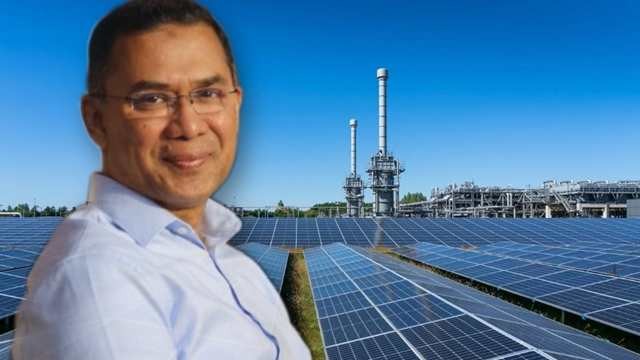
Bangladesh Prime Minister Tarique Rahman’s Gulshan residence is set to begin using solar power from October 1 as part of the government’s efforts to expand the use of renewable energy.
Local Government State Minister Mir Shahe Alam announced the initiative while speaking at a discussion on the development activities of the Local Government Engineering Department (LGED) at the LGED building on Saturday.
He said the initiative would not be limited to the prime minister’s residence. The government plans to gradually bring the Secretariat, National Parliament and other government institutions under solar power as well. Work has already begun at the Prime Minister’s Office and the National Parliament, he said.
“We cannot ask people to adopt solar power unless we take the initiative ourselves,” Shahe Alam said, stressing that government institutions should lead by example.
The state minister said the government has also launched a plan to install solar power systems at 3,416 ready-to-use Union Parishad complex buildings across the country.
Each complex will receive a 5.5-kilowatt solar power system, with a total allocation of Tk 119.56 crore. An amount of Tk 3.5 lakh has been released for each Union Parishad complex.
According to estimates obtained from the relevant institutions, installing a 5.5-kilowatt solar system with one hour of backup should cost a maximum of around Tk 3.25–3.26 lakh. The government therefore allocated Tk 3.5 lakh for each complex, the state minister said. He urged upazila engineers to expedite implementation.
Shahe Alam said Union Parishad complexes are important public facilities where residents regularly visit to access government services. Local markets and bazaars also attract large numbers of people every day.
Installing solar panels at such locations, he said, would allow people to see solar power generation and use firsthand and encourage them to adopt the technology in their homes and businesses.
According to the government’s plan, solar installations are expected to meet the institutions’ own electricity needs within the next six months, while excess electricity could be supplied to the national grid through net metering.
The government is also pursuing larger renewable-energy projects. According to the information cited in the report, 12 solar power projects contracted with the private sector are expected to add around 918 megawatts to the national grid by 2028.
In addition, the government has set targets for generating another 450–550 megawatts from other renewable sources, including wind power, waste-to-energy, hydropower, floating solar and agrivoltaics.
Advertisement