১৪ আশ্বিন ১৪৩৩



Trump Administration Seeks to Cancel $810 Million in Congressionally Approved Funding for Refugee Programs
29 September 2026 19:09 PM
NEWS DESK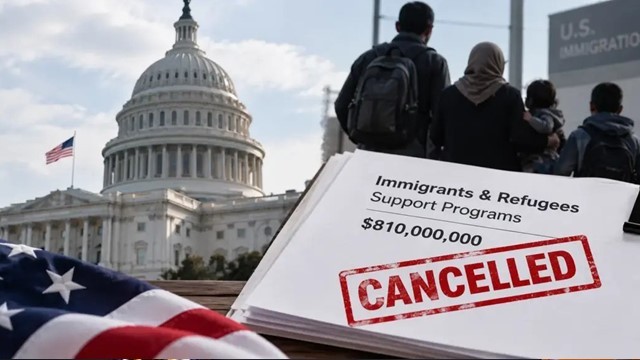
The Trump administration has moved to cancel $810 million in congressionally approved funding designated for refugee, migration, and related assistance programs, according to the U.S. Office of Management and Budget (OMB).
In a letter sent to House Speaker Mike Johnson on Friday, the administration formally requested that Congress rescind the funding. The proposed cuts would affect allocations across several federal departments, including Commerce, Education, Health and Human Services, Homeland Security, Housing and Urban Development, and the Department of Justice.
The proposal has drawn criticism from lawmakers on both sides of the aisle.
Republican Senator Susan Collins argued that attempting to cancel funds already appropriated by Congress without legislative approval would violate the law. She said she would work with colleagues to oppose any such action.
Democratic Senator Jeff Merkley accused President Donald Trump of attempting to unilaterally eliminate portions of spending that had already been approved by Congress. He described the effort as a "pocket rescission" and an unlawful "line-item veto."
Under U.S. law, a rescission is a formal request by the president asking Congress to cancel previously approved federal spending. The proposal has sparked renewed legal and political debate over the limits of executive authority in withholding or canceling appropriated funds.
The proposed funding cuts are widely viewed as part of the Trump administration's broader effort to reduce immigration and tighten federal immigration policies.
Earlier, the administration sought to restrict birthright citizenship in the United States through an executive order. That initiative, however, was challenged in court, and its implementation was blocked following rulings that ultimately reached the U.S. Supreme Court.
The report also noted that new federal guidance has expanded the authority of U.S. Immigration and Customs Enforcement (ICE) to detain certain lawfully admitted refugees who have not yet obtained permanent resident status.
In addition, new immigration regulations affecting foreign nationals seeking to change their visa status within the United States have recently taken effect. Under the revised rules, some applicants may be required to leave the United States and apply for the new visa category through a U.S. embassy or consulate in their home country.