১১ অগ্রহায়ণ ১৪৩৩


US Preparing New Tariffs on Imports from Bangladesh and 15 Other Major Trading Partners
25 November 2026 17:11 PM
NEWS DESK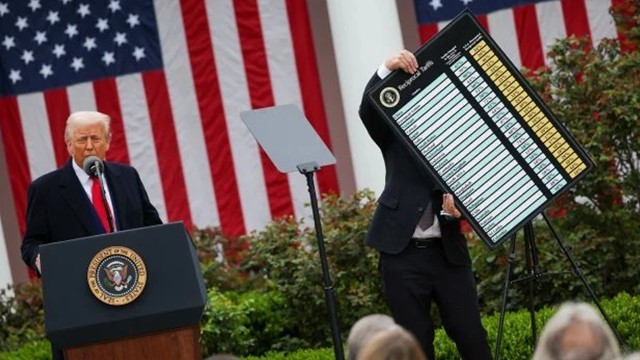
The United States is preparing to impose new tariffs on goods imported from Bangladesh and 15 other major trading partners following investigations into alleged excess industrial production capacity, according to a Reuters report citing three sources familiar with the matter.
The Trump administration may propose additional duties on selected products from these countries after concluding investigations into claims that they produce more goods than domestic and global markets require.
If implemented, the proposed tariffs could further increase the cost of exporting Bangladeshi products to the US market.
Reuters reported on Tuesday that the Trump administration has completed investigations into 16 major US trading partners over alleged excess industrial capacity. Washington is now considering additional tariffs on various imports from these economies, including Bangladesh.
The countries under investigation include China, India, Japan, South Korea, Mexico, Vietnam, Taiwan, Thailand, Malaysia, Indonesia, Switzerland, Norway, Singapore, Bangladesh and Cambodia. The European Union is also included.
According to the sources, the Office of the United States Trade Representative (USTR) may propose the new tariffs, which would be added to duties already imposed during Trump's second presidential term.
The move could partly replace some of the tariffs imposed by the Trump administration that were struck down by the US Supreme Court in February.
Meanwhile, Trump's tariff policies have contributed to rising consumer prices across the United States. A Reuters-Ipsos opinion poll conducted after November's midterm elections found that 62 percent of respondents would support efforts to repeal the tariffs.
The exact rates of the proposed tariffs have yet to be determined.
One source told Reuters that tariff rates would be set separately for each country. However, Mexico and Norway are considered less likely to face immediate additional duties.
The USTR is conducting investigations against most of the United States' major trading partners under Section 301 of the Trade Act of 1974. The investigations were launched to determine whether evidence exists of excess industrial production capacity in these economies.
Sources familiar with the matter said the White House may adhere to the maximum tariff rates established under trade agreements already reached with various countries.
Under these agreements, tariffs on imports from the European Union, Japan and South Korea are capped at 15 percent, while the ceiling for Malaysian goods is 19 percent.
For Chinese products, tariffs imposed during Trump's second term are expected to remain capped at 20 percent. However, this arrangement will remain in effect only if the US-China trade understanding, which is due to expire on January 10, is extended.
If the agreement expires, tariffs on Chinese goods linked to excess production capacity could increase further.
The USTR and the White House did not respond to Reuters' requests for comment.
However, Ryan Majerus, a former senior official at the US Department of Commerce, believes the administration may publish a detailed report recommending separate tariff measures for each of the 16 trading partners.
Majerus, now a partner at law firm King & Spalding, said the Trump administration could propose tariffs of between 15 and 25 percent on imports from countries believed to have excess production capacity in various sectors.
These additional duties could be imposed on top of existing tariffs of 10 or 12.5 percent introduced under separate investigations into the enforcement of laws prohibiting forced labour.
Alternatively, Majerus said, the administration could propose lower initial tariff rates, with provisions to gradually increase them if the countries concerned fail to take measures to reduce excess production capacity.
The Wall Street Journal previously reported that the findings of the investigations could be released as early as this week.
According to Reuters, the USTR launched its investigation into excess industrial capacity in March.
At the same time, the agency opened a separate investigation into whether 59 countries and the European Union were adequately enforcing laws prohibiting forced labour.
Through these two investigations, the Trump administration aims to restore tariffs imposed globally under its so-called 'Liberation Day' trade policy, which were struck down by the US Supreme Court in February.
China at the centre of the investigation
The Trump administration has identified China as the biggest contributor to excess global industrial production capacity.
Washington alleges that China is flooding international markets with surplus products, including steel, aluminium, electric vehicles, household appliances and solar energy equipment.
Beijing has rejected the allegations, arguing that its export strength is the result of competitive advantages rather than unfair industrial practices.
Chinese investments in several Southeast Asian countries are also a major focus of the investigations.
Chinese companies have established factories in countries such as Vietnam, Indonesia and Cambodia to manufacture goods for the US market. Washington suspects these investments are being used to circumvent previously imposed American tariffs.
Under the US-China trade understanding, which is set to expire on January 10, tariffs imposed on Chinese goods during Trump's second term are capped at 20 percent.
In addition, Chinese imports remain subject to tariffs of around 25 percent imposed during Trump's first term.
The United States has also already imposed a 12.5 percent tariff on all Chinese imports under measures related to forced labour.
As a result, there is room for only another 7.5 percentage points in tariffs before reaching the agreed 20 percent ceiling on duties imposed during Trump's second term, provided the trade understanding remains in force.