১২ কার্তিক ১৪৩৩



Bangladesh Showcases Premium Late-Season Mangoes at Festival in Kathmandu
28 July 2026 06:07 AM
NEWS DESK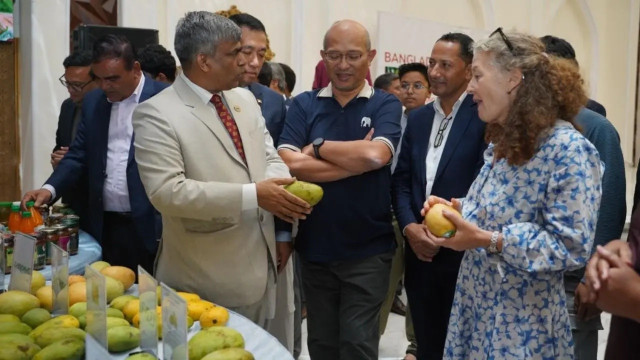
Bangladesh showcased its premium late-season mangoes and a wide range of mango-based processed products at a special festival in Kathmandu aimed at promoting the country's agricultural achievements and expanding exports to the Nepali market.
According to a press release issued on Monday, the Embassy of Bangladesh in Nepal organized the event, titled "Bangladesh Mango Delicacy," at Utsav Kunja in Kathmandu. The festival brought together diplomats, senior officials of the Nepalese government, business leaders, importers, traders, and media representatives.
Around 250 guests attended the event, where they sampled fresh Bangladeshi mangoes alongside a variety of processed mango products and desserts.
The chief guest was SAARC Secretary-General Ambassador Md. Golam Sarwar of Bangladesh. Representing Nepal's Foreign Secretary as the special guest was Ambassador Gahendra Rajbhandari, Joint Secretary for South Asia at Nepal's Ministry of Foreign Affairs.
In his welcome address, Bangladesh Ambassador to Nepal Md. Shafiqur Rahman highlighted the country's remarkable progress in agriculture and agro-processing industries. He said mangoes hold a special place in Bangladesh's culture, heritage, and agricultural economy.
The ambassador noted that Bangladesh's fertile alluvial soil and favorable climate enable the production of some of the world's finest mangoes, including Khirsapat (Himsagar), Haribhanga, Langra, Fazli, Gopalbhog, Amrapali, Ashwina, Banana Mango, Katimon, Gourmati, and several improved varieties developed by the Bangladesh Agricultural Research Institute (BARI).
He also praised Bangladeshi scientists and researchers for developing late-season mango varieties, allowing consumers to enjoy fresh mangoes over a longer period each year.
Highlighting Bangladesh's growing agro-processing sector, Ambassador Rahman said the country now produces internationally compliant mango products such as juice, nectar, pulp, jam, pickles, chutney, dried mango, candy, fruit bars, and a variety of desserts while maintaining global food safety standards.
SAARC Secretary-General Golam Sarwar said South Asia has a rich tradition and diversity of mango cultivation but continues to underperform in exporting fresh and processed mango products to international markets. He praised the Bangladesh Embassy's initiative and called for stronger agricultural cooperation among SAARC member states.
Special guest Ambassador Gahendra Rajbhandari commended Bangladesh's hospitality and described the event as an effective platform for strengthening ties between the people and business communities of Bangladesh and Nepal. He also praised Bangladesh's innovative "mango diplomacy" as a creative approach to fostering friendship and cooperation.
The exhibition featured premium mango varieties from Rajshahi, including Fazli, Amrapali, BARI-4, Katimon, Gourmati, and Ashwina. Bangladeshi companies also displayed processed products such as mango juice, pickles, fruit bars, dried mango, chutney, jam, and jelly.
Guests were served an assortment of mango-based desserts, including cakes, mango sticky rice, and pudding, along with traditional Bangladeshi cuisine.
Bangladeshi mango grower Rafiqul Islam shared his 15 years of farming experience and explained how Good Agricultural Practices (GAP), under the supervision of the Department of Agricultural Extension, have helped improve mango production and quality.
The festival also highlighted Bangladesh's advancements in modern horticulture, sustainable agriculture, and food processing technologies. Documentary films on mango cultivation, as well as promotional videos showcasing Bangladesh's culture and tourism, were screened during the event.
The Bangladesh Embassy said the festival aimed not only to promote the country's agricultural products but also to raise consumer awareness in Nepal and facilitate business connections between importers and exporters of both countries.
The embassy expressed hope that such initiatives would boost bilateral trade in fresh agricultural produce and processed food products while further strengthening the longstanding economic, cultural, and diplomatic ties between Bangladesh and Nepal.