২ অগ্রহায়ণ ১৪৩৩



Hasina's Promised December Return Raises Questions Amid Political Uncertainty in Bangladesh
15 November 2026 19:11 PM
NEWS DESK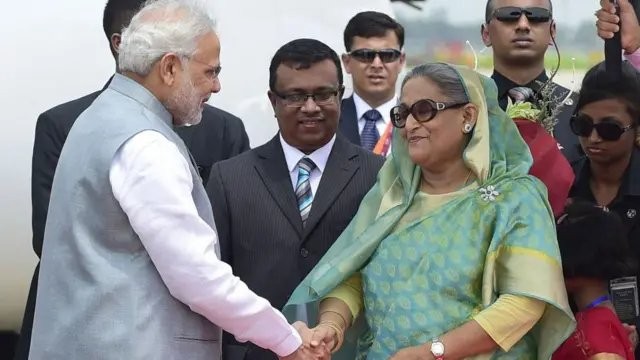
Former Bangladesh prime minister Sheikh Hasina, who was ousted from power on August 5, 2024, following a mass uprising and subsequently fled to India, has announced that she plans to return to the country in December.
She has also reportedly applied for a new passport to facilitate her return to Bangladesh on November 9, triggering fresh political debate over whether she will actually come back amid an increasingly hostile political environment, a death sentence and potential security risks.
Hasina has been living in India since her government's fall during the student-led mass uprising in August 2024. After remaining largely away from active political engagement for an extended period, her recent statements about returning home have reignited speculation about her political intentions.
The central question is whether her announcement represents a genuine plan to return or merely a political message.
Advocate Aminul Islam, chief prosecutor of the International Crimes Tribunal, described Hasina's recent moves as political theatrics. "Hasina will not return to the country," he said.
There are also concerns about the political consequences for the Awami League if Hasina fails to return by December. Observers warn that attempting to regain political ground through sabotage and disruptive activities without acknowledging the reasons behind the mass uprising could become a political trap for the party.
According to critics, the party has learned little from its past mistakes.
Following the tragic events of 1975, the Awami League remained out of power for 21 years. Before returning to power in 1996, Hasina sought public support by acknowledging past mistakes and presenting a commitment to political reform.
However, critics argue that despite allegations involving the killing and enforced disappearance of thousands of people, the party has yet to demonstrate meaningful remorse or accept responsibility. Instead, they say, it is attempting to rebuild its political position through narratives of conspiracy and disruptive activities.
Political analysts question how effective such a strategy could be, arguing that the Awami League's crisis extends far beyond organisational weaknesses.
Meanwhile, public discussion has grown over the lifestyles of members of the Hasina family and senior Awami League leaders, many of whom have reportedly been living abroad in considerable comfort both before and after the uprising.
In contrast, many mid-level and grassroots party activists had managed to resume relatively normal lives through businesses and employment over the past two years. However, the party's latest strategy has reportedly revived fears of arrest among them.
This has allegedly fuelled resentment among grassroots activists towards the Hasina family and senior party leadership, with concerns that ordinary party workers are being exposed to further risks while top leaders remain abroad.
Dr Badiul Alam Majumdar, secretary of Shushashoner Jonno Nagorik (SHUJAN), said the Awami League's current activities amounted to "bad politics rather than politics".
"If they believe they can forcibly return to power through destructive activities, that would be nothing more than a dream. The possibility of regaining power this way is extremely slim," he said.
He added that the Awami League had yet to accept responsibility for the July massacre, making reconciliation difficult.
"If they had accepted responsibility, there could have been a question of forgiveness. But they have not done so," he said.
Researcher and political analyst Mohiuddin Ahmad said Bangladesh's political culture generally discourages parties from admitting mistakes.
According to him, political leaders often fear that acknowledging wrongdoing would be interpreted by the public as an admission of defeat.
"That is why they do not say sorry. Moreover, the Awami League does not even recognise the July mass uprising. So it has not apologised either," he said.
Political observers also see similarities between the party's current activities and its previous political strategies. They point to a longstanding culture of using force against opposition movements, treating dissenting voices as political enemies and maintaining centralised control over party decisions.
So far, there has been little indication of a meaningful change in these practices. Instead of self-criticism, accountability within the leadership and organisational reforms, the party appears more focused on a rapid political comeback, observers say.
The ruling BNP, Jamaat-e-Islami, the National Citizen Party (NCP) and other political groups have accused the Awami League of attempting to create an atmosphere of fear through its programmes and alleged acts of violence.
Law, Justice and Parliamentary Affairs Minister Md Asaduzzaman said on Friday at an event at the National Press Club that those attempting to bring back a death-sentenced convict through bomb attacks and intimidation had failed to understand the people of Bangladesh.
He said the people would not allow the return of fascism, authoritarian politics or political terrorism.
The minister also said several people allegedly involved in bomb attacks and acts of terrorism had already been arrested. According to him, the government had gathered information and evidence about those behind the activities.
Syed Moazzem Hossain Alal, an adviser to the BNP chairman, described the Awami League's renewed political activities as reckless, arguing that the party had neither apologised for its alleged wrongdoing nor learned from history.
Speaking to Jugantor, he said the party had failed to explain why it had resorted to cocktail bomb attacks and sabotage.
"Without examining the reasons behind its downfall, the party suddenly launched surprise processions and cocktail attacks. It cannot simply assume that 'Apa will return' through such activities," he said, adding that the Awami League had once again fallen into the trap of misguided politics.
Dr AHM Hamidur Rahman Azad, assistant secretary-general of Jamaat-e-Islami, alleged that the Awami League was setting fire to buses, carrying out bomb attacks and targeting people's homes in an attempt to return to politics.
He argued that the only way for the party to regain public acceptance would be to acknowledge its past actions and seek forgiveness from the nation.
"Even if the Awami League apologises, I do not believe the people will forgive those responsible for mass killings of their own citizens," he said.
He added that the party had little prospect of returning to mainstream politics in the foreseeable future and claimed that the public was united against its alleged attempts to regain political influence through violence.
Meanwhile, AB Party Chairman Mojibur Rahman Manju said the Awami League was closing the door to its own political comeback through its actions.
He argued that the party would need serious internal introspection, policy corrections and a new political strategy to overcome its current crisis.
Manju said his party supported confronting the Awami League politically, culturally and legally. He added that a united effort by all groups that had suffered under what he described as Awami League fascism could make the party's return to politics even more difficult.
Monira Sharmin, joint convener of the National Citizen Party, also accused the Awami League of repeatedly pursuing destructive politics.
She alleged that the party had failed to change its approach and referred to the 2004 incident in Shahbagh, Dhaka, in which a bus was reportedly set on fire using gunpowder, killing passengers.
She said the party had shown no remorse despite the large number of people killed or permanently disabled during the July uprising.
"The Awami League has no moral right to practise politics in this country," she said.
Sharmin further argued that political parties whose governments fall amid authoritarian rule and whose leaders flee the country often lose their moral legitimacy to return to politics.
As debate intensifies over Hasina's promised December return, the Awami League faces mounting questions over its political future, its leadership's accountability and whether it can regain public trust without a fundamental change in its political approach.