২ অগ্রহায়ণ ১৪৩৩



US Must Respect India's Right to Self-Defence, Says Former Secretary of State Antony Blinken
15 November 2026 19:11 PM
NEWS DESK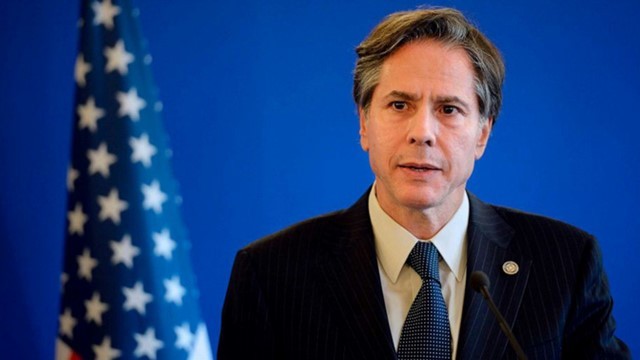
The United States must respect India's right to self-defence while maintaining a zero-tolerance policy towards terrorism and pursuing diplomatic efforts to prevent further escalation of tensions between New Delhi and Islamabad, former US Secretary of State Antony Blinken said on Saturday.
Describing Washington's relationships with India and Pakistan as "fundamentally different", Blinken said the US partnership with New Delhi was built around broader global interests, while its relationship with Islamabad was primarily regional.
Speaking at the Hindustan Times Leadership Summit 2026 in New Delhi, Blinken described India as a major global power with a wide range of strategic interests aligned with those of the United States, according to The Times of India.
"Our relationship with Pakistan is regional. There are still important areas where we need to work with them, particularly on counterterrorism. But these two relationships are fundamentally different," he said.
Emphasising Washington's position on terrorism, Blinken said the United States must maintain a zero-tolerance policy and make no compromises on the issue.
"That means respecting India's right to defend itself," he added.
Blinken said US policy should support India's efforts to respond to attacks while simultaneously pursuing diplomatic initiatives to prevent tensions between New Delhi and Islamabad from escalating further.
He stressed that preventing a broader conflict was particularly important because both countries possess nuclear weapons, the use of which could have devastating consequences.
Reflecting on the history of US-Pakistan relations, Blinken said successive US administrations may have been less critical of Pakistan's civilian and military leadership because of Washington's strategic interests during the Cold War and the war in Afghanistan.
India-US ties have evolved into strategic partnership
Discussing relations between India and the United States, Blinken said ties between the two countries had undergone a significant transformation over several decades, evolving from a period of estrangement into a genuine strategic partnership.
He attributed the growing relationship to shared strategic interests and strong people-to-people connections between the two countries.
"We have moved from estrangement to a genuine and, in some respects, unique partnership. It has been built on a convergence of strategic interests, but also strengthened by the deep connections between our two societies," he said.
Blinken identified emerging technologies as a major area for future cooperation between Washington and New Delhi.
He highlighted opportunities for collaboration in space exploration, quantum technology and artificial intelligence, saying technological cooperation could form an important part of the next phase of bilateral relations.
Washington does not expect India to sever ties with Russia
Addressing India's longstanding relationship with Russia, Blinken acknowledged the deep historical ties between the two countries.
He said Washington did not expect New Delhi to end its relationship with Moscow, recognising that differences in foreign policy would continue to exist between India and the United States.
"There will be areas where we do not see things the same way. On Russia, we understand that India and Russia have deep historical ties. We do not expect India to end that relationship," he said.
Blinken discusses global security and Middle East tensions
Blinken also discussed the changing global order and its implications for American foreign policy.
He examined how Washington's role in international affairs could be influenced by domestic political developments and the US midterm elections.
The former secretary of state also discussed the impact of President Donald Trump's administration's foreign policy and political changes in the United States on Washington's relationships with its allies and international partners.
The discussion covered conflicts in West Asia, particularly the ongoing confrontation involving the United States, Israel and Iran, and the potential risks to regional stability and international security.
Blinken also highlighted the strategic importance of the Strait of Hormuz, a critical route for global energy supplies, discussing the possible consequences of disruptions to maritime traffic through the waterway.
He stressed the importance of preventing a wider regional conflict and underscored the role of diplomacy in reducing tensions.
Antony Blinken served as the 71st US Secretary of State under former President Joe Biden from 2021 to 2025.