৮ অগ্রহায়ণ ১৪৩৩



Bangladesh Should Not Let Hasina Hold Its India Policy Hostage, Says US Analyst Michael Kugelman
22 November 2026 18:11 PM
NEWS DESK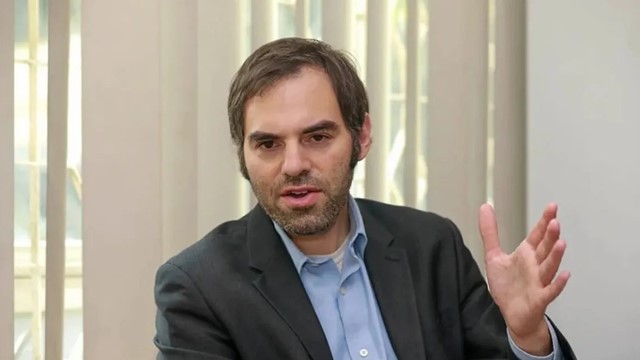
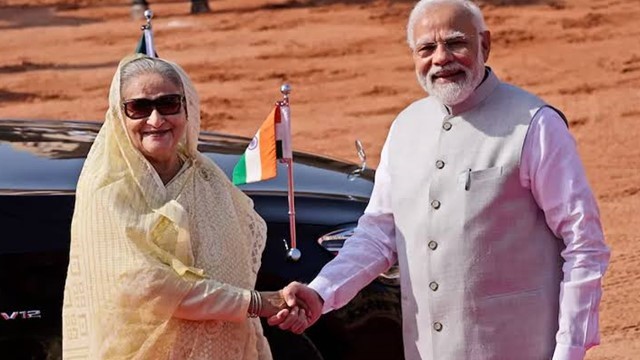
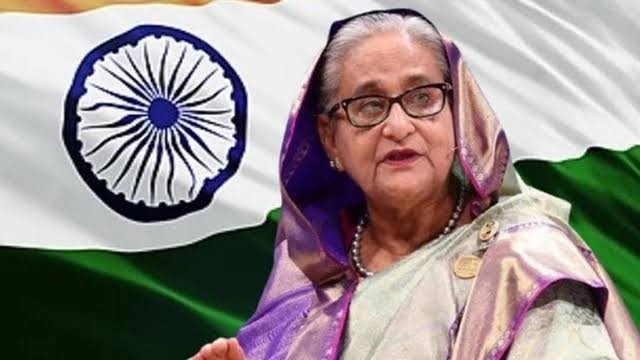
Bangladesh should not allow its India policy to be held hostage by former prime minister Sheikh Hasina, according to US-based South Asia analyst Michael Kugelman.
He said relations between Bangladesh and India had, in a sense, become hostage to the ousted prime minister. However, he argued that Hasina alone should not be blamed for the situation, as the Indian government also bears significant responsibility.
Kugelman made the remarks in an interview with English-language news outlet Daily O.
He said India had signalled its willingness to work with the government of Bangladeshi Prime Minister Tarique Rahman. However, Hasina's presence in India has created a complicated situation for Dhaka in its bilateral relations with New Delhi. As a result, closer cooperation with India has become a politically sensitive issue within Bangladesh.
According to Kugelman, Bangladesh will have to make more difficult decisions than India to normalise and make bilateral relations effective.
In an earlier interview with the same media outlet, former US ambassador Dan Mozena had said Bangladesh should not allow Sheikh Hasina to hold its India policy hostage. Asked for his views on Mozena's remarks, Kugelman expressed partial agreement.
"If I understand Ambassador Mozena correctly, I agree with him to some extent. Bangladesh-India relations have, in a sense, become hostage to Sheikh Hasina," Kugelman said.
However, the US analyst was reluctant to place the entire blame on Hasina. He said the Indian government also had an important role in creating the situation.
According to him, New Delhi could have allowed Hasina to remain in India while imposing restrictions on her political activities, particularly her public political statements.
Asked whether India should pursue broader relations with Bangladesh beyond its ties with Hasina and her family, Kugelman pointed to longstanding resentment in Bangladesh over India's perceived influence in the country's domestic politics.
The discussion also touched on India's relationships with Hasina's son, Sajeeb Wazed Joy, and daughter, Saima Wazed Putul.
Kugelman said there had long been a widespread perception in Bangladesh that India interferes in the country's internal affairs and attempts to influence domestic political developments.
He described such interference as unhealthy and, in some cases, entirely inappropriate.
However, Kugelman noted that the Bangladesh Nationalist Party (BNP) was interested in developing constructive relations with India. In his view, such relations must be based on mutual equality and respect, with Bangladesh never treated as a junior partner.
"The BNP wants good relations with India, but those relations must be based on equality. If Bangladesh is treated as a junior partner, the relationship will not reach the desired level," he said.
The interview also addressed India's criticism of the treatment of the Hindu community in Bangladesh.
Asked whether India's concerns about the situation of religious minorities in Bangladesh should be considered alongside the treatment of Muslims in India, Kugelman said New Delhi's allegations about Bangladesh were exaggerated.
He added that India's treatment of its Muslim population should also be taken into account.
According to Kugelman, greater restraint in raising such allegations publicly could help reduce existing tensions between the two countries. He advised New Delhi to scale back its criticism or, at the very least, refrain from making such accusations publicly.
"For India, a very easy change would be to tone down these allegations or at least avoid raising them publicly," he said.
Kugelman also shared his assessment of the possibility of Hasina returning to Bangladesh.
Despite her repeated promises to return, he believes she is unlikely to come back to the country in reality.
Instead, he warned that ongoing unrest involving Awami League supporters could increase political pressure on the BNP government, potentially serving Hasina's interests.
Kugelman further cautioned that Bangladesh could become one of South Asia's most unstable countries next year, amid a combination of economic difficulties, pressure on the energy sector and the continuing "Hasina factor".
Despite these challenges, the US analyst offered a positive assessment of Bangladesh's recent national election.
He described the February election as the first free and fair election held in Bangladesh in several years.
He also expressed hope that Bangladesh would remain stable regardless of which political party is in power.