[email protected]
রবিবার, ২৫ অক্টোবর ২০২৬
১০ কার্তিক ১৪৩৩
১০ কার্তিক ১৪৩৩

Sunday, 25th October 2026


Iranian Envoy Says Bangladesh’s Foreign Policy Balanced, No Concern Over ‘Mecca Pact’
03 September 2026 07:09 AM
NEWS DESK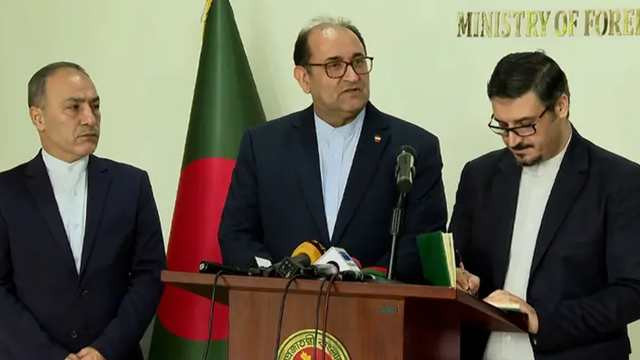
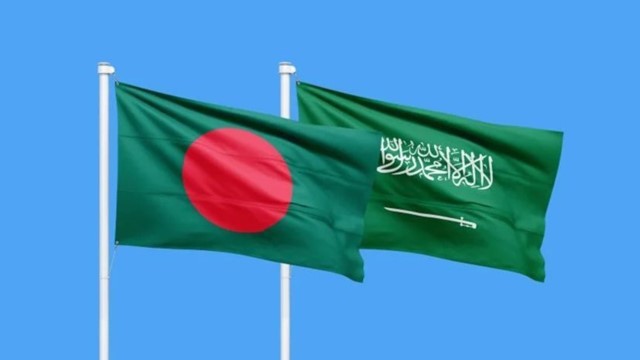
Iran’s Ambassador to Bangladesh, Jalil Rahimi, has said Bangladesh is pursuing a highly balanced foreign policy and that Tehran is not concerned about Dhaka’s decisions, including its position on the proposed “Mecca Pact.”
“We do not consider the Mecca Pact an agreement against Iran,” Rahimi told reporters after meeting Foreign Affairs State Minister-I Humayun Kabir at the Ministry of Foreign Affairs on Wednesday.
The Iranian envoy said Tehran believes the pact is largely a sign of what he described as the United States’ weakening security position in the Middle East.
“We believe that this Mecca Pact is actually a sign of the weakness of US security in the Middle East,” he said.
Rahimi said Iran had no challenge or confrontation with Saudi Arabia and maintained good relations with the country. He also described Türkiye and Pakistan as “very good friends” of the Islamic Republic of Iran.
“We have good relations with Saudi Arabia as well. It is a country with which we maintain good relations. So, we have no concern or worry about the Mecca Pact,” he said.
Asked about Iran’s military actions during its recent conflict with the United States and Israel, Rahimi said Iran had not targeted the territory of any Arab country.
“As you know, during the recent conflict between Iran and America, we only attacked American military bases located in these Arab countries. We never attacked the territory or soil of any Arab country,” he said.
Responding to a question about whether Muslim countries joining the Mecca Pact could indirectly serve the interests of the United States and Israel, as some experts have suggested, Rahimi rejected the interpretation.
“No, it is not like that,” he said, arguing that the pact was being formed at a time when Washington was deeply concerned about its ability to provide security to itself and its allies in the Middle East.
Rahimi said the US message to countries in the region had remained clear for years: allow the United States to establish military bases and purchase weapons from it, and Washington would provide security.
He claimed the same justification had been used by the United States when it attacked Iran, saying Washington sought to change Iran’s political system and government, seize its enriched uranium, halt its missile programme and demonstrate its military power globally.
“But as you can see, there has been no change in Iran’s political system. Our enriched uranium is still in our hands,” Rahimi said.
He further claimed that Iranian missiles had, as recently as Tuesday night, targeted US military bases in Jordan, Bahrain, Kuwait and Iraq’s Kurdistan region.
The ambassador also said the United States had spent billions of dollars trying to keep the Strait of Hormuz and the associated maritime route open.
“In my view, this Mecca Pact is merely a supplementary part of the strategic defeat of the United States,” he said.
According to Rahimi, Muslim countries in the region are now realising that “a stockpile of US weapons” cannot provide them with genuine security.
“That is why we do not consider the Mecca Pact to be against Iran, and we are not concerned about it at all,” he said.
Asked whether Iran had proposed joining the Mecca Pact or would do so in the future, Rahimi said Tehran had not submitted any request to join.
“We have not submitted any proposal ourselves to join. However, if the member countries of the Mecca Pact invite or propose that we join, we will consider it,” he said.
Rahimi said Iran had made proposals similar to the Mecca Pact about a decade ago.
“One was the establishment of a nuclear-free Middle East, so that no country in the region would possess nuclear weapons,” he said, adding that neither Israel nor the United States had supported the proposal.
Iran’s second proposal, he said, was for the Islamic countries of the Middle East to sign a joint defence agreement.
“But at that time, the Arab countries did not support the proposal because they thought US assistance would be sufficient for their security,” he said.
‘Could the US provide the security you wanted?’ Rahimi questioned whether the United States had been able to provide the security that Arab countries had expected.
“Now our question to Arab countries such as Bahrain, Kuwait, the United Arab Emirates, Qatar, Saudi Arabia and Jordan is: Has the United States been able to provide you with the security you wanted?” he said.
“Could the United States stop the missiles that travelled through your airspace towards Tel Aviv?” the Iranian ambassador asked.
Advertisement