[email protected]
রবিবার, ২৫ অক্টোবর ২০২৬
৯ কার্তিক ১৪৩৩
৯ কার্তিক ১৪৩৩

Saturday, 24th October 2026


Vice President Post Proposed in Caretaker Government Formation Debate
24 October 2026 23:10 PM
NEWS DESK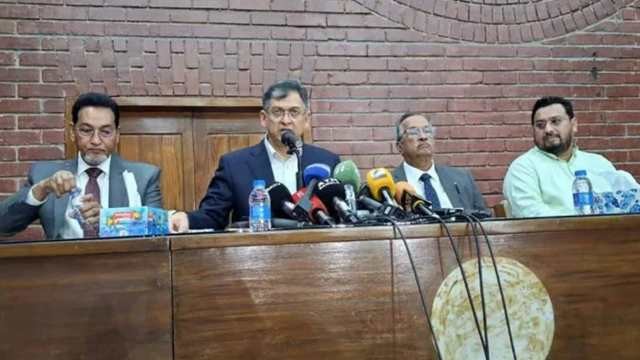
Some participants in discussions on the formation of a caretaker government have proposed creating the post of vice president, Salahuddin Ahmed, chairman of the parliamentary special committee on constitutional amendments and Home Affairs Minister, said on Saturday.
Speaking to reporters after the ninth meeting of the committee, Ahmed said several proposals had been discussed regarding how a caretaker government could be formed, particularly if a bicameral parliament is established and its upper house continues beyond the tenure of the lower house.
One proposal suggests that a vice president could serve as the speaker of the upper house and play a role in the caretaker government formation process, he said.
“Some have proposed that if the upper house remains in place beyond the tenure of the parliament, a caretaker government formation mechanism could be incorporated into the upper house, with the vice president serving as its speaker,” Ahmed said.
As an alternative, he said, the speaker could be appointed from the opposition with the consent of the ruling party. That speaker could then head the caretaker government, while other advisers could also be appointed with the agreement of both the ruling and opposition parties.
Ahmed stressed that these were proposals put forward during discussions and had not yet been finalised.
“We will place all the proposals before the committee and include them in our report. Further proposals may also emerge, and the draft bill will be prepared based on these discussions,” he said.
The committee's ninth meeting began at 11am on Saturday in the Cabinet Room of the Jatiya Sangsad Bhaban and continued until 5:30pm.
Supreme Court lawyers, law professors and prominent academics attended the meeting to share their views and recommendations on drafting broadly acceptable constitutional amendments, ensuring comprehensive reforms and strengthening constitutional institutions.
According to Ahmed, discussions covered the Constitution's basic structure and judicial review of administrative actions, legislation and constitutional amendments.
Participants also exchanged views on ensuring judicial independence, enacting a law governing the appointment of judges and establishing a separate Supreme Court Secretariat.
Asked about the proposed Supreme Court Secretariat, Ahmed said the government remained committed to its establishment but had not converted the previous government's ordinance into law because it contained several errors and shortcomings.
“We have a commitment to establishing the Supreme Court Secretariat,” he said.
The meeting also discussed easing the restrictions imposed by Article 70 of the Constitution on members of parliament when voting independently.
Proposals included allowing MPs greater freedom to vote and express dissent on issues other than constitutional amendments, money bills, confidence or no-confidence motions, and matters relating to national security or wartime situations.
The committee also discussed ways to establish a balance of power between the president and the prime minister.
Other issues included the structure and mandates of constitutional and statutory bodies, as well as measures to ensure that these institutions can operate independently.
Ahmed said proposals had also been made to expand the president's authority over appointments to statutory bodies and commissions. Under one proposal, the president would be responsible for appointments to at least six such bodies.
The committee is expected to begin compiling its report in the coming days. Discussions with opposition parties and efforts to obtain their views are also underway, Ahmed said.
Advertisement