৪ অগ্রহায়ণ ১৪৩৩



Legal Notice Sent to Government Demanding Return of Sheikh Hasina from India
18 November 2026 18:11 PM
NEWS DESK
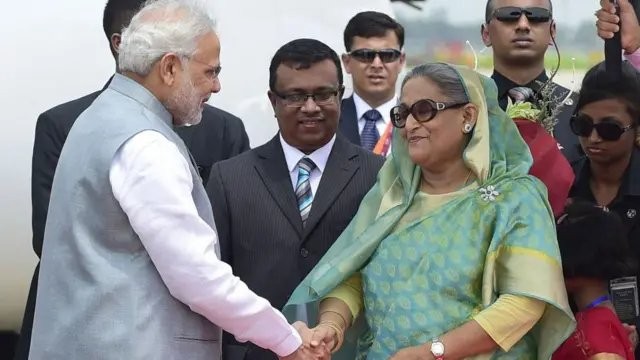
A legal notice has been sent to the Bangladesh government demanding the repatriation of ousted former prime minister Sheikh Hasina from India through diplomatic and administrative measures, followed by her placement in legal custody.
Supreme Court lawyer Md Mahmudul Hasan Mamun issued the notice on Wednesday in the public interest. He is a member of the Supreme Court Bar Association, holding membership ID number 6202.
The notice calls for ensuring Hasina's security, bringing her back to Bangladesh and completing the subsequent judicial proceedings in accordance with the law. It says the initiative is aimed at protecting state secrets, safeguarding national security, preventing the risk of a potential military confrontation with India and upholding the fundamental right to seek protection of the law guaranteed under Article 31 of the Constitution.
The notice was addressed to the Cabinet Secretary, Foreign Secretary, Secretary of the Public Security Division under the Home Ministry, Secretary of the Law, Justice and Parliamentary Affairs Ministry, Inspector General of Police (IGP) and Bangladesh's High Commissioner to New Delhi. Copies were sent to the concerned officials by registered post and email.
Mamun stated that the initiative was not associated with any political party, the incumbent government or any position in favour of or against former prime minister Sheikh Hasina. He said he had issued the notice from a politically neutral position, guided by the constitutional responsibility to protect the country's sovereignty, territorial integrity and public security under Article 21(1) of the Constitution.
The notice places particular emphasis on national security, arguing that Hasina's long tenure as prime minister means she may have access to sensitive information concerning Bangladesh's defence system, intelligence networks, diplomatic protocols and national security arrangements.
It expresses concern that her prolonged stay in a neighbouring country could create a risk of sensitive state information being disclosed to foreign authorities.
The notice also warns that such a situation could lead to deteriorating international relations and potentially even military confrontation.
As examples, it refers to the political situations in Yemen and Ukraine.
According to the notice, Yemen's former president Abdrabbuh Mansur Hadi sought refuge in Saudi Arabia in 2015. His prolonged stay and political activities were subsequently linked to the Saudi-led military intervention and the devastating regional conflict in Yemen.
It also cites the case of former Ukrainian president Viktor Yanukovych, who sought refuge in Russia in 2014. The notice refers to the geopolitical developments surrounding his stay, including Russia's seizure of Crimea and the subsequent prolonged conflict between Russia and Ukraine.
It argues that Bangladesh and India should take precautions to prevent similar hostility or armed conflict from emerging between the two neighbouring countries.
The notice outlines several legal and administrative steps for bringing Hasina back to Bangladesh.
First, it proposes that Bangladesh's Foreign Ministry send a formal diplomatic communication, known as a Note Verbale, to India's Ministry of External Affairs.
The communication should seek India's cooperation in ensuring Hasina's safe return, citing her rights as a Bangladeshi citizen under Article 31 of the Constitution, including the right to legal protection and justice.
Next, the notice proposes that the Bangladesh High Commission in New Delhi facilitate Hasina's entry into its premises and provide an opportunity for her to surrender.
Referring to the 1961 Vienna Convention, it mentions the diplomatic inviolability of the High Commission's premises. Under the proposal, Hasina would formally surrender to the authorised legal authorities of the Bangladesh government after entering the premises.
A specially trained Bangladesh Police team would then arrest her inside the High Commission compound and take her into legal custody.
The notice also proposes issuing a travel pass or travel permit through the Bangladesh High Commission in New Delhi to facilitate her return.
In coordination with the Home Ministry, the High Commission would arrange either a suitable commercial flight or a special chartered aircraft to bring her back. The lawyer has proposed round-the-clock security and police escort throughout the journey.
The notice also addresses arrangements for Hasina's security and detention after her return.
It proposes declaring her ancestral residence in Tungipara, Gopalganj, a special sub-jail or subsidiary prison.
According to the notice, the Home Ministry could implement the arrangement through an official government notification in accordance with the Prisons Act and the Jail Code.
It further proposes that, after landing in Dhaka, Hasina be transferred directly from the airport to the proposed sub-jail in Tungipara by a police helicopter.
The proposed arrangement is intended to maintain public order, prevent unwanted incidents and ensure her security.
The notice also highlights Hasina's right to appeal under Section 21 of the International Crimes (Tribunals) Act, 1973.
It states that after returning to Bangladesh and being placed in legal custody, she would be able to exercise her statutory right of appeal before the Appellate Division of the Supreme Court.
Under Section 21(3) of the Act, an appeal must generally be filed within 30 days of the date of the judgment. However, the notice argues that the Appellate Division has the judicial authority to consider an application for condonation of delay, provided sufficient grounds are presented, and admit the appeal for hearing.
The lawyer has also proposed using the virtual judicial system to continue proceedings in other civil and criminal cases pending against Hasina in various courts across the country.
Under the Use of Information and Communication Technology by Courts Act, 2020, virtual appearances and the recording of testimony could be conducted through audio-video conferencing.
The notice argues that this would help minimise security risks while allowing judicial proceedings to continue without interruption.
It further states that the government must implement the judgments and orders of the relevant courts impartially after all appeals and other legal proceedings have been finally resolved.
The proposal emphasises upholding the rule of law and ensuring everyone's legal rights under the Constitution.
Lawyer Md Mahmudul Hasan Mamun has demanded that the relevant authorities take the proposed diplomatic, administrative and legal measures within 15 days of receiving the notice and inform him of their actions in writing.
The notice warns that if effective steps are not taken within the stipulated period, he will file a public interest litigation (PIL) petition before the High Court Division of the Supreme Court under Article 102 of the Constitution.
The proposed legal action, it says, would seek to protect Bangladesh's sovereignty, state secrets and the rights guaranteed under Article 31 of the Constitution.