১২ আশ্বিন ১৪৩৩



Government Yet to Finalize New Official Residence for Next Prime Minister
08 December 2025 00:12 AM
NEWS DESK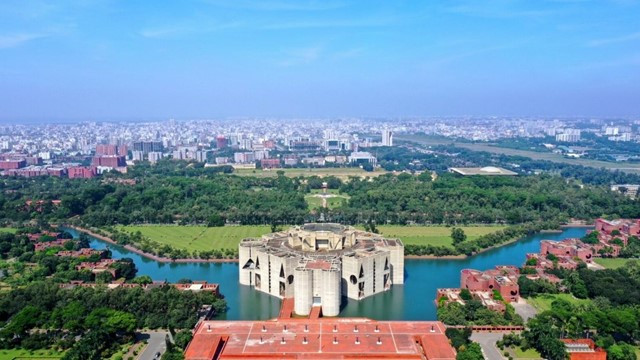
The high-level government committee formed to determine the next Prime Minister’s official residence had initially proposed merging the Speaker and Deputy Speaker’s residences within the Parliament complex to create a single, integrated compound for the country’s future premier.
The committee had also considered the possibility of using the State Guest House Jamuna along with Houses 24 and 25 on Hare Road as part of a coordinated plan.
However, none of these proposals has received final approval, according to officials familiar with the matter. They say discussions are ongoing within the administration about leaving the decision to the next elected government. A supervising engineer at the Public Works Department (PWD) confirmed that no final decision has been made.
During the last Awami League administration, the Prime Minister’s official residence was Gonobhaban. The Sheikh Hasina government collapsed on 5 August last year amid a mass uprising, during which angry crowds stormed and vandalized Gonobhaban. A month later, on 5 September, the interim government’s advisory council decided to turn the compound into the “July Uprising Memorial Museum.” According to the government, the museum will document the 16-year period of Sheikh Hasina’s rule, including incidents such as the Pilkhana massacre, enforced disappearances, extrajudicial killings, torture cells, and alleged election manipulation.
At present, State Guest House Jamuna is being used as the residence of the Chief Adviser to the interim government.
According to multiple government sources, a high-level committee led by Housing and Public Works Secretary Md. Nazrul Islam was formed on 7 July to identify a new official residence for the incoming Prime Minister. After initial discussions, the committee leaned toward using Jamuna or several bungalows on Hare Road. But eventually it recommended combining the Speaker and Deputy Speaker’s residences near the Parliament complex. Committee members even inspected the two houses in September.
However, the government has reportedly abandoned the plan due to various complications. Officials stated that constructing a Prime Minister’s residence within the Parliament complex would violate the original architectural design by Louis I. Kahn. Another key issue is that converting the Speaker and Deputy Speaker’s residences would leave the new holders of those offices without accommodation—an urgent problem since national elections are expected in February, with new parliamentary office-bearers likely to take their positions by February or March.
Officials also raised practical concerns: housing not only the Prime Minister but also the necessary staff and security personnel would require additional buildings. It remains unclear where such space would be made available.
Moreover, establishing an official residence requires a dedicated government development project, which must be approved and funded through the Annual Development Programme (ADP). But no such project exists in the 2025–26 ADP prepared by the Public Works Ministry, the Parliament Secretariat, or the Ministry of Finance. As a result, there is no scope at present to begin construction of a new Prime Minister’s residence in the Parliament area.
Unnamed officials from the Public Works Ministry say the matter will ultimately be decided by the new government elected in the upcoming national polls.