৩ অগ্রহায়ণ ১৪৩৩



Nearly 40% of Doctors Absent During Surprise Inspections, BHW Report Finds
16 November 2026 16:11 PM
NEWS DESK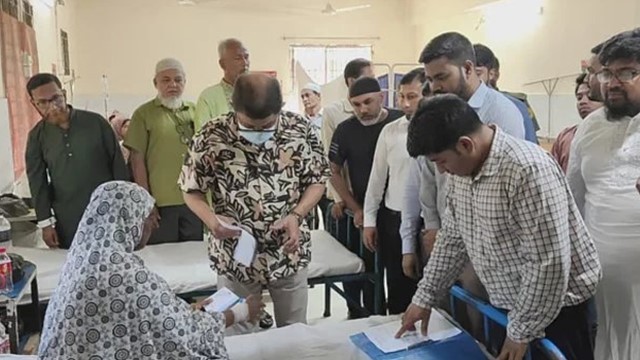
Doctors allegedly receive up to 50% commission for referring patients to private diagnostic centres, while procurement irregularities have caused hundreds of crores of taka in losses
Nearly 40 per cent of doctors were found absent from their workplaces during surprise inspections at government hospitals, while doctors are allegedly receiving commissions ranging from 20 to 50 per cent of diagnostic test fees for referring patients to private diagnostic centres, according to a new study by Bangladesh Health Watch (BHW).
The study estimates that such commission transactions at major diagnostic institutions across the country could amount to approximately Tk 1,861 crore annually, although it noted that the estimate requires independent verification.
The findings were presented in BHW's 191-page biennial report for 2025–26, released on Sunday at the International Mother Language Institute in Dhaka.
The report also revealed significant irregularities in public procurement, particularly in purchases made by the Central Medical Stores Depot (CMSD). According to the findings, procurement-related losses amounted to Tk 459 crore, while medical equipment worth Tk 283 crore remained unused. Some equipment was reportedly purchased at prices up to 18 times higher than the market rate.
Edited by Bangladesh Health Watch Convener Dr Ahmed Mushtaque Raza Chowdhury and icddr,b Emeritus Scientist Dr Shams El Arifeen, the report contains 11 chapters written by 17 researchers. The Embassy of Sweden and the Swedish International Development Cooperation Agency (Sida) supported its preparation.
Corruption in public hospitals
The report documents various forms of corruption experienced by patients seeking treatment at government hospitals, including the influence of brokers, illegal payments for bed allocation and hospital discharge, and referrals to private clinics.
In one incident, a hospital ward attendant allegedly took Tk 5,000 from an elderly patient, promising to arrange a surgery date. However, the ward had no facilities to perform the operation. Instead of facing disciplinary action, the employee was transferred elsewhere.
The report also examined the practice of doctors receiving commissions in exchange for referring patients to diagnostic centres. It estimated that the annual volume of such transactions at major diagnostic institutions could reach Tk 1,861 crore.
Widespread absenteeism among doctors
The study found that approximately 40 per cent of doctors were absent from their workplaces during surprise inspections.
A separate study found absenteeism exceeding 70 per cent at some health facilities in remote areas. The report also highlighted the existence of so-called "ghost doctors" who allegedly receive salaries and benefits despite failing to perform their duties.
It further identified political influence and weaknesses in paper-based management systems in the recruitment, transfer and promotion of more than 180,000 healthcare workers. The cancellation of the appointments of 2,839 health workers in 2021 was also mentioned.
Weak regulatory oversight and accountability
The report raised concerns over the independence and accountability of regulatory bodies in the health sector.
Of approximately 90 members of the Bangladesh Medical and Dental Council (BMDC), around 70 are reportedly affiliated with the government.
None of the six regulatory bodies reviewed by the researchers had effective representation from patients or members of the general public.
The report also highlighted delays in resolving complaints of medical negligence. Between 2010 and May 2025, the BMDC received 172 complaints, of which 79 remained unresolved. Disciplinary action was taken in only 29 cases.
Meanwhile, the number of medical colleges in Bangladesh increased from 62 in 2010 to 118 in 2022–23. However, the expansion was not accompanied by corresponding improvements in quality control and monitoring of medical education, the report said.
Recommendations to curb corruption
To address corruption in the health sector, Bangladesh Health Watch recommended making it legally prohibited for doctors to receive commissions in exchange for referring patients to diagnostic centres or healthcare facilities.
It also proposed making disclosure of doctors' financial relationships with pharmaceutical companies and medical equipment manufacturers mandatory.
Other recommendations include:
Establishing a legal framework for resolving medical negligence complaints and providing compensation to affected patients.
- Introducing a digital human resource information system to improve transparency in recruitment, transfers and promotions.
- Providing incentives to healthcare workers serving in remote areas.
- Publishing all information related to government procurement.
- Ensuring proper management and monitoring of medical equipment throughout the process, from procurement to actual use.
- Protecting whistleblowers who expose irregularities and corruption.
To strengthen the independence of regulatory institutions, the report recommended barring ministers, secretaries and members of parliament from heading such bodies.
It also called for ensuring representation of patients and the general public in regulatory institutions and establishing an independent appeals mechanism to strengthen accountability in the country's healthcare system.