৩ অগ্রহায়ণ ১৪৩৩



Lower Trade Barriers to Give Bangladeshi Consumers More Choices at Competitive Prices: US Ambassador
16 November 2026 18:11 PM
NEWS DESK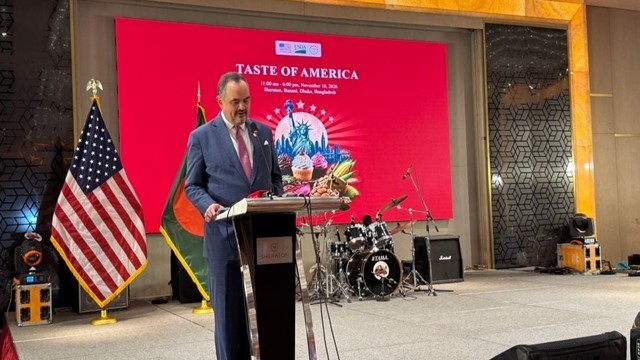
Reducing trade barriers between the United States and Bangladesh would allow consumers in Bangladesh to enjoy a wider variety of products at lower prices, US Ambassador to Bangladesh Brent T Christensen has said.
He said expanding bilateral trade would give American companies access to new markets, while Bangladeshi businesses would gain opportunities to import high-quality products and ingredients, benefiting the economies of both countries.
The ambassador made the remarks on Monday while speaking at the "Taste of America" event, organised by the US Embassy at the Sheraton Hotel in Dhaka to mark the 250th anniversary of the United States.
Christensen said one of his key priorities was to facilitate greater access for American products to the Bangladeshi market. This would give local consumers more choices and competitive prices while allowing chefs, bakers and businesses to showcase their creativity using high-quality ingredients.
Trade agreement to reduce import costs
Speaking about trade policy, Christensen said an effective bilateral trade agreement between the two countries would help reduce import costs.
Lower tariffs on various products would make it easier and more affordable to import American food products, allowing importers to bring in a wider range of goods. Restaurants and bakeries would also have opportunities to introduce new types of food, he added.
Emphasising food safety and product quality, the ambassador said products cannot enter the US market unless they pass the required inspections and standards.
He noted that the trade agreement also places importance on maintaining high standards of food safety, intellectual property protection and effective regulatory systems.
Highlighting challenges in Bangladesh's market, Christensen said import restrictions and an unregulated market environment often drive up the prices of many products. Counterfeit and adulterated food products also force consumers to spend more while creating uncertainty over quality.
"Every family in Bangladesh deserves access to safe, high-quality food at fair prices," he said, adding that efforts to gradually reduce trade barriers between the two countries would continue.
US beef market potential in Bangladesh
Highlighting the potential of American beef in Bangladesh, Christensen said beef was an important ingredient in traditional Bangladeshi dishes such as biryani, pulao, mezban and tehari.
While American beef is internationally renowned for steaks, he said grain-fed cattle often produce beef with distinctive marbling, tenderness and flavour.
He also described the US Department of Agriculture's (USDA) Choice and Prime grades as internationally recognised premium-quality beef products.
The ambassador said American beef was currently not legally available for purchase in Bangladesh. As a result, people interested in premium American steaks often have to travel to Bangkok, Singapore, Tokyo or the United States.
The US Embassy will work with the Bangladesh government to secure commercial market access for premium American beef in the future, he said.
Referring to beef imported from his home state of Iowa, Christensen said the state was one of the leading corn-producing regions in the United States, with a significant portion of its corn production used as livestock feed.
He added that high-quality beef was as important to the people of Iowa as beef was to people in Bangladesh.
Bangladesh becomes ninth-largest buyer of US wheat
Christensen also said Bangladesh became the ninth-largest buyer of American wheat in 2025 following the approval of tariff exemptions.
He encouraged Bangladesh to import more US wheat, process it locally and increase its use in restaurants and cafes.
The event featured halal-slaughtered beef imported from Iowa, alongside a cupcake competition featuring products prepared by Bangladeshi bakers using American ingredients.
The programme highlighted the quality and diversity of American agricultural products while exploring opportunities to expand agricultural and food trade between the two countries.
Guests also had opportunities for networking and discussions, followed by live musical performances.