১০ আশ্বিন ১৪৩৩



India’s Maharashtra to Use AI to Identify Alleged Bangladeshi and Rohingya Migrants, Sparking Concerns
03 February 2026 07:02 AM
NEWS DESK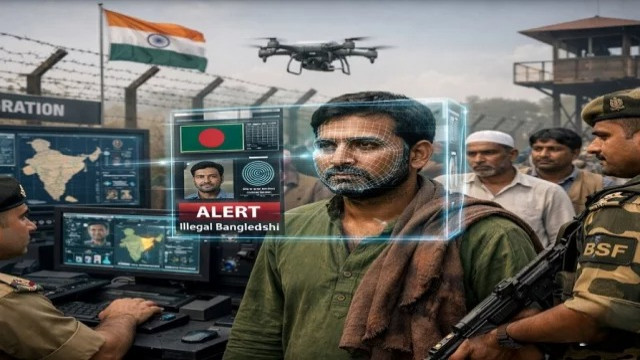
India has been running special drives for several months to verify citizenship, during which people identified as undocumented migrants have been detained, placed in camps, or pushed across the border into Bangladesh.
Amid growing controversy over these actions, the western Indian state of Maharashtra has announced a new step: the use of artificial intelligence (AI) to identify alleged Bangladeshi and Rohingya migrants, according to the BBC.
As part of a special operation, police in Maharashtra are currently verifying documents of residents suspected of living illegally in the state. Authorities have said AI technology will then be used to help identify undocumented Bangladeshis and Rohingya migrants.
Speaking on an NDTV program earlier this year, Maharashtra Chief Minister Devendra Fadnavis said that the task of identifying Bangladeshis and Rohingya migrants using AI for the Mumbai administration is being carried out by the Indian Institute of Technology (IIT).
However, it remains unclear how the technology will be used in practice. When contacted, IIT Bombay did not immediately respond to questions regarding the project.
AI experts believe the system may be trained on data such as physical appearance, speech patterns, clothing, regional backgrounds, and ways of speaking Bengali. The tool may also be taught conversational patterns in Bangla. However, specialists warn that accurately identifying Bangladeshi or Rohingya migrants through such methods is nearly impossible.
Economist Prasenjit Bose, who has long researched and campaigned on citizenship issues, questioned the rationale behind the move. “After spending crores of rupees on intensive voter list revisions across states, how many Bangladeshis or Rohingya were actually found? Governments should first release those figures,” he said, calling the AI plan “entirely misleading.”
An NDTV report quoted Chief Minister Fadnavis as saying that the AI tool—being developed jointly with IIT Bombay—is currently 60 percent accurate and is expected to reach 100 percent accuracy within four months.
Kolkata-based Mediaskills Lab founder and AI expert Joydeep Dasgupta explained that such systems are typically large language models trained on vast amounts of data, including images, videos, maps, audio, infographics, and research papers.
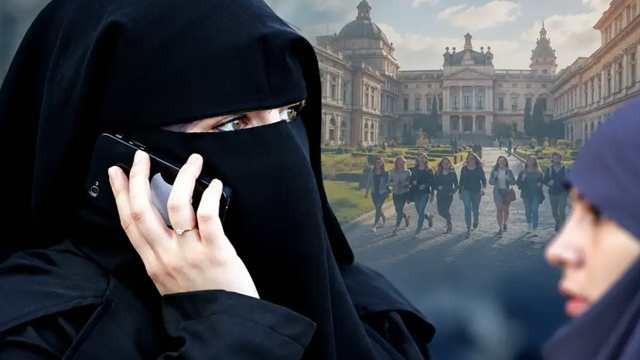
He said the AI may be trained to recognize what officials consider a “typical Bangladeshi Muslim,” including whether a person wears a skullcap, has a beard without a mustache, or, in the case of women, wears a burqa, along with how they speak. “Based on such profiling, the system may attempt to decide whether a person is Bangladeshi, Rohingya, or Indian,” he said.
“But the problem is that these same traits are common among Indian Bengali-speaking Muslims as well, and even many Hindus,” Dasgupta added. “How will the machine distinguish between them?”
Raising concerns about political bias, Arijit Mukherjee, a principal scientist at a major multinational IT company, questioned whether the data fed into the system would be politically neutral.
“AI entirely depends on training data,” Mukherjee said. “For such a project, the system would need to be trained on hundreds of thousands of speech samples. Who will curate that data? Political bias is almost inevitable, and that bias will reflect in the results.”
Experts also point out that language does not follow political borders. Bengali spoken in Bangladesh’s Sylhet region is similar to that spoken in parts of India’s Tripura and Assam’s Barak Valley. Likewise, the dialect spoken in Bangladesh’s Rajshahi region closely resembles that of Murshidabad in West Bengal. Even within India, Bengali dialects vary widely from Purulia to Kolkata to Siliguri.
“Can anyone really distinguish the spoken Bengali of Cooch Behar in West Bengal from Lalmonirhat in Bangladesh?” Mukherjee asked. “Language does not respect political boundaries. Identifying ‘Bangladeshi speech’ through AI will remain a fantasy.”
Fears of Political Bias and Wrongful Identification
AI experts warn that such profiling could lead to Indian Muslims—and even Indian Hindus—being wrongly labeled as illegal migrants.
Activists working on citizenship issues question whether AI can succeed where existing processes have failed. Intensive voter list revisions and citizenship verification drives are already underway in several states, including West Bengal. “How many Bangladeshi or Rohingya migrants have actually been identified through those processes?” they ask.
Prasenjit Bose, who recently joined India’s Congress party, reiterated: “After spending massive public funds on citizenship verification across states like West Bengal, Uttar Pradesh, and Tamil Nadu, how many infiltrators were found? Release those numbers first.”
Over the past 10 months, multiple reports have documented cases in which Bengali-speaking Muslims in West Bengal and Assam were detained as suspected Bangladeshi migrants, with some allegedly pushed into Bangladesh without due legal process.
While some of those deported were indeed living illegally in India, investigations have also found several cases where genuine Indian citizens were wrongly labeled as ‘infiltrators’ and forced across the border, raising serious human rights and legal concerns.