৯ অগ্রহায়ণ ১৪৩৩



Youth-Led Protests Sweep Across Europe Amid Rising Living Costs and Economic Inequality
23 November 2026 18:11 PM
NEWS DESK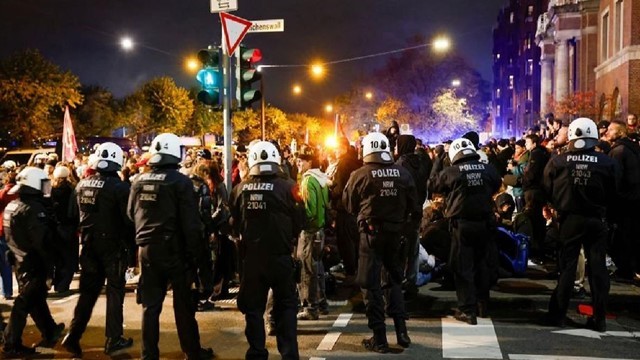
Youth-led protests are spreading across Europe as rising living costs, a worsening housing crisis, underfunded education systems and growing employment uncertainty fuel public anger. Demonstrations have erupted in France, Spain, Italy, Portugal, Germany and the United Kingdom, highlighting growing dissatisfaction with the continent's existing economic and political systems.
In France, students have been protesting for weeks against inadequate investment in education, teacher shortages and deteriorating classroom facilities.
In Spain, public outrage erupted following the eviction of an 87-year-old woman from the home where she had lived for 70 years. After an investment fund acquired ownership of the property, her rent was reportedly increased by 230 per cent. She died in hospital two weeks after being evicted, intensifying public anger over housing insecurity and the growing influence of investment funds in the property market.
In Italy, more than one million people reportedly took part in demonstrations across 50 cities last week. In Portugal, protesters have set up tents to demonstrate against soaring housing costs and the growing difficulty of securing affordable accommodation.
Meanwhile, protests have intensified in Germany against plans to expand compulsory military recruitment, with police using water cannons to disperse demonstrators. In the United Kingdom, thousands of students took to the streets on November 20 under the slogan, "Fight for Our Future, Not for Their Wars."
Analysts argue that the unrest goes beyond immediate economic grievances and reflects deeper structural problems within Europe's economic model.
The global economic situation has been further complicated by the COVID-19 pandemic, the war in Ukraine, US tariff policies and the conflict involving the United States and Israel over Iran. These developments have disrupted global supply chains and contributed to rising prices of essential goods.
However, analysts say the roots of the crisis lie deeper, pointing to decades of market-oriented economic policies, growing corporate monopolies and the unequal distribution of wealth.
Over the past four decades, excessive reliance on free-market principles has weakened governments' ability to regulate and manage their economies, while large corporations have gained increasing influence over both economic and political decision-making.
As a result, essential services and basic needs, including housing, education and healthcare, have increasingly been treated as profit-driven commodities rather than public necessities.
To address these challenges, analysts are calling for stronger economic planning, increased public investment and measures to break corporate monopolies. They also stress the need to move away from an economic model focused primarily on growth towards one that prioritises fairer wealth distribution and social welfare.
The growing wave of youth-led protests, they argue, signals an increasingly urgent demand for fundamental changes to Europe's established economic and political order.