৯ অগ্রহায়ণ ১৪৩৩



Palestinian-American Aber Kawas Makes History as New York’s First Palestinian and Muslim Woman State Senator
23 November 2026 18:11 PM
NEWS DESK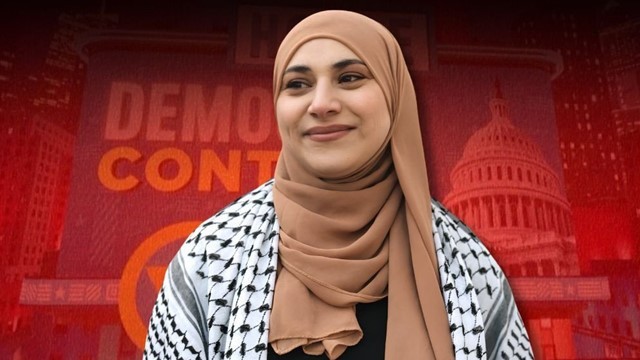
Aber Kawas has made history by becoming the first Palestinian and first Muslim woman elected to New York’s State Senate and Legislature. The Democratic Socialist candidate won the election in Queens’ 12th District with 74.5 per cent of the vote, campaigning on Palestinian freedom, affordable housing, healthcare and public transportation.
According to Al Jazeera, on election night on November 3, Kawas stood before hundreds of members of the Democratic Socialists of America (DSA) and declared, “You have just elected the first Palestinian to the New York State Senate.”
The gathering at Bohemian Beer Garden in Queens erupted into chants of “Aber! Aber!” Kawas appeared wearing a traditional Palestinian-patterned dress embroidered with gold and red thread.
At 34, Kawas will represent District 12 in northwest Queens, an area home to one of New York’s largest Arab communities. Nearly half of the district’s residents were born outside the United States.
Her victory is being viewed as part of a broader electoral breakthrough for pro-Palestinian and democratic socialist candidates. In the same election, Abdul El-Sayed won a Senate seat in Michigan, while Nithya Raman was elected mayor of Los Angeles, California.
Margaret DeReus, executive director of the Policy Project at the Institute for Middle East Understanding, said the election demonstrated that politics incorporating Palestinian human rights could also win electoral support.
She argued that holding Israel accountable for genocide and supporting Palestinian freedom have increasingly become important political benchmarks for millions of Americans.
Kawas’ political journey is deeply rooted in her family’s experience of displacement. Her father was displaced from Palestine in 1948, while her mother was forced to leave in 1967.
The two later met as neighbours in Jordan, where they fell in love and married. In the 1990s, they moved to the United States with their young son. They subsequently had three daughters, with Aber being the third of their four children.
When Kawas was in seventh grade, her father was detained by US Immigration and Customs Enforcement (ICE). According to her mother, Manal Abu Samaha, such incidents became increasingly common among Muslim families in New York after the September 11 attacks.
Following her father's detention, the family had to visit him in prison every weekend. Her mother was also left responsible for supporting the household.
“I had to work, whether I wanted to or not. I had to play both roles, father and mother, man and woman,” her mother recalled.
As a teenager, Kawas travelled to Albany, the state capital, to raise awareness about her family's experience and advocate for expanded scholarship opportunities for undocumented students, including those in similar circumstances to her older brother.
However, she received little response from lawmakers. Kawas says the experience became a turning point that pushed her towards activism and the fight for civil rights.
Kawas previously worked with New York's current mayor, Zohran Mamdani, when he was serving in the state legislature.
With support from Mamdani and the DSA, more than 1,000 volunteers joined her election campaign. They went door to door, made phone calls and mobilised voters around affordable housing, healthcare, public transportation and solidarity with Palestine.
One of Kawas' first priorities is to revive the “Not on Our Dime!” bill, which she co-developed with Mamdani in 2023.
The proposed legislation seeks to prevent New York-based nonprofit organisations from financing illegal Israeli settlements in the occupied Palestinian territories.
Although the bill was previously rejected, it has now been reintroduced in the state Senate.
However, DSA members remain a minority in the legislature, making political support from the state's leadership a major challenge to implementing significant reforms, Kawas believes.
Drawing inspiration from activists who helped end apartheid in South Africa, she emphasised the importance of grassroots mobilisation and accountability.
“If you have the power of the people behind you, that is what will stand with you. And those are the people you have to be accountable to,” she said.
Her victory marks a significant moment for Palestinian representation in American politics, while also highlighting the growing electoral influence of progressive movements advocating social and economic justice.