১০ কার্তিক ১৪৩৩



Opposition MP Criticizes Government for Moving Away from State Reform
01 April 2026 06:04 AM
NEWS DESK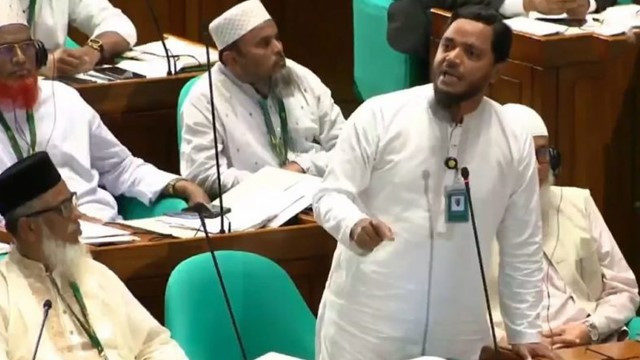
Opposition lawmaker Shafiqul Islam Masud has criticized the government for shifting its focus from structural state reform to development initiatives, warning that this risks undermining the goals of the July uprising.
Speaking in the Jatiya Sangsad on Tuesday during a discussion on the proposed “July National Charter (Constitution Reform) Implementation Order, 2025,” he said that people did not sacrifice their lives for welfare schemes or infrastructure projects, but for meaningful reform of the state.
At the start of his speech, he shared a story about a king and an incompetent minister who refused to act outside a predefined list of duties, even in an emergency. Drawing a comparison to parliament, he said lawmakers are focusing on punctuation and technical details while ignoring the main responsibility. Referring to a principle in Political Science, he said, “necessity knows no law,” but argued that this idea is now being restricted within constitutional provisions.
He alleged that the government has deviated from its core responsibilities. According to him, for the past 17 years, development narratives had overshadowed electoral concerns, and now the same pattern is re-emerging. He warned that the emphasis on development risks diverting attention from the July Charter.
Masud stressed that protesters who were injured or killed during the uprising were demanding systemic reform, not minor policy changes. He accused the government of pursuing amendments instead of genuine reform, saying that even the previous administration had offered amendments, which were rejected by the public.
He also expressed concern that despite a commitment to complete reforms within 30 working days, the government appears to be prioritizing projects such as canal excavation and social support programs.
Criticizing the government’s slogan “Together for Bangladesh,” he questioned recent administrative appointments in city corporations and district councils, arguing that the process lacked inclusivity and favored ruling party affiliates.
Responding to claims from treasury bench members that the oath based on the July Charter was illegal, he questioned who facilitated the process and said those responsible should be held accountable first.
His remarks reflect growing political tensions over the direction and implementation of constitutional reforms in Bangladesh.