[email protected]
মঙ্গলবার, ২৭ অক্টোবর ২০২৬
১১ কার্তিক ১৪৩৩
১১ কার্তিক ১৪৩৩

Monday, 26th October 2026


Dhakai Muslin Makes a Comeback, Eyes Global Luxury Market
26 October 2026 22:10 PM
NEWS DESK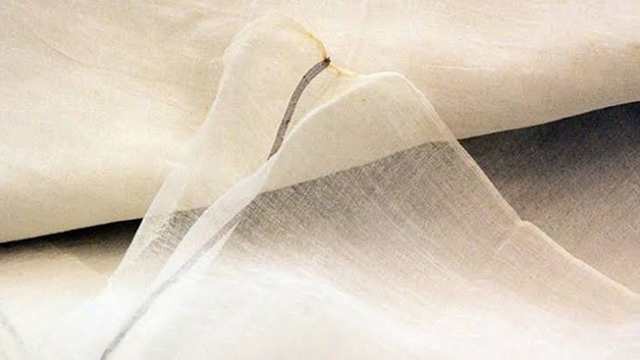
DNA research, revival of traditional cotton and the skills of rural women artisans are bringing Bangladesh’s legendary fabric back to life, with commercial expansion now in focus
Dhakai muslin, the legendary “woven air” once prized by emperors and aristocrats, is making a remarkable comeback in Bangladesh. After nearly two centuries of decline, scientific research, the recovery of traditional raw materials and the craftsmanship of rural women have helped revive the historic fabric, opening up new opportunities in the global luxury fashion market.
Renowned for its extraordinary transparency, softness and lightness, Dhakai muslin was once among the world’s most coveted textiles. Historical accounts trace its international appeal to ancient times, when fine cotton fabrics from Bengal were traded across distant markets, including those of the Roman, Greek and Arab worlds.
The fabric reached the height of its prestige during the Mughal era. Its finest variety, known as Malmal Khas, was reserved for the imperial elite. Different varieties of muslin carried poetic names reflecting their delicate appearance and exceptional quality, including Ab-e-Rawan, meaning flowing water, and Shabnam, meaning morning dew.
Stories of an entire sari fitting inside a matchbox or passing through a finger ring have long illustrated the extraordinary fineness associated with the historic textile.
Dhakai muslin’s decline accelerated under British colonial rule, as imported mill-made textiles gained ground and local weaving traditions came under increasing economic pressure. High tariffs, competition from cheaper manufactured fabrics and harsh treatment of local artisans contributed to the collapse of the industry.
The disappearance of Phuti Karpas, a cotton variety associated with the Meghna River basin and prized for producing exceptionally fine fibres, further undermined the craft. Over time, the traditional knowledge and specialised techniques required to produce the fabric faded, leaving Dhakai muslin largely a part of history.
Yet reviving the textile required much more than restoring old looms. Its production depended on a delicate relationship between raw materials, humidity, temperature and the expertise of skilled spinners.
The humid conditions around the Shitalakshya River basin were particularly suitable for spinning its fragile, ultra-fine yarn. Traditional production involved multiple painstaking stages, from harvesting and cleaning cotton to spinning, washing the yarn and weaving the fabric on specialised looms.
In 2014, the Bangladesh Handloom Board formed a research team to revive the country’s golden textile heritage.
Using historical records and illustrations from a 1788 book by Swedish scientist Carl Linnaeus, researchers collected 39 wild cotton varieties from areas including Kapasia and other parts of Gazipur, Baghabari and Rajshahi.
The team then used DNA sequencing and genome matching to compare the collected varieties with historical muslin yarn samples preserved at the Victoria and Albert Museum in London. The research led to the identification and cultivation of cotton believed to match the historic Phuti Karpas variety.
The revival also required the reconstruction of more than 50 specialised traditional tools used in the production process.
The results have been striking. While ordinary cotton yarn commonly falls within a count range of 40 to 80, revived Dhakai muslin yarn has reportedly reached 731 to 750 metric counts, reflecting its exceptional fineness.
In December 2020, Dhakai muslin received geographical indication (GI) recognition in Bangladesh, reinforcing its status as a textile closely associated with the country's heritage.
Beyond its scientific achievements, the revival project is creating opportunities for rural women whose specialised skills are essential to producing the fabric.
More than 300 women from disadvantaged communities have been trained in the demanding art of spinning ultra-fine muslin yarn. Their work requires exceptional concentration, patience and precision, as even a minor mistake can cause the delicate thread to break.
The project is helping preserve traditional craftsmanship while creating opportunities for women to earn incomes and participate in a specialised, high-value industry.
The revival has also established a production base at Dhakai Muslin House in Tarabo, Rupganj, in Narayanganj, where efforts are underway to expand production and transfer the technology to private-sector entrepreneurs.
Bangladesh is now seeking to transform Dhakai muslin from a research and heritage project into a commercially viable luxury textile industry.
Luxury brands in markets such as the United States, France and Japan have reportedly expressed interest in the revived fabric. According to information provided by the project, an international order for 500 yards of muslin has already been fulfilled.
The government is implementing a second-phase project worth Tk 18.5 crore to further develop the technology, improve raw materials and support commercial expansion.
At a recent seminar organised by the Ministry of Textiles and Jute, plans were announced to further improve the Phuti Karpas variety. Contract farming arrangements are also being pursued with rural farmers in Kapasia, Rajshahi and Cumilla to ensure a more reliable supply of cotton.
Expanding the availability of raw materials will be crucial to increasing production and reducing costs.
Despite its commercial potential, producing Dhakai muslin remains expensive and labour-intensive.
The initial production cost of a sari has been estimated at Tk 3.6 lakh. Authorities are working to bring the cost down to between Tk 1 lakh and Tk 3 lakh through wider cultivation, improved production methods and larger-scale manufacturing.
A single muslin sari can take several months to weave and may require the combined efforts of two to four weavers, in addition to the specialised work involved in spinning the yarn.
These constraints mean that Dhakai muslin is likely to enter the international market primarily as a premium luxury fashion product, targeting high-income consumers and specialist buyers.
However, technology transfer to private enterprises and expanded cotton cultivation could help improve production efficiency and make the fabric more accessible over time.
Bangladesh's ready-made garment industry has established the country as a major global apparel supplier. The revival of Dhakai muslin presents a different opportunity: building a niche in high-value luxury textiles rooted in traditional craftsmanship and scientific innovation.
Success will depend on maintaining quality, ensuring a sustainable supply of raw materials, supporting artisans and attracting private investment. Developing reliable international distribution channels and protecting the authenticity of the fabric will also be important.
For Bangladesh, the return of Dhakai muslin is more than the restoration of a lost textile. It represents an effort to turn centuries-old knowledge into a source of employment, cultural pride and export earnings.
Once celebrated as “woven air,” the fabric is now being prepared for a new chapter—one that could reconnect Bangladesh's historic weaving traditions with the demands of the modern luxury market.
Advertisement