[email protected]
মঙ্গলবার, ২৭ অক্টোবর ২০২৬
১১ কার্তিক ১৪৩৩
১১ কার্তিক ১৪৩৩

Monday, 26th October 2026


Lula Wins Fourth Term as Brazil’s President, Defeats Flávio Bolsonaro in Runoff
26 October 2026 23:10 PM
NEWS DESK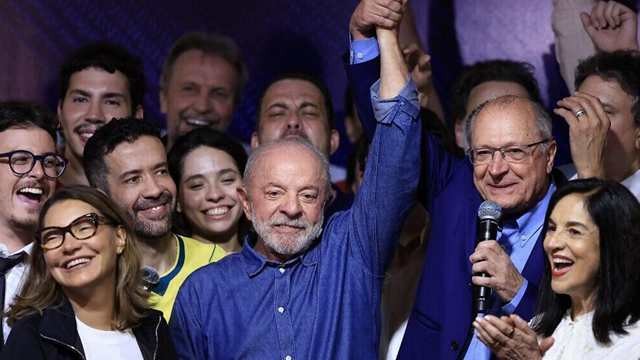
Brazilian President Luiz Inácio Lula da Silva has won a fourth presidential term, defeating right-wing Senator Flávio Bolsonaro in Sunday’s runoff election and staging a remarkable comeback after trailing his rival in the first round.
According to the final results released by Brazil’s Superior Electoral Court (TSE), Lula secured 64,256,232 votes, or 51.79% of the valid ballots. Bolsonaro received 59,826,041 votes, accounting for 48.21%.
Lula won by a margin of more than 4.4 million votes, marking a significant moment in Brazil’s political history. The result was announced on Sunday, October 25.
The outcome marked a dramatic reversal from the first round, held on October 4, when Bolsonaro finished ahead of Lula.
Bolsonaro received 47.03% of the valid votes in the first round, compared with 45.16% for Lula, leaving the incumbent with the challenge of overcoming a gap of nearly two percentage points.
Lula ultimately reversed the result in the decisive round, securing a fourth presidential mandate and extending his record of electoral victories.
More than 158 million Brazilians were eligible to vote in the runoff, with approximately 128.2 million casting ballots. The abstention rate stood at around 19.2%, down from 21.08% in the first round.
The election was also marked by an unusual decision to extend voting hours at polling stations that remained open following a last-minute judicial order. The measure required electoral authorities to make adjustments to vote-counting procedures.
The head of the TSE acknowledged that the extension created operational challenges but said the authorities were able to proceed with the counting process.
Born on October 27, 1945, in Garanhuns, in the northeastern state of Pernambuco, Lula rose from a working-class background to become one of Brazil’s most influential political figures.
Before entering politics, he worked as a metalworker and became prominent as a trade union leader. He also played a key role in founding the Workers’ Party (PT) in 1980.
Lula first won the presidency in 2002 and served two consecutive terms from 2003 to 2010. After returning to power following his victory in the 2022 election, he has now secured another term in the 2026 election.
Advertisement