৯ অগ্রহায়ণ ১৪৩৩



COP31 Ends in Deadlock as Countries Fail to Agree on Major Climate Deal
23 November 2026 19:11 PM
NEWS DESK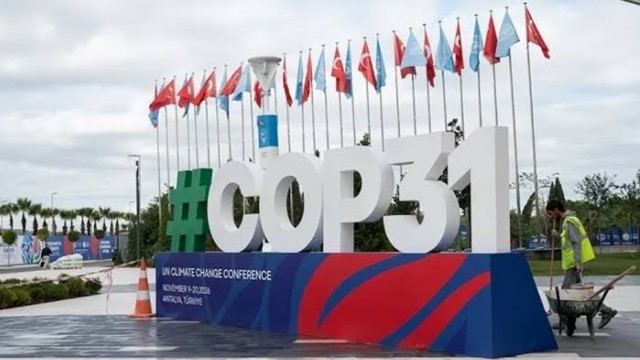
The world has failed to reach a major new agreement on tackling climate change, as disagreements over phasing out fossil fuels and financing climate adaptation for vulnerable nations stalled negotiations at the UN COP31 climate summit in Turkey.
Although the conference was scheduled to conclude on Friday, negotiations continued into the following day as delegates struggled to reach a consensus. The prolonged discussions made COP31 the longest climate conference in United Nations history.
According to a BBC report, the final draft agreement failed to satisfy the European Union (EU), Pacific island nations and several other countries because it made no direct reference to fossil fuels, the primary driver of global warming.
Meanwhile, many developing nations objected to the absence of specific financial commitments from wealthy countries to help poorer nations cope with the effects of climate change.
A similar deadlock was last witnessed at the 2009 UN climate summit in Copenhagen, where countries failed to finalise a key political agreement.
For UN Secretary-General António Guterres, COP31 was his final climate summit before leaving office. He expressed deep disappointment over the failure to secure an agreement.
Guterres also criticised powerful interest groups within the fossil fuel industry, accusing them of following the tactics of the tobacco industry.
He said these groups were distorting scientific evidence, delaying policymaking, obstructing climate action and making enormous profits while ordinary people were paying the price.
Australian Prime Minister Anthony Albanese, whose country co-hosted the summit, blamed the failure to reach an agreement on the challenging geopolitical environment.
After two weeks of negotiations, a new draft agreement was presented to delegates early in the morning in a final attempt to break the deadlock.
However, the document made no mention of the term “fossil fuels”. Instead, it referred indirectly to an agreement reached at COP28 in 2023, under which countries had agreed to transition away from fossil fuels in their energy systems.
EU representative and Irish minister Darragh O'Brien made clear that the bloc strongly opposed the draft.
He said the proposed decisions fell far short of the level of ambition required to address climate change.
“Accepting a climate agreement that makes no mention of fossil fuels would be unconscionable,” he said.
Countries including Panama and the Marshall Islands also criticised the draft, arguing that it did not go far enough to address the accelerating climate crisis.
The first draft, released last week, had mentioned the phrase “fossil fuels” six times. However, oil-producing countries refused to accept those references.
Saudi Arabian representative Mohammed Ayoub said Arab countries had participated in the negotiations sincerely, while arguing that their historical contribution to greenhouse gas emissions had been relatively small.
Russia warned against relying on “slogans” when discussing coal, oil and gas. It argued that moving away from fossil fuels too quickly could create energy shortages and cause hardship for ordinary people.
Another major obstacle was financing for developing countries facing the consequences of climate change.
Poorer nations need substantial financial support to adapt to extreme weather events, including severe heatwaves and devastating droughts.
At COP30 in Brazil last year, countries agreed to triple financing for climate adaptation. However, the latest draft agreement included no specific financial figure.
It also failed to clarify the baseline against which the promised increase in funding would be calculated. This has raised concerns that wealthy countries could have greater room to avoid fulfilling their commitments.
The year 2026 could become the hottest year on record, with extreme weather events and natural disasters affecting different parts of the world.
Recent examples include summer heatwaves and droughts in Europe, as well as flash floods in Nepal.
COP31 was the first annual UN climate summit at which the failure to achieve one of the world's most important climate goals was formally brought into the negotiations.
At the 2015 Paris climate conference, nearly 200 countries agreed to pursue efforts to limit global warming to 1.5 degrees Celsius above pre-industrial levels to avoid the most devastating consequences of climate change.
According to the United Nations, the Paris Agreement encouraged almost every country to take action on climate change. In the early 2010s, projections suggested that global temperatures could rise by 4 degrees Celsius or more by the end of this century.
However, the UN now estimates that if current government policies continue, global warming could be limited to approximately 2.8 degrees Celsius by 2100.
Despite this progress, climate action has not advanced quickly enough to meet the Paris Agreement's targets.
As a result, long-term global warming could exceed the 1.5-degree threshold within the next few years. Climate scientists and policymakers refer to this scenario as “overshoot”.
Many countries continue to pledge that global temperatures will eventually be brought back down to 1.5 degrees Celsius. Achieving that goal, however, would require a massive expansion of technologies capable of removing carbon dioxide from the atmosphere, which are not yet available at the necessary scale.
Despite the failure to finalise the main agreement, the summit achieved progress on several issues.
One significant development involved discussions on a “Just Transition Mechanism”, a framework designed to support workers and local communities as economies move towards cleaner energy sources.
More than 80 countries also supported Turkey's target of meeting 35 per cent of global energy consumption through electricity by 2035.
Nevertheless, the outcome of COP31 has raised fresh questions about the effectiveness of the UN climate negotiation process.
Under the current system, major decisions require consensus among all participating countries. Growing geopolitical divisions have therefore raised doubts about whether such broad agreement can be achieved in the future.
UN climate chief Simon Stiell said he would seek advice on possible reforms to the negotiation process.
The next UN climate conference, COP32, is scheduled to take place in Ethiopia in November 2027.