৯ অগ্রহায়ণ ১৪৩৩



Allama Muhammad Iqbal: The Poet of Self-Discovery and Spiritual Awakening
23 November 2026 19:11 PM
NEWS DESK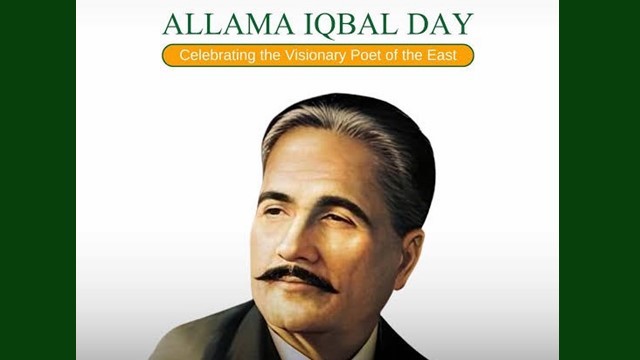
The journey between birth and death is, in many ways, a continuous quest for self-discovery. A person's greatness is not determined by outward identity or material achievements, but by the depth of their thoughts, intellectual strength and vision.
Throughout history, poets and philosophers have sought to awaken this inner potential and consciousness. One such remarkable voice was Allama Muhammad Iqbal. His poetry does more than flow through rhythm and rhyme; it ignites an enduring flame of self-awareness and spiritual awakening in the human heart.
Muhammad Iqbal was born on November 9, 1877, in Sialkot, Punjab. From an early age, he demonstrated a deep interest in knowledge, philosophy and literature. His intellectual journey across Eastern and Western traditions helped him develop a distinctive worldview. Although he was deeply influenced by European philosophy and modern intellectual thought, Islamic spirituality remained firmly rooted in his heart. As a result, his literary works became a unique synthesis of Eastern philosophical wisdom and Islamic spiritual consciousness.
Khudi: The Philosophy of Selfhood
At the heart of Iqbal's philosophy lies the concept of Khudi, which can be translated as selfhood or self-identity. However, Khudi does not represent arrogance, vanity or excessive individualism. Rather, it refers to the awakening of the inner strength, confidence and intellectual potential that lie dormant within every human being.
The essence of Khudi is to recognise one's true self and establish one's potential through meaningful action. Iqbal believed that people who fail to recognise their inner strength repeatedly become dependent on the thoughts and decisions of others. Through his philosophy, he encouraged humanity to emerge from the darkness of self-forgetfulness and discover its true identity.
Poetry as an Expression of Philosophy
Iqbal's literary world is a remarkable artistic expression of this philosophy. Among his most celebrated works are Asrar-e-Khudi, Rumuz-e-Bekhudi, Bang-e-Dra, Bal-e-Jibril and Zarb-e-Kalim.
In particular, Asrar-e-Khudi explores the development of selfhood and the hidden strength of human beings with remarkable philosophical depth.
His famous poems Shikwa and Jawab-e-Shikwa reflect themes of self-criticism, introspection and the aspiration for spiritual and intellectual revival within Muslim society.
His poetry carries different emotional dimensions: sometimes it burns with the fire of rebellion, sometimes it expresses the tenderness of spirituality, and at other times it speaks with the powerful voice of a nation calling its people to awaken.
A Message of Inspiration for the Youth
Iqbal devoted much of his poetry to awakening the younger generation and inspiring them to dream of building a new world.
One of his most celebrated couplets reads:
Khudi ko kar buland itna ke har taqdeer se pehle,
Khuda bande se khud poochhe, bata teri raza kya hai.
In essence, he urges people to elevate their selfhood to such heights that, even before destiny is determined, God asks the individual what they truly desire.
These lines express an extraordinary philosophy of self-confidence, dignity and inner strength.
Iqbal did not want young people to remain mere dreamers. He envisioned a generation that would be courageous, creative, committed to knowledge and driven by action. In his view, youth is not simply a matter of age; it is an unstoppable mental force capable of creating new possibilities and transforming society.
A Legacy That Transcends Time
The great poet and philosopher passed away on April 21, 1938. Yet the philosophy of self-discovery and awakening that he left behind continues to inspire people to reflect on their identity and purpose.
His message remains relevant in a world where individuals often struggle with self-doubt, social pressures and uncertainty about their future.
As long as the human desire for self-realisation survives, Iqbal's poetry will continue to shine like a lighthouse, guiding people towards inner strength, intellectual freedom and spiritual enlightenment.
For Iqbal, the greatest journey was not the journey to conquer the world, but the journey to discover and strengthen the self.