১৪ আশ্বিন ১৪৩৩



Major Eruption at Hawaii’s Kilauea Volcano Sends Lava Fountains Soaring
09 December 2025 11:12 AM
NEWS DESK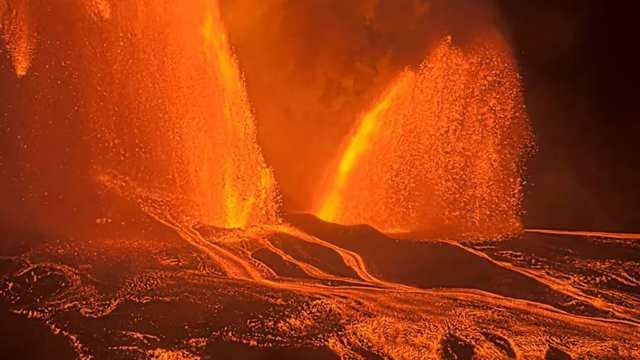
One of the world’s most active volcanoes, Kilauea in the U.S. state of Hawaii, has erupted dramatically, ejecting massive quantities of lava from its vents and creating powerful fountain-like displays. The information was reported by Japan’s public broadcaster NHK.
According to the U.S. Geological Survey (USGS), the eruption began on Saturday at around 8:45 a.m. local time, when two new vents opened on the volcano’s surface. Prior to this, lava had already begun flowing from a separate fissure. The agency said it is extremely rare for Kilauea to have three active lava fountains simultaneously. Some of the fountains shot lava as high as 370 meters (1,214 feet) into the air.
USGS stated that it is not yet clear whether the eruption has caused any damage. Residents across a wide area have been urged to avoid exposure to sulfur dioxide and other volcanic gases, which can pose significant respiratory risks.
Kilauea, located on the southeastern flank of the Big Island’s larger Mauna Loa volcano, is renowned for its frequent eruptions. In Hawaiian, Kilauea means “to spew” or “to spread,” a reference to its persistent lava outflows. Nearly 90% of its surface has been covered by lava flows produced in just the last 1,100 years, highlighting its extraordinary level of activity.
The volcano’s most prolonged modern eruptive phase lasted from January 1983 to 2018, one of the longest documented eruptions on Earth. Although Kilauea’s eruptions are typically less explosive, it experienced a devastating steam explosion in 1790, which killed more than 400 people, making it one of the deadliest volcanic events in U.S. history.
In Hawaiian tradition, Kilauea is considered the sacred home of Pelehonuamea, the goddess of fire, believed to reside in the Halemaʻumaʻu crater within the volcano’s summit caldera.
Recent activity at Kilauea has been episodic, with eruptions occurring intermittently and sometimes lasting only a few hours. The current eruption is producing significant sulfur dioxide emissions, prompting health advisories. Portions of Hawaii Volcanoes National Park may be temporarily closed due to volcanic hazards and infrastructure repairs.