[email protected]
শনিবার, ২১ নভেম্বর ২০২৬
৬ অগ্রহায়ণ ১৪৩৩
৬ অগ্রহায়ণ ১৪৩৩

Friday, 20th November 2026


US Approved Export of Nearly 880,000 AI Chips to Chinese Firms, Including Sanctioned Entities
20 November 2026 23:11 PM
NEWS DESK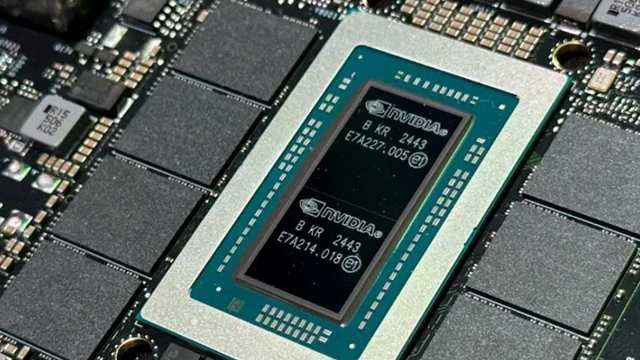
The US government authorised the sale of advanced artificial intelligence (AI) chips manufactured by Nvidia and AMD to several Chinese companies, including some entities considered to have links to China's military and subject to US sanctions, according to confidential documents released by the House Foreign Affairs Committee.
The documents, published on Thursday, revealed that Nvidia and AMD had sought US approval to export more than 3.4 million AI chips to various Chinese entities over a six-month period between December 2025 and May 2026.
Of the total applications, the US Department of Commerce's Bureau of Industry and Security (BIS) approved the export, re-export or transfer of 879,868 chips.
Among the approved shipments were 75,000 chips for Alibaba, 150,000 for Tencent, 43,000 for Baidu and 4,000 for BYD. However, it remains unclear whether all the approved chips were actually delivered to China.
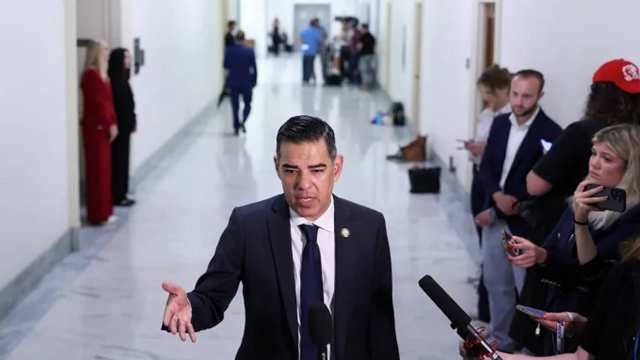
Republican Representative Brian Mast, chairman of the House Foreign Affairs Committee, said Nvidia's licence applications included two Chinese entities that US authorities had identified as shell companies linked to chip smuggling.
Despite these concerns, the BIS approved chip sales to the two companies, he said.
Gregory Meeks, the committee's senior Democratic member, warned that the decisions could jeopardise US national security and the country's technological advantage. He said the public had a right to know how such decisions were made.
Concerns in Washington have also intensified following reports of an alleged romantic relationship between former Nvidia chief executive Jensen Huang and a woman identified as a Chinese spy. The woman has reportedly been suspected of playing a role in smuggling Nvidia chips into China.
Against this backdrop, Commerce Secretary Howard Lutnick has agreed to testify before the Senate Banking Committee. Huang is also expected to face questioning in a closed-door congressional session next month.
Meanwhile, California's attorney general has subpoenaed Nvidia, seeking information about allegations involving the transfer of chips or confidential information to China and possible misleading statements to investors.
Nvidia said it had supplied limited quantities of chips with BIS approval. However, the company has already stopped shipping its H200 chips to China.
AMD also said it complies with US export control laws.
AMD shares fell 7.7 per cent on Thursday following the publication of two reports associated with short-selling firm Hunterbrook, which raised concerns about the company's exposure to China-related business and financing risks.
CNN Investigation Finds Sanctioned Chinese Universities Bought Nvidia Chips
In a separate investigation, CNN found that at least six Chinese universities on the US government's blacklist had purchased Nvidia-controlled chips in recent years.
After reviewing nearly 300 procurement records, CNN reported that universities accounted for around 80 per cent of approximately 90 purchasing entities, while research institutions represented another 14 per cent.
The purchased chips included Nvidia's A100, A800, H100, H200 and H800 models.
One notable buyer was the Harbin Institute of Technology, a member of China's so-called 'Seven Sons of National Defence' group, a collection of universities known for their close ties to the Chinese military. The institution reportedly purchased an A100 chip for approximately $7,000 last September.
During the same period, Northwestern Polytechnical University purchased four H200 chips for approximately $240,000.
Another member of the group, Beihang University, purchased more than a dozen A100 and A800 chips between 2022 and 2024. The university has been on the US blacklist since 2001.
At least three other sanctioned universities have also disclosed chip purchases.
Experts believe some of these transactions may have involved chips stockpiled in China before export restrictions took effect or purchases made through intermediary companies.
Last year, following lobbying by Nvidia, the US government introduced a special licensing arrangement allowing certain H200 chip sales to China. However, exports of A100 chips remain prohibited.
Records indicate that some of the chips reached Chinese universities through unidentified sellers in China. CNN, however, could not independently verify whether the purchased chips were actually delivered.
Kate Koren, a former US export control official, said chip smuggling operations often involve shell companies, shipments routed through multiple countries, currency exchanges and forged documentation.
Such methods make it extremely difficult to stop the resale of chips once they have reached China, she said.
Meanwhile, Chinese Foreign Ministry spokesperson Mao Ning said Beijing opposed discriminatory restrictions imposed on Chinese companies under the pretext of national security.
The disclosures have renewed scrutiny of Washington's export control policies and raised questions about how effectively the United States can prevent advanced semiconductor technology from reaching entities considered potential national security threats.
Advertisement