১ কার্তিক ১৪৩৩



Japan Reaffirms Commitment to Rohingya Response with ¥500 Million Support to UNFPA
04 March 2026 07:03 AM
NEWS DESK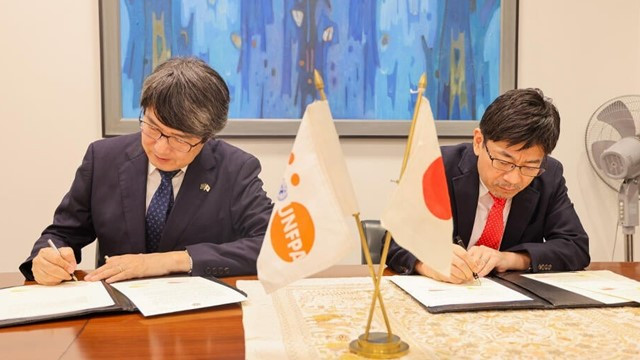
United Nations Population Fund (UNFPA) has received ¥500 million (approximately $3.2 million) in funding from the Government of Japan, reaffirming Japan’s strong commitment to addressing the Rohingya humanitarian crisis in Bangladesh.
The new two-year project aims to safeguard the health and rights of women and adolescents in Cox’s Bazar and on Bhasan Char. With this funding, UNFPA will continue delivering life-saving sexual and reproductive health services and gender-based violence (GBV) prevention support for Rohingya refugees and vulnerable host communities.
The Rohingya crisis remains one of the world’s most protracted humanitarian emergencies, with more than one million Rohingya refugees living in Cox’s Bazar, alongside vulnerable local communities. Since 2024, an additional 150,000 Rohingya have reportedly arrived, more than half of whom are women and girls. Despite rising needs, severe funding shortfalls have placed the 2025–2026 Joint Response Plan under significant financial strain.
Due to acute funding gaps, six government-run health facilities serving the Rohingya population have recently been closed. As a result, the number of midwives has declined by 16 percent, while staffing for GBV response has dropped by more than 50 percent. In this context, Japan’s timely contribution is expected to serve as a critical lifeline.
Through this support, UNFPA will directly assist approximately 180,000 people, maintain 24-hour emergency obstetric care, and continue providing GBV response and mental health services.
Katherine Brine Kamkong, UNFPA Representative in Bangladesh, described Japan’s support as vital during a critical period. “Japan’s assistance comes at a crucial time for women and girls. It will help UNFPA sustain life-saving services that protect the health and dignity of women and adolescents, who would otherwise face severe barriers in accessing essential care. We are deeply grateful for Japan’s principled and consistent support,” she said.
The new phase builds on visible successes achieved under previous Japanese-funded initiatives. In Cox’s Bazar and Bhasan Char, more than 38,000 women and girls have already received services through UNFPA-supported centers. The partnership has expanded specialized services for GBV survivors through women-friendly spaces and women-led community centers, reaching thousands of vulnerable women and adolescents.
With Japan’s assistance, a 20-bed hospital has been established on Bhasan Char, significantly reducing referrals to other facilities for high-risk cases. Since its launch, the facility has contributed to maintaining a notably low maternal mortality rate. Additionally, youth empowerment programs have strengthened life skills and awareness of gender equality among both boys and girls, playing an important role in long-term GBV prevention.
Since 2017, Japan has contributed more than $250 million to Rohingya humanitarian operations in Bangladesh through UN agencies and NGOs, positioning itself as one of the most reliable and steadfast partners in meeting the needs of displaced Rohingya and host communities.
Japan’s Ambassador to Bangladesh, Saida Shinichi, expressed hope that the government’s continued support would improve the living conditions of both Rohingya refugees and local communities.
“Japan remains firmly committed to protecting the most vulnerable people affected by displacement, especially women and adolescents,” the ambassador said. “Despite growing humanitarian and financial challenges, our partnership with UNFPA aims to ensure the uninterrupted delivery of essential health and protection services.”
The partnership between UNFPA and the Government of Japan seeks to inspire continued international solidarity and sustained investment in protecting the health, dignity, and safety of Rohingya women and girls affected by the crisis.