৮ কার্তিক ১৪৩৩



Bangladesh President Mohammed Shahabuddin Resigns Due to Ill Health; Speaker Assumes Role of Acting President
25 July 2026 04:07 AM
NEWS DESK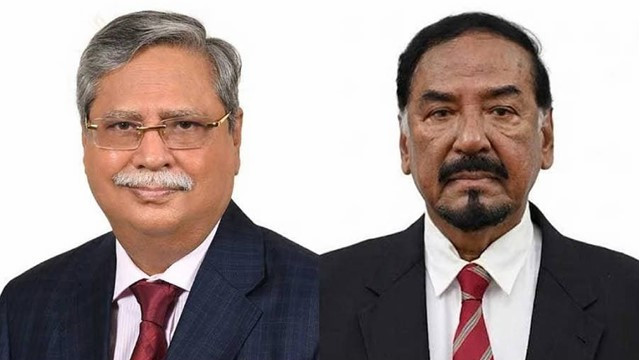
Bangladesh's 22nd President, Mohammed Shahabuddin, has resigned from office, citing serious health complications. His resignation letter was formally accepted by Speaker of the Jatiya Sangsad, Hafiz Uddin Ahmed, who has assumed the responsibilities of Acting President in accordance with Article 54 of the Constitution.
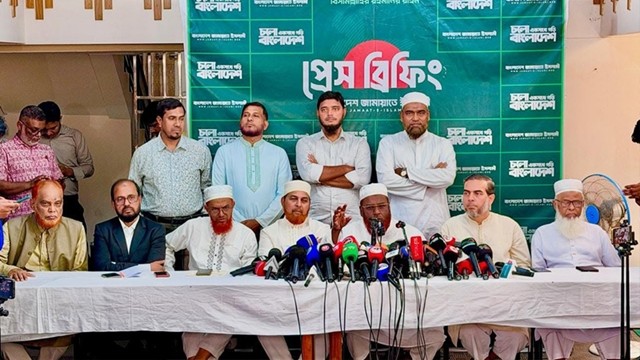
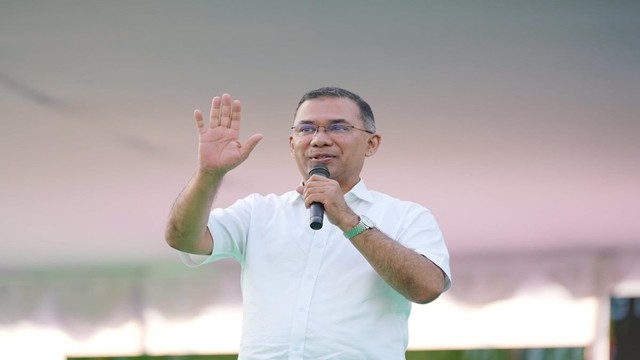
The announcement was made by Speaker Hafiz Uddin Ahmed during an emergency press briefing at the National Parliament's oath-taking chamber at approximately 5:30 p.m. Bangladesh time on Friday.
Addressing reporters, the Speaker said that President Shahabuddin submitted his signed resignation letter to him at 5:01 p.m. under Article 50(3) of the Constitution. Following the vacancy in the office of the President, he assumed the duties of Acting President as mandated by Article 54.
"I have accepted the resignation letter and instructed that it be preserved in the official records of the Parliament Secretariat while the necessary administrative procedures are completed," Hafiz Uddin Ahmed said.
He also noted that he had already taken the oath to serve as Acting President when he was sworn in as Speaker, adding that the Deputy Speaker similarly takes the relevant constitutional oath upon assuming office.
According to the Speaker, President Shahabuddin cited severe health issues as the reason for his resignation. The former President stated that he has been suffering from heart disease, hypertension, diabetes and kidney-related complications.
In his resignation letter, Shahabuddin wrote that he was elected as the 22nd President of the People's Republic of Bangladesh and took office on April 24, 2023, carrying out his constitutional responsibilities with integrity and loyalty.
The letter also referred to the political developments following the student-led mass uprising on August 5, 2024, which resulted in the fall of the then government and created what he described as a constitutional crisis.
Shahabuddin said that, in an effort to address the crisis, he sought the opinion of the Appellate Division of the Supreme Court under Article 106 of the Constitution. Based on the court's advice, he formed an interim government, which subsequently organized parliamentary elections in consultation with political parties. He added that the current government was formed following those elections and that both the ruling party and the opposition are now carrying out their parliamentary responsibilities through democratic processes.
The outgoing President also stated that his constructive role had helped prevent any constitutional breakdown during the transition.
Explaining his decision to step down, Shahabuddin said his medical condition has significantly deteriorated. In addition to heart disease, high blood pressure, diabetes and kidney complications, he has previously undergone coronary bypass surgery. He further revealed that he has recently been diagnosed with autonomic neuropathy, a condition that causes occasional brief episodes of unconsciousness.
"Due to my physical and mental incapacity caused by these illnesses, I am no longer able to discharge the responsibilities of the office of the President. I require long-term medical treatment. Therefore, under Article 50(3) of the Constitution, I hereby resign from the office of the President," the letter stated.
Under Bangladesh's Constitution, the Speaker of Parliament serves as Acting President until a new President is elected. A new presidential election must be held by Parliament within 90 days of the office becoming vacant.