৭ কার্তিক ১৪৩৩



Pentagon Plans Deep-Cover Spy Programme to Wage Economic War Against Rivals: Report
22 October 2026 20:10 PM
NEWS DESK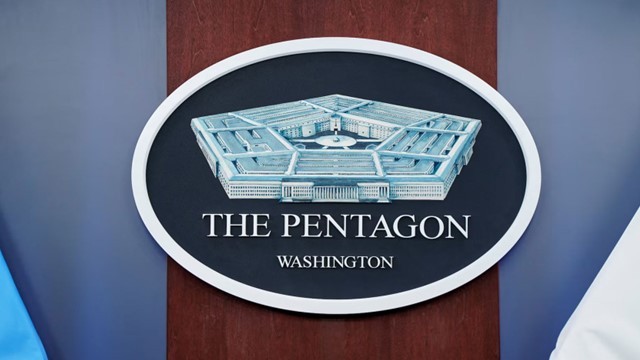
The US Department of Defense is developing an ambitious deep-cover espionage programme aimed at gathering intelligence to support economic warfare against China and other American rivals, according to a report by The Washington Post citing about half a dozen officials familiar with the plans.
Under the proposed initiative, intelligence officers would pose as private-sector businesspeople or corporate executives while concealing their connections to the US government. The programme would operate as a covert arm of the Pentagon's broader economic warfare strategy.
The initiative, known as the Non-Official Cover Officers (NOCs) programme, remains in the planning stages, and field operations have not yet begun. Its precise organisational location within the Pentagon has not been determined. It could become a new standalone deep-cover unit or expand the department's existing clandestine human intelligence (HUMINT) capabilities.
The programme is being overseen by Tom Raguson, a former CIA officer with 39 years of service who now serves as a senior adviser to Deputy Defense Secretary Steve Feinberg.
Raguson retired from the CIA in 2021. In 2017, he was promoted to deputy director of operations, one of the agency's senior intelligence leadership positions. He later led CIA activities in response to Russian interference in the 2016 US presidential election.
After leaving the CIA, Raguson joined Cerberus Capital Management, a private equity firm co-founded by Feinberg. He moved to the Pentagon alongside Feinberg in 2025.
The proposed initiative brings together specialists from the Pentagon's military branches, defense intelligence and security offices, as well as retired CIA officers.
However, officials have yet to clarify exactly where the unit will be housed or how it will coordinate with existing intelligence agencies.
The initiative reflects the Trump administration's growing emphasis on economic warfare as an instrument of national power and foreign policy.
The administration has used tariffs, export controls and investment in strategically important US assets and technologies to counter competitors. It has also sought to coordinate private-sector capital with efforts to protect critical components of the American defense industrial base.
Economic intelligence has become another priority.
In a speech in September, CIA Deputy Director Michael Ellis said the United States was intensifying intelligence collection against China, particularly targeting companies operating in fields such as artificial intelligence, biotechnology and advanced semiconductors.
Although US intelligence agencies have monitored major Chinese companies for years, a senior intelligence official's public emphasis on these commercial targets represents a notable development.
David S. Cohen, a former CIA deputy director, has argued that the United States should reconsider longstanding restrictions on sharing sensitive economic intelligence with domestic businesses.
In an article published in Foreign Affairs, Cohen argued that intelligence gathered secretly should help American companies working with advanced technologies maintain a competitive advantage.
“We have been collecting economically sensitive information for years. We should not be conflicted about whether to give companies a commercial advantage,” Cohen said in an interview.
He added that safeguards would be necessary to prevent favouritism and corruption when deciding which companies could benefit from such information.
Cohen said he was unaware of the Pentagon's proposed NOC initiative.
The debate raises questions about how intelligence collected for national security purposes might be used to support private commercial interests, and how the government could prevent conflicts of interest.
Some parts of the Pentagon's economic warfare strategy have already been made public.
Earlier this year, Feinberg announced the creation of an Economic Defense Unit (EDU). In a memorandum to senior Pentagon officials, he described its mission as using economic tools to deter, disrupt and defeat adversaries. DefenseScoop was the first outlet to report on the memorandum.
In February, Feinberg appointed George Kollitides, a former Cerberus colleague and senior Pentagon adviser, to lead the unit.
The EDU has since announced government investments worth hundreds of millions of dollars in domestic and international mining and refining operations.
One deal involved a $750 million Pentagon investment to secure a major rare-earth deposit in Brazil, highlighting Washington's efforts to protect access to strategically important minerals used in advanced technology and defense manufacturing.
Alongside these public investment initiatives, Raguson has been overseeing the development of the proposed covert intelligence programme.
People familiar with the planning said the EDU had once been considered a possible home for the secret unit. That option was reportedly dropped amid concerns that the unit's investments and public profile would attract excessive scrutiny from the media and Congress.
Those concerns could intensify if Democrats regain control of Congress in the November elections, according to the report.
The CIA has a long and uneven history of attempting to expand its non-official-cover operations.
Previous initiatives have struggled with inadequate training, weak supervision and difficulties managing inexperienced officers operating under commercial identities.
In the 2000s, with support from congressional intelligence committees, the CIA launched an initiative known as the Global Deployment Initiative. An ambitious effort to rapidly expand the number of NOC officers ultimately ran into serious problems, partly because of insufficient oversight.
Many junior officers were eventually forced to return to the CIA's headquarters or leave the agency.
The Pentagon has also encountered difficulties operating officers under deep commercial cover.
The Defense Intelligence Agency (DIA) and the Joint Special Operations Command (JSOC) have both attempted operations involving personnel posing as private-sector employees, with mixed results.
In one post-September 11 operation in a remote part of Africa, several JSOC NOC officers posed as employees of a mining company. They were reportedly exposed when they encountered geologists and engineers and could not demonstrate adequate knowledge of mining.
Although the officers were eventually rescued, the incident prompted JSOC to send commercial-cover personnel for specialised training and short courses relevant to their assumed professions.
Former intelligence officials say deep-cover operations are particularly difficult for the Pentagon because military personnel leave extensive records that can be hard to conceal.
Modern biometric identification systems and digital records also make it increasingly difficult to operate under assumed identities.
In addition, military officers may display distinctive mannerisms, physical habits and patterns of behaviour that can reveal their backgrounds even when their official identities are hidden.
These challenges mean that creating a convincing commercial identity requires more than false documents. Officers must also acquire the professional knowledge and everyday behaviours expected of the people they claim to be.
The Pentagon's proposed programme would therefore face substantial operational and counterintelligence challenges before it could become fully functional.
The initiative also highlights shifting power dynamics within the Trump administration as the Pentagon seeks a record $1.5 trillion budget.
CIA Director John Ratcliffe has pledged to take a more aggressive approach to developing foreign intelligence sources and stealing information from adversaries.
However, some former intelligence officials argue that the Pentagon may be more willing than the CIA to accept the risks associated with covert operations.
A former senior CIA official, commenting on the Pentagon's ambitions, said the department had “a lot of money, legal authority and capability,” adding: “God bless them.”
The proposed deep-cover programme remains at an early stage. Its eventual structure, operational scope and relationship with existing intelligence agencies have yet to be settled.
If implemented, it could mark a significant expansion of the Pentagon's role in intelligence gathering, linking covert human intelligence operations more directly to the United States' efforts to compete with China and other strategic rivals in technology, industry and global markets.