২৪ কার্তিক ১৪৩৩



Bangladesh Must Ensure Transparency to Maximise Benefits of US Trade Deal, Experts Say
08 November 2026 20:11 PM
NEWS DESK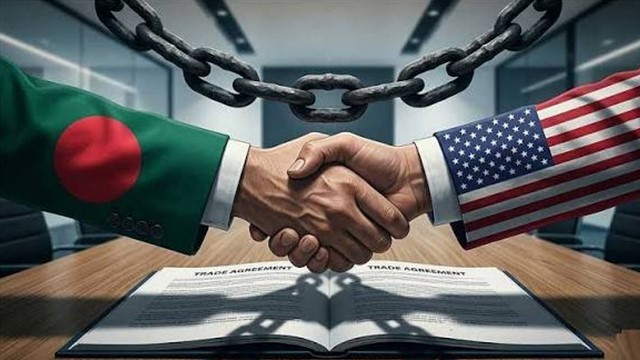
The benefits Bangladesh can derive from its reciprocal trade agreement (ART) with the United States will largely depend on how effectively the country implements and utilises the deal, business leaders and economists have said.
They stressed the need for full transparency and open discussions about the agreement's terms, potential opportunities and associated risks.
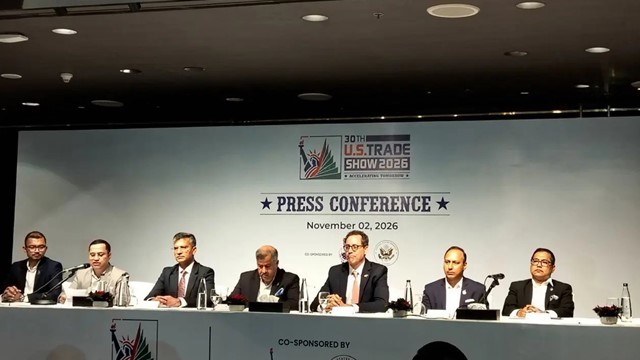
The views emerged at a seminar held on the concluding day of the three-day US Trade Show at a hotel in Dhaka on Saturday. Titled “New Opportunities and Challenges in Bangladesh-US Trade”, the seminar was jointly organised by the American Chamber of Commerce in Bangladesh (AmCham) and the US Embassy in Dhaka.
A keynote paper was presented by Ala Uddin Ahmed, vice-president of AmCham and chief executive officer of MetLife Bangladesh.
He said the ART required compliance with three key areas: labour standards, digital regulations and intellectual property rights.
“When a factory ensures compliance with the requirements of the ART, American and other investors will gain greater confidence in investing in Bangladesh,” he said.
He also emphasised the need to maintain regular communication and cooperation between businesses in the two countries amid the changing dynamics of Bangladesh-US trade relations.
The seminar was moderated by Mahbub-ur Rahman, CEO of HSBC Bangladesh.
Other speakers included Syed Nasim Manzur, managing director of Apex Footwear; Moinuddin Hasan Rashid, chairman and managing director of United Group; Shams Mahmud, managing director of Shasha Denims; and Ali Arsalan, country representative of Cotton USA.
AmCham President Syed Mohammad Kamal delivered the welcome address.
Syed Nasim Manzur said Bangladesh would not be able to fully benefit from the agreement without understanding both its advantages and disadvantages.
He called for detailed discussions rather than keeping the agreement's provisions confidential.
According to him, the deal could become a benchmark for other countries. While it could contribute to economic growth and strengthen Bangladesh's competitive position, compliance requirements and mandatory product-origin tracking could also increase business costs.
He stressed that Bangladesh must prepare accordingly to address these challenges.
Dr Fahmida Khatun, distinguished fellow at the private research organisation Centre for Policy Dialogue (CPD), said improving skills and capabilities would be essential to taking full advantage of the trade agreement.
“Bangladesh needs to increase productivity as part of its preparations for graduation from the Least Developed Country (LDC) category. At the same time, it must improve its capabilities to benefit from this trade policy. Tariff agreements and LDC graduation are complementary to each other,” she said.
She also stressed that ensuring compliance would be essential.
Shams Mahmud said that although nearly a year had passed since the trade agreement was signed, there had not been sufficient discussions with government agencies on how its benefits would reach exporters.
However, he noted that the agreement had already attracted new American buyers to Bangladesh and created fresh opportunities to export garments made with US cotton through third countries.
Ali Arsalan, the Cotton USA representative, said the US “Great American Cotton Plan” provides an opportunity for full tariff exemption on garments manufactured using American cotton.
However, he noted that the implementation process remained unclear.
The seminar also examined new opportunities and challenges under the reciprocal trade framework, its potential impact on businesses and industries, and ways to strengthen trade and investment ties between Bangladesh and the United States.
Discussions particularly focused on international market access, export competitiveness, supply chain development and the broader implications of the agreement.
Participants also highlighted the importance of engagement with policymakers, private-sector cooperation and a stable trade environment to encourage long-term business growth and investment in both countries.