[email protected] বৃহঃস্পতিবার, ২৮ মে ২০২৬
১৩ জ্যৈষ্ঠ ১৪৩৩

Growing Restrictions on Eid Prayers Deepen Anxiety Among Muslims in India

27 May 2026 23:05 PM

NEWS DESK

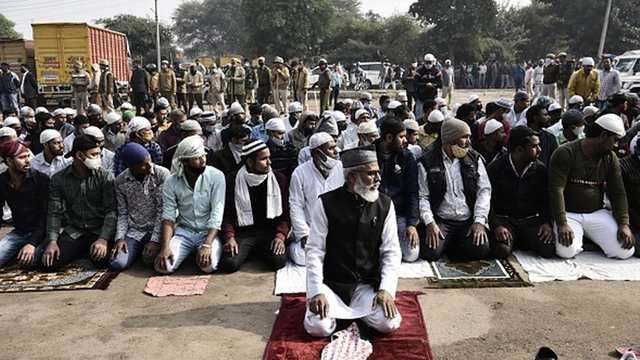
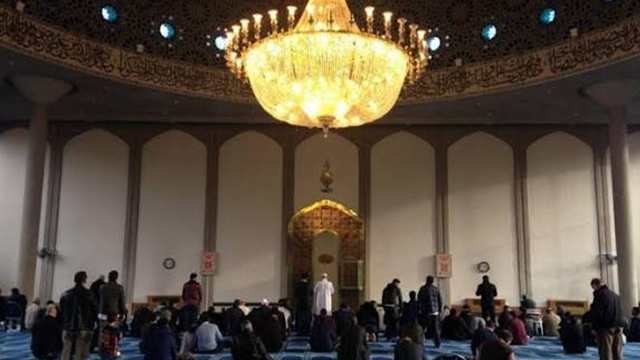
File Photo

In the small village mosque of Maliyana in Uttar Pradesh’s Meerut district, preparations are underway for Eid-ul-Azha prayers. But instead of the usual festive spirit, the atmosphere is marked by anxiety and caution.

The discussion is not centered on sacrificial animals or charity. Instead, mosque committee members are focused on roads, barricades, police permissions, and where and how Eid prayers can be offered without attracting trouble.

At the mosque, around 80 kilometers from Delhi, organizers are repeatedly advising worshippers not to gather outside the gates, to wait for later congregational prayers if crowds become too large, and to avoid arguments or reactions to provocation.

Some attendees scroll through police advisories on their mobile phones warning against offering prayers in public spaces. Others exchange uneasy glances.

A Village Marked by Painful History

Maliyana holds painful memories for India’s Muslim community. In May 1987, 72 Muslims were killed there by Hindu mobs and members of the Provincial Armed Constabulary. After a 36-year legal process, all accused were acquitted in 2023 due to lack of evidence.

But this year’s concerns are rooted less in that history and more in the growing restrictions surrounding Eid prayers in recent years.

Since the Hindu nationalist Narendra Modi and his Bharatiya Janata Party (BJP) came to power in 2014, right-wing Hindu groups have increasingly opposed Muslims offering prayers in open spaces. They argue that prayers on roads or public grounds create traffic congestion and security concerns.

Authorities in several areas have blocked prayers in parks, roads, and vacant land. In some cases, permissions granted to Muslim groups were later revoked after videos of public prayers went viral on social media.

Recently, the hardline Hindu nationalist organization Vishwa Hindu Parishad (VHP), which is closely aligned with the BJP, demanded a nationwide ban on prayers on public roads, alleging that such gatherings are displays of “Muslim power.”

Muslims Say Space Constraints Leave Few Alternatives

Muslim leaders reject those claims, saying the reality is far more practical. In densely populated areas, many mosques and Eidgah grounds cannot accommodate all worshippers at once during Eid or Friday prayers. As a result, temporary use of nearby streets often becomes unavoidable.

Uttar Pradesh, India’s most populous state, is home to nearly 39 million Muslims. Since 2017, the state has been governed by Chief Minister Yogi Adityanath, known for his hardline rhetoric toward Muslims.

Under his administration, restrictions on prayers in open spaces have intensified.

On May 18, Adityanath suggested that Muslims should offer Eid prayers “in shifts.” In a post on X, he wrote: “If accepted peacefully, good; otherwise other methods will be adopted.”

That phrase — “other methods” — has fueled uncertainty and fear among many Muslims.

A resident of Meerut said that last year, several people faced legal cases for allegedly praying in open areas. In some places, homes were reportedly demolished, while others claimed their passport or driving license verification processes were delayed.

Fear and Self-Censorship Ahead of Eid

In Aligarh district, shopkeeper Arif Malik recalled that during the previous Eid, worshippers prayed for only a few minutes in an open field before police dispersed them.

“This year families are telling people to avoid crowds altogether,” he said.

Across Uttar Pradesh, mosque committees are redesigning Eid arrangements. Some are reducing the size of congregations, while others are asking worshippers to arrive in small groups and leave immediately after prayers. Volunteers have been instructed to ensure no one steps onto nearby roads, even briefly.

Mohammad Arif, a mosque committee member in Meerut, said the concern now extends beyond where prayers will take place.

“People are beginning to wonder whether simply gathering publicly as a religious community is itself being viewed with suspicion,” he said.

Businessman Arshad from Meerut said Eid mornings once brought joy and excitement. “Now the anxiety starts the night before. People worry whether police will arrive or whether someone will film them and spread it online.”

Psychological Impact Growing

The emotional toll is also becoming more visible.

Noman Khan, a student at Aligarh Muslim University, said many Muslims fear humiliation even if no physical confrontation occurs.

“There is fear of being recorded, targeted online, or falsely accused,” he said. “Many families now discourage young people from even standing outside mosques.”

An imam from Saharanpur district said mosque authorities now spend more time planning how to avoid controversy than preparing for Eid celebrations.

“Avoiding conflict has become the top priority,” he said.

Another imam in Lucknow noted that limited use of roads during prayers had never previously been treated as a major issue.

“Now it is portrayed as if Muslims deliberately want to occupy public spaces,” he said.

Restrictions Extend Beyond Uttar Pradesh

The concern is no longer limited to Uttar Pradesh. Similar directives have reportedly appeared in Delhi and other BJP-governed regions.

Shopkeepers near the historic Jama Masjid in Old Delhi say uncertainty now accompanies every Eid.

“People simply want to pray peacefully and return home,” said clothing trader Danish Khan. “But now every Eid comes with fear of new restrictions.”

Despite the tension, Eid preparations continue. Markets remain crowded late into the night, tailors are busy with orders, and children are excited about new shoes and sweets. Volunteers at mosques continue cleaning carpets and arranging drinking water for worshippers.

Yet beneath the familiar festive atmosphere lies an unmistakable sense of unease.

Sacrifice Rituals Also Under Scrutiny

Authorities have also increased monitoring around animal sacrifice during Eid-ul-Azha. Strict warnings have been issued to ensure that animal blood or waste does not spill onto roads or drains, with threats of legal action for violations.

At the same time, television debates and social media campaigns targeting Muslim religious practices have intensified. Controversies over hijabs, halal food, and mosque loudspeakers have contributed to growing uncertainty within the community.

Faizan Ali, a software engineer from Noida, said Muslims increasingly feel that every aspect of their identity is under scrutiny.

“People now think twice even before offering prayers,” he said.

Debate Reflects Broader Questions About Public Space

Analysts argue that the controversy over public prayers reflects a deeper transformation in how Muslims are perceived in India’s public sphere.

Researcher Nadeem Khan, who studies religion and public spaces, said that when a community fears gathering openly during one of its most important religious festivals, it signals a larger shift in who feels entitled to public visibility and belonging.

The government maintains that the measures are intended to preserve public order and manage traffic. Critics, however, note that large Hindu religious processions often receive administrative support, police protection, and traffic arrangements.

A Delhi-based lawyer, speaking anonymously, said India’s constitution guarantees religious freedom subject to public order.

“But when one community faces constant surveillance while others receive institutional support, questions about equality before the law inevitably arise,” he said.

Sociologist Azhar Ahmad Khan of Delhi said public space is not merely physical but symbolic.

“The debate over prayers ultimately raises a larger question,” he said. “In contemporary India, who gets to be visible, legitimate, and fully included in public life?”


Comments Here:

Related Topic