১৭ আশ্বিন ১৪৩৩



Cuba Ready to Defend Sovereignty Against Any U.S. Military Aggression, President Díaz-Canel Warns
04 July 2026 04:07 AM
NEWS DESK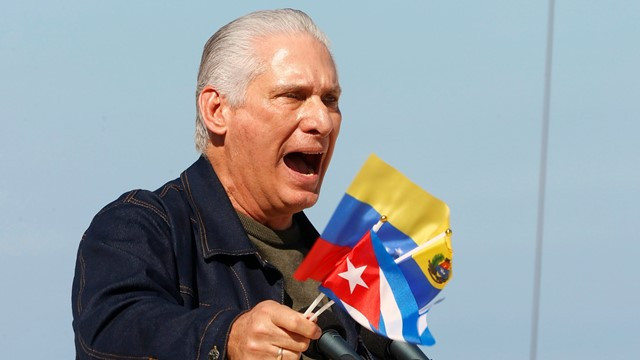
Cuban President Miguel Díaz-Canel has warned that the Cuban people are prepared to fight "to the last drop of blood" to defend the country's sovereignty against any form of U.S. military aggression or intervention.
Speaking in a special interview in response to recent remarks by U.S. President Donald Trump, Díaz-Canel accused Washington of waging a media-driven campaign and psychological warfare against Cuba.
Trump recently said that "Cuba is coming our way," a statement Díaz-Canel strongly condemned, describing it as an insult to the dignity of the Cuban people and a clear violation of international law.
The Cuban president said his government is not dismissing the possibility of a U.S. military attack and is preparing accordingly. "If an attack comes, the Cuban people will respond with unity and determination to defend our sovereignty. We do not seek war, but neither do we fear it," he said.
Recalling Cuba's long history of resistance, Díaz-Canel cited a famous statement by 19th-century independence leader Antonio Maceo, who declared that anyone attempting to conquer Cuba would "find only the dust of a soil soaked in blood." The president said the quote represents not merely a slogan but the deeply held conviction of millions of Cubans.
Díaz-Canel also referred to Cuban nationals who died during what he described as a U.S. military operation aimed at capturing Venezuelan President Nicolás Maduro. He said 32 Cubans lost their lives in that mission and warned that, if necessary, millions more Cubans would be willing to sacrifice themselves in defense of their homeland.
Addressing U.S. economic sanctions, particularly new energy-related restrictions imposed by Washington in January, Díaz-Canel rejected allegations that Cuba hosts Chinese or Russian military bases, insisting that no Chinese military installation exists on Cuban soil.
He described the decades-long U.S. embargo as the longest-running blockade in modern history, blaming it for severe power shortages, medicine shortages, and the country's deep economic crisis. He also characterized U.S. energy sanctions as "criminal" and compared them to an act of genocide.
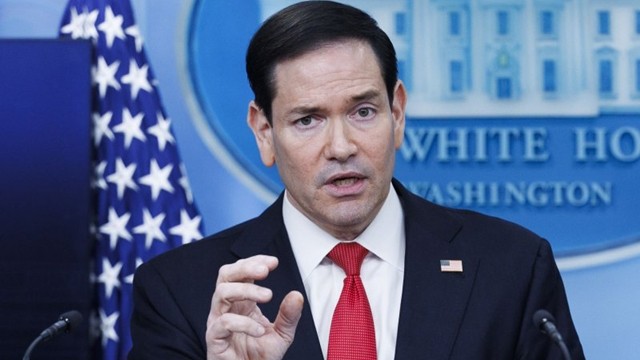
Responding to allegations by U.S. Secretary of State Marco Rubio and several human rights organizations regarding political prisoners and suppression of dissent, Díaz-Canel denied that Cuba holds any political prisoners. He said those currently imprisoned were convicted of ordinary criminal offenses under Cuban law rather than for expressing political opposition.
Despite ongoing tensions and sanctions, Díaz-Canel said Cuba remains open to dialogue with Washington. However, he stressed that any negotiations must take place without preconditions and be based on mutual respect for Cuba's sovereignty and political system.
Concluding the interview, the Cuban president said that despite the country's current hardships and economic challenges, he remains confident that Cuba's future will be one of prosperity and victory.