[email protected]
সোমবার, ১২ অক্টোবর ২০২৬
২৭ আশ্বিন ১৪৩৩
২৭ আশ্বিন ১৪৩৩

Monday, 12th October 2026


Former Qatari Emir Sheikh Hamad bin Khalifa Al Thani Dies at 74
13 July 2026 09:07 AM
NEWS DESK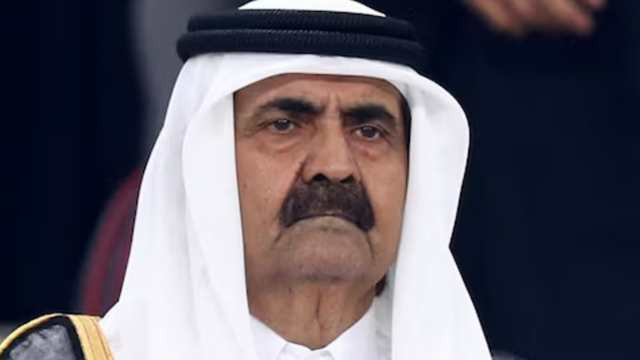
Sheikh Hamad bin Khalifa Al Thani, the former ruler credited with transforming Qatar into a global power in diplomacy, media, and investment before voluntarily handing power to his son in a historic break from regional tradition, has died at the age of 74.
Qatar News Agency (QNA) confirmed his death on Sunday but did not disclose the cause.
According to the Associated Press, Sheikh Hamad stepped down as Emir of Qatar in June 2013 after ruling for 18 years. Widely regarded as the architect of Qatar's ambitious development strategy, he oversaw the country's transformation from a relatively isolated Gulf state into a major international political, economic, and diplomatic hub in less than a generation.
During his reign, Qatar acquired London's iconic Harrods department store and established Al Jazeera, which grew into one of the Middle East's most influential satellite news networks.
Today, Qatar's political influence extends from North Africa to Afghanistan. The country hosted the 2022 FIFA World Cup—one of the world's most-watched sporting events. Although no longer in power, Sheikh Hamad received a standing ovation from Qataris when he attended the tournament's opening match.
While his leadership elevated Qatar's global standing, his independent foreign policy often unsettled regional allies and Western partners. Qatar maintained close ties with Iran, the Palestinian group Hamas, and Egypt's banned Muslim Brotherhood as part of its broader diplomatic strategy.
Al Jazeera earned international recognition for challenging the traditionally state-aligned media landscape in the Arab world, but it also faced criticism and accusations of reflecting the Qatari leadership's political priorities.
Announcing his decision to step down in 2013, Sheikh Hamad declared: "The future lies before you, the sons and daughters of this nation. You will begin a new era in which young leadership will raise Qatar's flag across the world."
He carefully orchestrated the transfer of power to his son, Crown Prince Sheikh Tamim bin Hamad Al Thani, who had already been prepared for leadership. After studying in the United Kingdom, Sheikh Tamim succeeded his father at the age of 33.
Voluntary and peaceful transfers of power are rare in the Middle East, where leadership changes typically occur following a ruler's death or removal. Ironically, Sheikh Hamad himself came to power in 1995 through a bloodless palace coup that deposed his father, Sheikh Khalifa bin Hamad Al Thani.
Many observers viewed his abdication as a forward-looking response to the demands for reform and younger leadership that emerged across the region following the Arab Spring.
At the time, rumors circulated that Sheikh Hamad had been suffering from long-term health problems, with speculation that his condition influenced his decision to step aside. In December 2015, Qatari officials said he had been flown to Switzerland for surgery after breaking his leg while on vacation.
A graduate of Britain's Royal Military Academy Sandhurst, Sheikh Hamad later became commander of Qatar's armed forces and minister of defense. He was named crown prince in the late 1970s and gradually assumed responsibility for managing the country's vast oil and natural gas resources.
After taking power from his father, Sheikh Hamad moved quickly to open the previously inward-looking nation to the outside world. One of the most significant symbols of that transformation was Al Jazeera, which later became a global media powerhouse.
The network's coverage angered many Arab governments and also strained relations with the United States. Following the September 11, 2001 attacks and during the U.S.-led wars in Afghanistan and Iraq, Al Jazeera aired messages from al-Qaeda despite Qatar hosting a major U.S. military logistics base.
Sheikh Hamad also used sports as a tool to enhance Qatar's international profile. The country's successful bid to host the FIFA World Cup became the centerpiece of that strategy, although it was accompanied by allegations that financial influence had been used to secure support from poorer nations.
Qatar expanded its sporting influence through sponsorship agreements with Spain's FC Barcelona and by acquiring a majority stake in France's Paris Saint-Germain Football Club.
He also transformed Qatar Airways into a leading international airline capable of competing with the UAE's Emirates. Qatar invested at least $15 billion in constructing Doha's new international airport, which was later named Hamad International Airport in his honor.
Another of Sheikh Hamad's major ambitions was to position Qatar as a global diplomatic mediator. Over the years, the country facilitated negotiations involving Sudan, Lebanon's political factions, and reconciliation efforts between the Palestinian groups Hamas and Fatah.
In October 2012, Sheikh Hamad became the first head of state to visit the Gaza Strip after Hamas took control of the territory. During the visit, he pledged $400 million in reconstruction projects and investments. Local radio stations reportedly broadcast songs titled "Thank You, Qatar" throughout his visit.
Despite its support for Hamas, Qatar also maintained communication with Israel. In 2007, Sheikh Hamad met then-Israeli Foreign Minister Tzipi Livni during the United Nations General Assembly. Qatar also allowed Israel to maintain a trade office in Doha until ordering its closure following Israel's military offensive in Gaza in late 2008.
Although Bahrain and the United Arab Emirates normalized relations with Israel in 2020, Qatar declined to follow suit. During the 2022 FIFA World Cup, Israeli visitors encountered widespread displays of Palestinian flags and criticism over Israel's occupation of territory claimed for a future Palestinian state.
During the Arab Spring, Qatar joined the NATO-led intervention in Libya by deploying fighter jets and providing substantial military and financial assistance to forces opposing Muammar Gaddafi.
Qatar also emerged as one of the principal political backers of opponents of former Syrian President Bashar al-Assad and called for increased arms supplies to Syrian rebel groups.
However, Qatar's support for Islamist movements, including the Muslim Brotherhood, deepened tensions with neighboring countries. Under Sheikh Tamim's rule, those disputes escalated, leading Bahrain, Egypt, Saudi Arabia, and the United Arab Emirates to impose a years-long blockade on Qatar, citing policies that had originated during Sheikh Hamad's leadership.
One of Sheikh Hamad's final major initiatives before leaving office was authorizing the opening of an official Taliban political office in Qatar. That move later paved the way for negotiations between the United States and the Taliban, ultimately contributing to the withdrawal of U.S. and NATO forces from Afghanistan in 2021.
Advertisement