[email protected]
বুধবার, ১৬ সেপ্টেম্বর ২০২৬
১ আশ্বিন ১৪৩৩
১ আশ্বিন ১৪৩৩

Wednesday, 16th September 2026


SpaceX Rocket Stage on Course for Accidental Collision with the Moon
01 August 2026 22:08 PM
NEWS DESK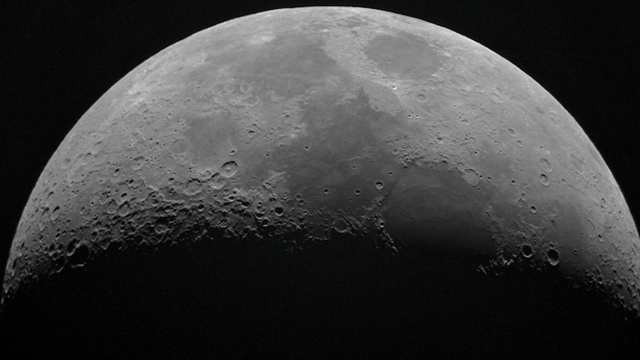
A SpaceX rocket stage launched more than a year ago to deploy two lunar spacecraft is now on an unintended collision course with the Moon.
According to The Guardian, the rocket is expected to crash into the lunar surface on Wednesday, creating a new crater and sending a massive cloud of dust and rocks into space. Scientists and skywatchers are eagerly awaiting the event.
Space debris tracker Bill Gray predicts the rocket will strike the Moon at a speed of about 8,700 kilometers per hour (5,400 mph)—roughly seven times the speed of sound.
The impact is expected to occur near Einstein Crater on the Moon's sunlit western limb. While the collision will take place late at night in the United States, it is expected to be more favorably positioned for observers in the eastern U.S., Canada, and much of South America.
Although scientists say this particular piece of space debris poses no immediate concern, the incident has once again highlighted the growing problem of space junk.
"Space is becoming increasingly crowded," Gray said. He plans to observe the aftermath of the collision from New Brunswick, Canada.
Experts stress that SpaceX never intended for the rocket to hit the Moon. They say the accident could have been avoided if the rocket's upper stage had been placed into a stable heliocentric orbit after completing its mission.
The report notes that this will be only the second known accidental collision of a discarded rocket stage with the Moon. In 2022, a spent Chinese rocket stage struck the Moon's far side, leaving behind two craters.
Unlike that event, this impact will occur on the Earth-facing side of the Moon. The collision is expected to release energy equivalent to about three tons of TNT.
Scientists believe the flash produced by the impact will last for less than a second, making it difficult to observe from Earth. However, the cloud of dust and debris could rise several miles above the lunar surface and remain visible through telescopes for several minutes.
Benjamin Fernando, a scientist at Los Alamos National Laboratory, explained that the Moon's weak gravity and lack of atmosphere mean that dust settles much more slowly than it does on Earth.
Fernando has encouraged both professional and amateur astronomers to monitor the event closely.
In an email, he said the collision could also help researchers better understand the risks that space debris may pose to future astronauts operating on the Moon.
He estimates the impact will create a crater about 27 meters (90 feet) wide and 5 meters (16 feet) deep. While the crater will not be visible from Earth, spacecraft orbiting the Moon should be able to capture clear images of it.
NASA's Lunar Reconnaissance Orbiter (LRO) and South Korea's Danuri lunar orbiter are expected to photograph the impact site before and after the collision to study its effects.
Advertisement