১৫ কার্তিক ১৪৩৩



Netanyahu Could Remain Caretaker PM as Israeli Election Ends in Deadlock
29 October 2026 19:10 PM
NEWS DESK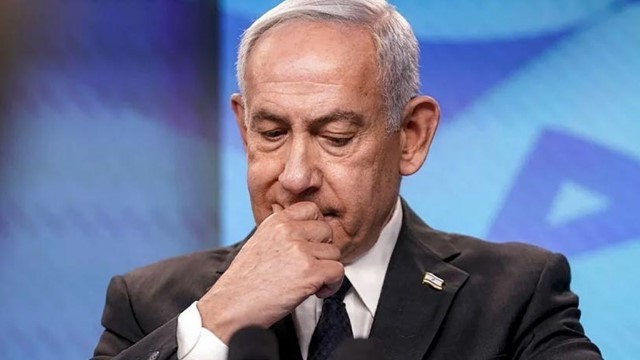
No political bloc has secured a clear majority in Israel’s election, leaving opposition leader Gadi Eisenkot with limited prospects of unseating Prime Minister Benjamin Netanyahu. If the opposition fails to form a government, Netanyahu could remain caretaker prime minister.
Despite his right-wing coalition losing its parliamentary majority, Netanyahu has secured unexpectedly strong support among Jewish voters, making it difficult for his rivals to remove him from power, Reuters reported.
With nearly 90 per cent of the votes counted by Wednesday, projections from Israel’s three major television broadcasters showed Netanyahu’s right-wing and far-right bloc winning 53 seats in the 120-member Knesset. The opposition alliance led by Eisenkot was projected to secure 48 seats, while parties representing Arab Israelis could win a record 19 seats.
The projections suggest that Eisenkot has little realistic chance of taking power without substantial support from Arab parties. However, many Jewish political leaders remain reluctant to accept such support.
The results have created a political deadlock. If neither side manages to form a government, Netanyahu would continue as caretaker prime minister while coalition negotiations proceed and until another election, potentially next year.
Experts say a caretaker government retains considerable authority, including powers over issues such as the war with Iran, although certain decisions may be subject to restrictions and expectations of restraint.
Guy Lurie, a researcher at the Israel Democracy Institute, said a caretaker government generally retains powers similar to those of a regular government, while facing certain limitations on decision-making and an obligation to exercise restraint.
Speaking to supporters of his Likud party after 3am following the close of voting, Netanyahu called for the formation of a strong nationalist right-wing government.
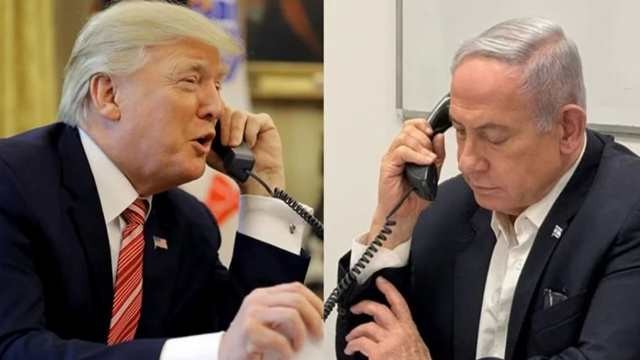
He highlighted Israel’s military achievements and suggested the possibility of renewed joint military action against Iran in coordination with his ally, US President Donald Trump.
Trump, meanwhile, said Netanyahu had done very well and that his support had helped the Israeli leader considerably.
Eisenkot described Netanyahu as a caretaker prime minister without a mandate and urged security officials to resist political pressure. He accused Netanyahu of potentially using national security for political purposes, allegations that Netanyahu’s office has previously denied.
The political uncertainty has also affected Israel’s financial markets.
The shekel weakened by approximately 1.6 per cent against the US dollar to 3.10 per dollar, while Tel Aviv’s stock market index fell by more than 3 per cent.
The election results also point to a continued shift towards right-wing politics among Israeli Jews. Almost all Jewish political parties now oppose the establishment of an independent Palestinian state.
The election was Israel’s first since Hamas’s October 7, 2023, attack, which killed approximately 1,200 people and saw 251 others taken hostage, according to figures cited in the report.
Gaza health authorities say approximately 74,000 Palestinians have been killed in the ensuing war. The conflict has increasingly isolated Israel internationally, while Netanyahu also faces an International Criminal Court arrest warrant and corruption allegations at home.
Voter turnout reached 77.7 per cent, the highest level in two decades. Participation was particularly strong among Israeli citizens of Palestinian Arab descent.
Celebrations erupted at the headquarters of the Joint List, an alliance of several Arab parties, after exit polls were released.
In previous efforts to remove Netanyahu from power, opposition politicians had relied on the support of a smaller Arab party. This time, the opposition may need the backing of the Joint List to assemble a parliamentary majority.
Since Israel’s establishment, however, most Jewish political leaders have avoided formal governing coalitions with Arab parties, making the formation of a viable government particularly challenging.