[email protected]
বুধবার, ১৬ সেপ্টেম্বর ২০২৬
১ আশ্বিন ১৪৩৩
১ আশ্বিন ১৪৩৩

Wednesday, 16th September 2026


Italy Suspends Schengen Rules for One Month Following Migrant Surge at Spain’s Ceuta Border
01 August 2026 23:08 PM
NEWS DESK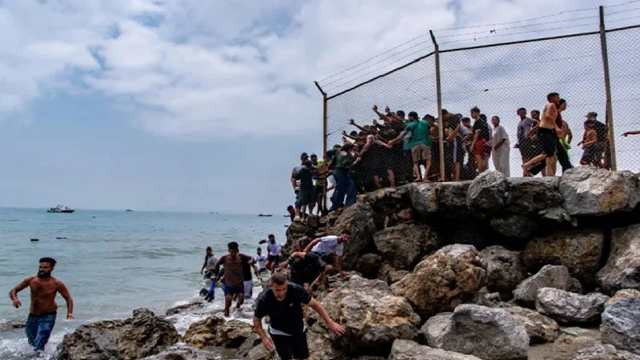
Italy has announced a one-month suspension of certain Schengen Agreement provisions in response to an unprecedented surge of migrants at Spain’s Ceuta border enclave.
In an official statement issued in Rome, the Italian government said the measure would not affect European Union citizens, including Spanish nationals, travelling to Italy. However, non-EU nationals arriving in Italy from Spain by air or sea will be subject to additional border checks and security screening.
Italian Prime Minister Giorgia Meloni said in a post on X (formerly Twitter) that the temporary measure was necessary to safeguard national security and prevent any potential domestic consequences arising from irregular migration.
She added that the restrictions would remain in place only for as long as necessary, with efforts being made to minimize disruption to summer tourism.
Although Italy shares no land border with Spain, Rome has also reached an agreement with Paris to strengthen security controls along the French-Italian border in an effort to prevent irregular migrants from entering Italy.
Earlier, Spain reported that more than 50,000 migrants had crossed into the Spanish enclave of Ceuta from neighboring Morocco, although authorities said that most later returned voluntarily to Morocco.
The move by Italy's right-wing government has drawn criticism from opposition figures and analysts, who argue that it is largely symbolic and politically motivated. Critics note that migrants arriving in Ceuta generally have no intention of travelling to Italy.
Prime Minister Meloni's coalition, which came to power in 2022 on promises to curb illegal immigration, is facing increasing political pressure from a new far-right party led by former army chief Roberto Vannacci. Analysts say the government is seeking to reinforce its tough stance on immigration as Vannacci gains support among anti-immigration voters.
Meanwhile, Piero De Luca, a senior lawmaker from the opposition Democratic Party, criticized the government's decision, calling it a populist measure aimed at domestic political audiences rather than addressing the underlying migration challenge. He argued that the move risks straining relations with Spain without offering a practical solution.
Under the Schengen Agreement, citizens of 29 European countries can travel across participating states without routine passport checks. However, member states are permitted to temporarily reintroduce border controls when national security or public order is considered to be at risk.
Advertisement