৭ কার্তিক ১৪৩৩



Global Debt Surpasses $365 Trillion as Rising Interest Costs Squeeze Government Budgets
22 October 2026 18:10 PM
NEWS DESK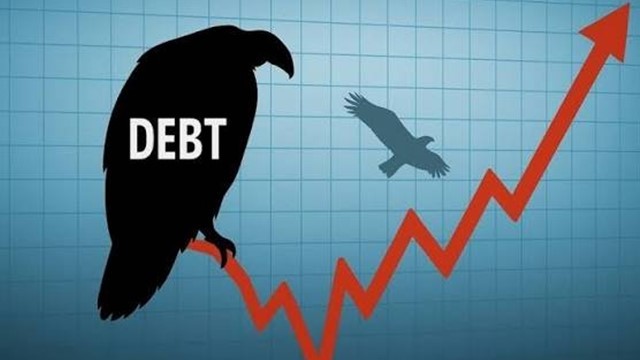
Rising borrowing costs are putting pressure on public finances, threatening spending on education, healthcare and social protection as governments struggle to manage mounting debt.
Global debt surged by $10 trillion in the first half of 2026, exceeding $365 trillion, according to the Institute of International Finance (IIF). The figure is equivalent to roughly $44,000 for every person on Earth, with emerging-market economies accounting for a significant share of the increase.
Meanwhile, advanced economies spent more than $3.3 trillion servicing government bond interest over the past year, according to figures cited in an analysis by Qatar-based Al Jazeera. The amount exceeded global military spending of $3.1 trillion, as well as spending on artificial intelligence (AI) and clean energy, estimated at $2.6 trillion and $2.3 trillion, respectively.
The growing cost of debt has intensified concerns about governments’ ability to fund public services and respond to mounting social pressures. Across Europe, rising living costs, low wages, expensive housing and inadequate funding for education have fuelled demonstrations in recent weeks.
Millions of people have taken to the streets in countries including France, Belgium, Italy and Portugal. Some protests have been accompanied by clashes, looting and arson, although many demonstrations have remained peaceful.
Against this backdrop, rising government borrowing costs are emerging as a major challenge for European economies already struggling with substantial debt burdens.
France at the Centre of Europe's Protests
France has become a focal point of the recent unrest. According to the country's interior ministry, more than 550,000 people took part in demonstrations nationwide on a Saturday, amid weeks of student protests over pressures on education, the rising cost of living and household finances.
The protests have coincided with mounting concerns about France's public finances. The country's borrowing costs have reached their highest level since 2002, making it more expensive for the government to raise new funds or refinance existing debt.
As a growing share of government revenue goes towards interest payments, less money may be available for schools, hospitals, pensions and other public services. This creates a difficult balancing act for policymakers, who must meet public expectations while maintaining control over government spending.
How Governments Borrow Money
Governments borrow to finance public spending, cover budget deficits and refinance maturing debt. One of their principal methods is issuing government bonds.
A government bond is essentially a loan made by an investor to a state. In return, the government promises to pay interest according to the bond's terms and repay the principal when the bond matures.
For example, an investor who purchases a 10-year government bond worth €100 receives interest payments and gets the original €100 back at maturity, assuming the government meets its obligations.
At an annual interest rate of 2.5%, the investor would receive €2.50 a year, or €25 over 10 years if the rate remains fixed and payments are made annually. At 5%, the annual payment would rise to €5, bringing total interest over the same period to €50.
The example illustrates how higher borrowing rates can increase government financing costs. However, the interest rate on newly issued bonds does not automatically apply to all outstanding government debt. The impact depends on how much debt must be refinanced and the terms of existing bonds.
The yield on a 10-year government bond is closely watched because it reflects market expectations about inflation, economic growth, monetary policy and the government's creditworthiness.
When bond prices fall, their yields generally rise. Governments issuing new debt must then offer investors higher returns, potentially increasing the cost of financing public spending.
Higher Interest Payments Can Crowd Out Public Spending
Rising borrowing costs can place significant pressure on government budgets. As more revenue is directed towards debt servicing, governments may have less flexibility to fund education, healthcare, transport infrastructure, pensions and social protection.
Policymakers may be forced to consider tax increases, spending cuts or additional borrowing to meet their obligations.
According to Al Jazeera's analysis, 10-year government bond yields across major European economies have risen to levels not seen since the early years of the euro.
The situation recalls the eurozone debt crisis of 2010-2012, when countries including Greece, Italy and Spain faced severe financial pressure. Ireland and Portugal were forced to seek international assistance after their government bond yields climbed above 7%.
France is now facing renewed scrutiny from financial markets. Its 10-year government bond yield is reported to be around 5%, compared with approximately 3.41% for Germany.
The difference, known as the yield spread, indicates that investors are demanding a higher return to lend to France than to Germany. Such spreads can reflect differences in perceived fiscal risk, economic prospects and political uncertainty.
The analysis also places France's borrowing costs above those of Italy and Greece, two countries heavily affected by the eurozone debt crisis. Among major European economies, only the United Kingdom, which is outside the eurozone, reportedly faces higher borrowing costs than France.
US Leads in Total Government Debt, Japan in Debt-to-GDP Ratio
The United States has the world's largest government debt in absolute terms, at $41.4 trillion, equivalent to 127% of its gross domestic product (GDP), according to the figures cited in the report.
China follows with government debt of $22.5 trillion, or 104% of GDP. Japan's government debt stands at $8.7 trillion, equivalent to 199% of GDP, the highest ratio among the major economies listed.
The United Kingdom has government debt of $4.4 trillion, representing 102% of GDP, while France's debt totals $4.2 trillion, or 118.5% of GDP.
Italy's government debt amounts to $3.7 trillion, equivalent to 138% of GDP, compared with $3.5 trillion for Germany, or 65% of GDP.
These figures highlight the distinction between the absolute size of a country's debt and its debt relative to the size of its economy.
A large debt burden does not necessarily mean a country faces the greatest risk of default. Its ability to service that debt also depends on government revenue, borrowing costs, economic growth prospects, the maturity structure of its liabilities and the currency in which it borrows.
France's Debt Could Reach 121.8% of GDP by 2030
France's fiscal outlook remains a source of concern. According to projections by the International Monetary Fund (IMF), the country's government debt could rise to 121.8% of GDP by 2030.
A further increase would complicate efforts to put public finances on a more sustainable footing, particularly if interest rates remain elevated.
Higher debt and borrowing costs can create a difficult cycle: governments must devote more resources to servicing existing obligations, leaving less room for investment and making it harder to reduce budget deficits without politically difficult measures.
The pressure could constrain spending on infrastructure, social protection and improvements to public services at a time when many citizens are already struggling with high living costs.
Annual Interest Payments Exceed Global Military Spending
The scale of debt-servicing costs is becoming a major concern for the global economy.
According to figures cited by Al Jazeera, advanced economies spent more than $3.3 trillion on interest payments on government bonds over the past year.
That was more than the estimated $3.1 trillion spent worldwide on the military. It also exceeded the reported $2.6 trillion associated with AI spending and the $2.3 trillion spent on clean energy.
The comparison highlights the enormous financial resources absorbed by interest payments. In principle, some of these resources could otherwise support education, healthcare, infrastructure or the transition to cleaner energy.
However, interest payments and spending on these sectors are not directly interchangeable. Governments must meet their debt obligations under existing agreements, while decisions about other spending depend on tax revenues, budget priorities and financing conditions.
How Rising Government Debt Affects Ordinary People
The consequences of higher government borrowing costs can extend well beyond national budgets, affecting households through several channels.
First, public services may come under pressure. Governments facing rising interest bills may increase taxes or reduce spending on schools, hospitals, pensions and social welfare programmes.
Second, borrowing costs for households and businesses may rise. Higher government bond yields can influence interest rates across financial markets, making mortgages, car loans and other forms of credit more expensive, although the effects vary by country and monetary policy conditions.
Third, economic growth and household spending may weaken. Higher debt-servicing costs can limit public investment, while expensive credit can discourage businesses from investing and households from making major purchases.
These pressures can intensify public frustration when wages fail to keep pace with living costs and housing remains unaffordable.
Europe's recent protests have multiple causes, including the cost of living, low wages, housing shortages and concerns about public services. Rising public debt and interest payments may make these problems more difficult to address, even though they are not the sole causes of the unrest.
A Growing Challenge for the Global Economy
The rise in global debt beyond $365 trillion and annual interest payments exceeding $3.3 trillion in advanced economies underscore the growing challenges facing governments worldwide.
Borrowing remains an essential tool for financing public services, supporting investment and responding to economic shocks. However, when debt accumulates faster than governments' capacity to service it, higher interest costs can restrict fiscal flexibility.
For countries such as France, the challenge is particularly acute: governments must reassure financial markets that their finances are sustainable while responding to citizens demanding better services and relief from rising living costs.
How governments balance those competing demands will help determine whether mounting debt remains manageable or becomes a more serious obstacle to economic growth, public investment and social stability.