২৩ আশ্বিন ১৪৩৩



Argentina's Muslim Community: A Minority with a Rich History and Growing Institutional Presence
10 July 2026 05:07 AM
NEWS DESK
Argentina, the second-largest country in South America, is renowned worldwide for its football legacy and vibrant culture. Less widely known, however, is its sizeable Muslim community, which is among the largest in Latin America. Shaped by centuries of migration, perseverance and institutional development, Muslims in Argentina have established a distinct religious and cultural presence despite rem
According to data from the Association of Religion Data Archives (ARDA), Argentina is home to approximately 500,000 Muslims, accounting for just over one percent of the country's population. Other estimates suggest the figure could be nearly twice as high, making Argentina one of Latin America's most significant centres of Muslim population.
Historians trace the earliest introduction of Islam to the region to the 15th century, when Spanish explorers arrived accompanied by Moorish and Morisco Muslims. Many of these Muslims, fleeing religious persecution in Spain, later settled in different parts of what is now Argentina in search of a new life.
The country's Muslim community expanded significantly during the late 19th and early 20th centuries with the arrival of large numbers of immigrants from present-day Syria and Lebanon. These Arab migrants played a central role in strengthening Islamic institutions and preserving religious identity.
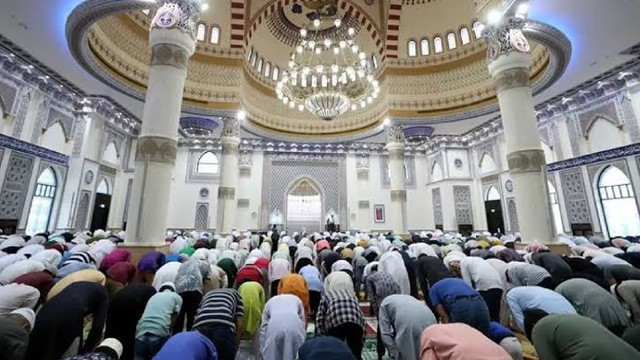
The institutional development of Islam in Argentina accelerated during the 1980s. In 1983, the At-Tauhid Mosque was established in Buenos Aires, becoming the country's first mosque. Two years later, the Al-Ahmad Mosque, built in a traditional Islamic architectural style, further marked the growth of the community.
A major milestone came in 1996 with the inauguration of the King Fahd Islamic Cultural Center in Buenos Aires, funded by Saudi Arabia. The complex, regarded as the largest Islamic centre in South America, includes a mosque, library, educational facilities and landscaped grounds, serving as a major hub for religious, educational and cultural activities.
Today, however, Argentina's Muslim community faces new challenges. As younger generations increasingly grow up speaking Spanish as their primary language, many have weaker connections to Arabic and traditional Islamic scholarship. At the same time, the limited availability of reliable Islamic literature in Spanish and the lack of balanced media representation of Islam have made preserving religious identity more challenging.
Despite these obstacles, Argentina's Muslim community continues to draw strength from more than a century of migration, institution-building and religious tradition. Community leaders believe that expanding Islamic education, scholarly research and outreach initiatives in Spanish will be essential to preserving Islamic values and heritage for future generations while strengthening the community's contribution to Argentina's diverse social fabric.