২৬ কার্তিক ১৪৩৩



‘I Am Not a Muslim, But I Want the Caliphate to Return’: Jewish Rabbi Recalls Muslim-Jewish Coexistence
10 November 2026 19:11 PM
NEWS DESK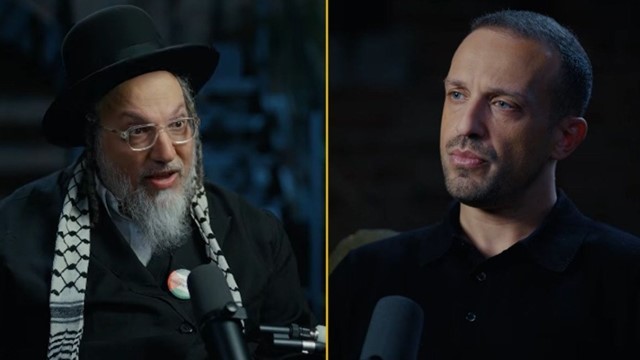
Jewish religious leader Rabbi Chaim Sofer has highlighted the long history of coexistence, mutual support and protection of religious minorities under Muslim rule, saying, "I am not a Muslim, but I want the Caliphate to return."
Recalling his family's experiences in Baghdad and what he described as the positive memories of life under Muslim rule, Sofer said Muslim neighbors often supported Jewish families during their religious festivals.
Sofer is an Orthodox Jewish rabbi known for his strong criticism of Zionist nationalism and his pro-Palestinian stance. Al Jazeera published an audio interview with him titled along the lines of "Israel, the Third Temple, and the Lost History of Jews and Muslims." The UK-based website Islam21c also published an article about his views and experiences under the headline "Rabbi Gives an Islamic History Lesson."
In recounting his family's history, Sofer said they were part of Baghdad's Jewish community and maintained warm relationships with their Muslim neighbors. During Passover, one of Judaism's most important religious festivals, Muslim neighbors would bring a sheep for his family.
Passover commemorates the liberation of the Israelites from Egypt and is celebrated with special meals and family gatherings. According to Sofer, the festival involved considerable expenses, but Muslim neighbors voluntarily brought gifts to help his family celebrate.
These gifts included not only sheep but also vegetables and other food items.
A report by The Leader's Mena also highlighted these recollections, noting that Sofer's Muslim neighbors would bring potatoes, dates, cucumbers and tomatoes, along with a sheep, for the Passover celebrations.
Sofer also discussed the collection of jizya, a tax imposed on non-Muslim subjects under traditional Islamic governance. According to his account, poor Jews were exempted from the tax, while those unable to afford it sometimes received financial assistance instead.
Under traditional Islamic governance, jizya was a tax imposed on non-Muslim subjects in return for protection of their lives and property under the state. However, its collection, rates and implementation varied across different periods and regions.
Sofer presented his perspective on the religious and social lives of Jews under Muslim rule, arguing that Jewish communities in various Muslim-ruled periods were able to preserve their religious identities while participating in trade, education and wider social activities.
Baghdad, particularly during the Abbasid Caliphate, became one of the most important centers of Jewish religious scholarship and learning. The city maintained close connections with major Jewish academies, particularly those in Sura and Pumbedita. Jewish communal leadership also maintained relations with the caliphal court.
During the Abbasid period, Baghdad's Jewish population grew, and the city emerged as a significant center of Jewish religious education and intellectual life.
Beyond historical recollections, Sofer also expressed his views on political unity in the Muslim world.
According to The Leader's Mena, he advocated the establishment of a unified Islamic authority or caliphate extending from Morocco to Afghanistan. In his view, such an arrangement could contribute to regional stability and help protect Palestinians.
He also criticized the Sykes-Picot Agreement, which was concluded during World War I. Sofer argued that decisions made by colonial powers, including the dissolution of the Ottoman Caliphate and the subsequent division of the Middle East, weakened political unity in the Muslim world.
Sofer further expressed support for establishing a Muslim-led peacekeeping force to ensure the protection of Palestinians in Gaza. His remarks also included a call to rebuild the historical bonds between Muslim and Jewish communities.
Chaim Sofer is an Orthodox rabbi based in the United Kingdom and a member of Neturei Karta, an anti-Zionist Jewish movement founded in Jerusalem in 1938. The movement opposes the Zionist concept of establishing a Jewish state.
Sofer's parents were born in Iraq. According to his account, they were forced to move to Palestine in the early 1950s because of Zionist violence. Sofer himself was born in Palestine, although The Leader's Mena describes him as an Iraqi-origin rabbi.
In his Al Jazeera interview, he discussed Jewish identity, exile, the historical experiences of Jews in Muslim societies and the anti-Zionist position of Neturei Karta.
Sofer's account places particular emphasis on the positive aspects of Muslim-Jewish coexistence, including neighborhood solidarity, support during religious celebrations and experiences of social protection.
However, the historical application of jizya and the status of religious minorities varied across regions, rulers and periods. His remarks can therefore be understood as a personal and political perspective on Muslim-Jewish relations rather than a comprehensive account of the entire history.
His recollections nevertheless highlight examples of interfaith cooperation, mutual respect and everyday solidarity between Muslim and Jewish communities.