৭ কার্তিক ১৪৩৩



Experts Warn Space-Based Data Centers Could Have Devastating Environmental Impact
24 July 2026 06:07 AM
NEWS DESK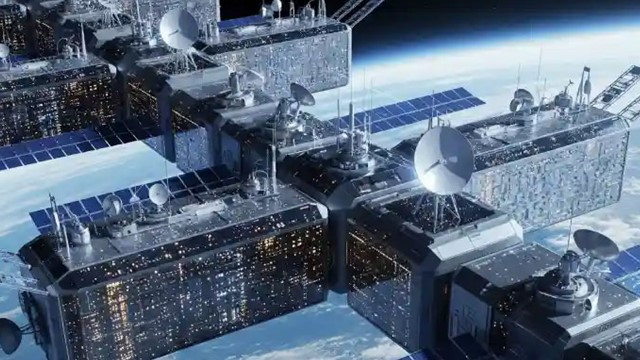
Plans by several leading aerospace and technology companies, including Elon Musk's SpaceX and Jeff Bezos' Blue Origin, to build data centers in space have sparked growing concern among scientists and environmental groups, who warn the projects could significantly alter Earth's atmosphere and pose long-term environmental risks.
According to The Guardian, a coalition of environmental organizations has petitioned the U.S. Federal Communications Commission (FCC) to halt approval of new licenses for space-based data center projects until comprehensive environmental assessments are completed.
The petition was filed by the nonprofit organizations Public Employees for Environmental Responsibility (PEER), Earthjustice, and DarkSky International.
Experts say that deploying large satellite constellations—and the subsequent destruction of those satellites as they burn up during atmospheric re-entry—could release substantial amounts of black carbon, aluminum oxide, and rare metals into the stratosphere. Scientists caution that the combined effects of these pollutants remain poorly understood but could damage the ozone layer and increase human exposure to harmful ultraviolet (UV) radiation.
Steve Volz, former director of satellite operations at the U.S. National Oceanic and Atmospheric Administration (NOAA), said the complex materials contained in satellites should not be allowed to disperse freely into the atmosphere after re-entry. He compared the issue to industrial smokestack emissions, arguing that it deserves similar environmental scrutiny.
The number of active satellites in Earth's orbit has risen dramatically over the past decade, increasing from about 1,400 in 2015 to nearly 15,000 today. Researchers estimate that figure could exceed 100,000 within the next decade, while space-based data center projects could require hundreds of thousands—or even millions—of additional satellites.
A NOAA-funded study published in late 2023 detected spacecraft-derived metals embedded in sulfuric acid particles in the stratosphere. Scientists say it remains unclear how these metals interact with atmospheric chemistry. These particles play an important role in regulating Earth's temperature and reflecting portions of the Sun's incoming radiation.
Environmentalists are also concerned about the impact on the night sky. They warn that the deployment of millions of satellites could permanently increase light pollution, affecting astronomical observations and disrupting ecosystems that rely on natural darkness.
Ruskin Hartley, Executive Director of DarkSky International, said natural darkness is essential for the biological cycles of many plants and animals, adding that excessive artificial light has already contributed to declines in firefly populations and other insect species.
The organizations behind the FCC petition argue that the proposed projects should undergo a full environmental review under the U.S. National Environmental Policy Act (NEPA). They contend that current applications fail to adequately assess the cumulative risks associated with placing more than one million satellites into orbit, including collisions, orbital debris, atmospheric re-entry, and their long-term environmental consequences.
Experts say that before space-based data centers become a reality, governments and regulators should conduct rigorous scientific assessments of their potential impacts on Earth's atmosphere, climate, ozone layer, biodiversity, and the natural night sky, alongside evaluating their technological and economic benefits.