১ আশ্বিন ১৪৩৩



Top U.S. General Warns Military Resources May Be Insufficient to Defend Israel in Prolonged Iran Conflict
02 August 2026 15:08 PM
NEWS DESK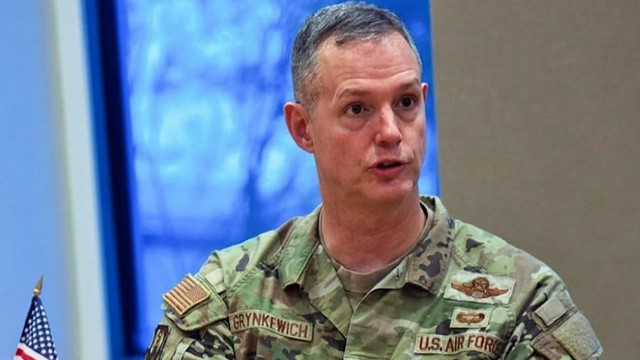
A senior U.S. military commander has warned that the United States may not have sufficient military resources to simultaneously defend Israel from Iranian missile attacks while protecting American forces and interests across the Middle East if a conflict with Iran becomes prolonged.
General Alexus Grynkewich, commander of the U.S. European Command (EUCOM), reportedly told Pentagon officials that an extended confrontation with Iran is placing increasing strain on U.S. naval capabilities in the region. According to reports by The Washington Post and other media outlets, he cautioned that without deploying an additional U.S. Navy destroyer to the Middle East, commanders could eventually face difficult decisions over whether to prioritize the protection of U.S. forces or continue supporting Israel's missile defense.
The warning has reignited debate over the readiness of the U.S. military and the adequacy of its missile defense stockpiles. Analysts say the significance of the remarks lies not only in the concerns raised but also in the fact that they come from one of the United States' most senior military leaders responsible for overseeing global operations.
Unlike outside commentators, General Grynkewich is directly involved in managing U.S. military commitments worldwide. His assessment is seen as reflecting internal Pentagon concerns that the growing number of global security responsibilities is placing unprecedented pressure on existing military resources.
The U.S. Navy's Aegis-equipped destroyers currently play a critical role in Israel's air and missile defense. These warships are capable of detecting long-range ballistic missiles and intercepting them using SM-3 and SM-6 missile systems.
However, these destroyers are also among the U.S. military's most valuable strategic assets. They are needed in the Indo-Pacific to deter China, in Europe to reassure NATO allies, and across the Middle East to safeguard U.S. bases, personnel, and vital maritime routes.
General Grynkewich's warning underscores the strategic trade-offs facing Washington. Every destroyer assigned to defend Israel is one less available to respond to potential crises elsewhere.
According to The Washington Post, Pentagon assessments indicate that the United States has expended more than 200 Terminal High Altitude Area Defense (THAAD) interceptors during operations related to the conflict with Iran—reportedly close to half of its total inventory. In addition, U.S. Navy warships have launched more than 100 interceptor missiles in support of regional missile defense operations.
Israel has also relied on its own Arrow and David's Sling missile defense systems. However, during periods of the most intense missile attacks, it reportedly depended heavily on U.S. military support.
Defense experts note that the challenge extends beyond the number of missiles fired. Advanced interceptor missiles are highly expensive, and rebuilding depleted stockpiles can take several years due to lengthy production timelines.
Recent defense assessments have warned that a prolonged, high-intensity conflict could place significant pressure on the United States' inventory of advanced air and missile defense systems, potentially affecting its ability to respond to multiple crises simultaneously.