[email protected]
বৃহঃস্পতিবার, ৮ অক্টোবর ২০২৬
২৩ আশ্বিন ১৪৩৩
২৩ আশ্বিন ১৪৩৩

Thursday, 8th October 2026


US Imposes 50% Tariffs on $20 Billion of Canadian Imports as Trade Talks Collapse
23 August 2026 11:08 AM
NEWS DESK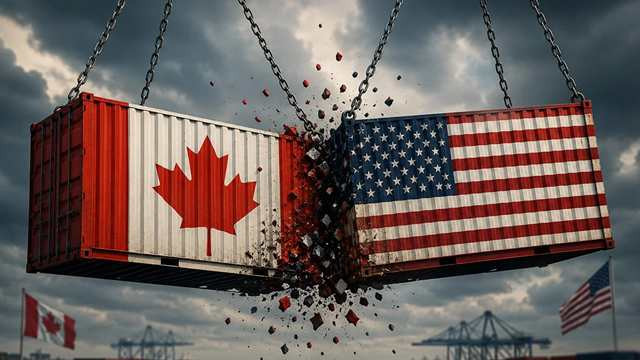
The United States has imposed a 50% tariff on nearly $20 billion worth of goods imported from Canada, after several days of negotiations between the two countries ended without an agreement.
The new tariffs took effect shortly after midnight on Saturday. In response, Canadian Prime Minister Mark Carney announced that Ottawa was suspending trade negotiations with Washington and would impose dollar-for-dollar retaliatory tariffs.
Officials from both countries blamed each other for the collapse of the talks. Canada said the United States changed the proposed terms at the last minute, making the offer unfair and economically unacceptable. Washington, meanwhile, accused Ottawa of refusing to finalise a deal based on terms that had been agreed earlier in the week.
The new US tariffs cover a range of products, including alcohol, furniture, dairy products, cement, clothing, fishing equipment and ice-hockey goods. These products will no longer receive preferential treatment under the United States-Mexico-Canada Agreement (USMCA).
A senior Trump administration official said no new negotiations had been scheduled.
Only slightly more than 5% of Canada's total exports to the United States are affected by the latest tariffs, meaning the immediate impact on the overall Canadian economy could be limited. However, trade experts warned that several already-struggling industries could face significant pressure, potentially leading to business closures and job losses.
In a statement, Carney said he had decided to suspend trade talks with the United States and instructed Canadian negotiators to return to Ottawa.
He said Canadian officials had worked until the final moments to protect the country's interests but accused Washington of introducing last-minute changes that were unfair and economically unacceptable. The changes, he said, also raised questions about the credibility of any potential agreement.
Carney announced that Canada would respond to the new US tariffs with countermeasures on a “dollar-for-dollar” basis.
US Trade Representative Jamieson Greer, however, said Canada had refused to finalise an agreement based on terms previously accepted by both sides.
At a White House briefing, Greer said Canada had missed an opportunity to strengthen its partnership with the United States.
According to a senior Trump administration official, if the US proposal had been accepted, Canada would have enjoyed the most favourable tariff position among major exporters to the American market. Ottawa, however, sought additional concessions on steel, aluminium, automobiles and softwood lumber, the official said.
The two sides had previously appeared close to reaching an agreement, according to people familiar with the negotiations. A potential deal was expected to include lower tariffs on steel, aluminium and automobiles, as well as the return of US alcoholic beverages to liquor stores in Canada.
The latest tariff decision followed three days of negotiations in Washington between Canada's Trade Minister Dominic LeBlanc and Greer.
Canadian industries involved in steel, lumber and automobiles have already suffered substantial losses from existing US tariffs imposed over the past 18 months.
Although the latest measures affect a relatively limited range of products, they have further escalated tensions between US President Donald Trump and Carney's government.
Analysts warned that the dispute could also make broader negotiations over the renewal of the USMCA significantly more difficult.
Advertisement