[email protected] সোমবার, ২৫ মে ২০২৬
১১ জ্যৈষ্ঠ ১৪৩৩

Bangladesh Seeks New IMF Loan Program Worth Up to $4.5 Billion

25 May 2026 20:05 PM

NEWS DESK

File Photo

Bangladesh is moving toward a new loan program with the International Monetary Fund (IMF), with discussions already underway for a package estimated at between $4 billion and $4.5 billion.

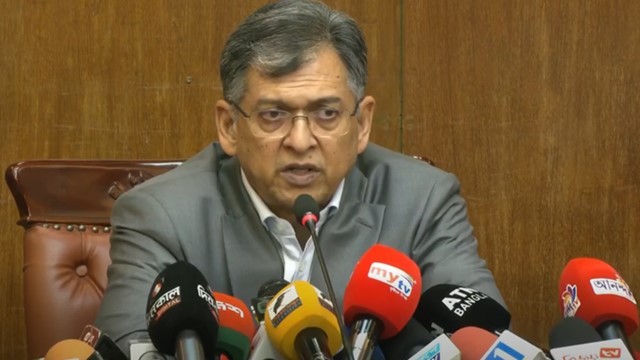
At the same time, the government has informed the IMF that it does not wish to continue the country’s existing loan program, according to sources familiar with the matter. The issue was discussed during a virtual meeting on Thursday between Finance Minister Amir Khasru Mahmud Chowdhury and senior IMF officials.

The meeting included Bangladesh Bank Governor Md. Mostakur Rahman, Finance Secretary Khairuzzaman Mozumder, and other top government officials. They held talks with IMF Deputy Managing Director Nigel Clarke.

According to Finance Ministry sources, Bangladesh had initially conveyed its lack of interest in continuing the current program during the World Bank-IMF Spring Meetings held in Washington in April. Since then, both sides have held several formal and informal virtual discussions.

Although the finance minister has not publicly commented on exiting the current program, the Finance Ministry issued a statement on Monday confirming that talks were held on May 21 regarding a new three-year IMF program. The statement said the new arrangement would focus on “priority and implementable reforms” to be carried out gradually.

The ministry added that Nigel Clarke welcomed Bangladesh’s initiative to adopt a new program.

Finance Minister Amir Khasru Mahmud Chowdhury said the existing IMF program had been designed under a different economic and policy environment. He noted that subsequent domestic developments, political economy considerations, and global uncertainties had created challenges in implementing some reforms.

“The government does not want to move away from reforms,” the minister said, adding that Bangladesh is interested in implementing reforms that are “realistic, phased, and aligned with the country’s circumstances.”

Reform Challenges Behind the Shift

Officials familiar with the discussions said Bangladesh has identified several key reasons for wanting to leave the current program.

Progress has reportedly been slow in areas such as:

  • Increasing tax revenue and implementing VAT reforms
  • Reducing tax exemptions
  • Modernizing tax administration
  • Introducing a fully market-based exchange rate
  • Cutting subsidies in the energy and power sectors

Bangladesh has also lagged behind in banking sector reforms and governance improvements. The IMF has expressed dissatisfaction over the restructuring of weak banks, controlling non-performing loans, and improving governance in bank ownership and management.

The IMF has reportedly raised concerns about the proposed Bank Resolution Act and the broader restructuring process for weak banks during previous loan review discussions.

New Program to Offer More Time

Following the Spring Meetings in Washington, Bangladesh intensified discussions with the IMF over launching a new lending arrangement. After receiving preliminary consent from the IMF last Thursday, the Finance Ministry is now seeking policy-level approval from the country’s top leadership.

Once approved, Bangladesh is expected to formally write to the IMF explaining the rationale and practical necessity for replacing the current program with a new one.

An IMF mission is likely to visit Dhaka in July or August, during the first months of the 2026–27 fiscal year, to negotiate the reform conditions under the proposed package. The mission will later submit a report to IMF headquarters in Washington outlining the overall framework of the new program.

A senior Finance Ministry official said the current program has less than a year remaining, making it difficult to fulfill all mandatory conditions within the timeframe.

“With a new program, it will be easier for the current government to implement reform measures gradually,” the official said, adding that the IMF appears to understand Bangladesh’s realities.

Economists See “Buying Time”

Former World Bank Dhaka office chief economist Zahid Hossain said the government is essentially trying to “buy time” through a new IMF arrangement.

“The reforms Bangladesh could not implement under the current program are likely to remain in the new one as well,” he said. “These reforms are necessary for Bangladesh itself.”

Hossain added that the government has not clearly explained which parts of the current program it disagrees with or considers contrary to national interests.

“We now need to see what the content of the new program will be,” he said. “Apart from getting more time to do the same work, I do not think Bangladesh will gain any major additional benefit.”

Background of the Existing IMF Program

Bangladesh formally requested IMF support on July 24, 2022, seeking assistance to stabilize its balance of payments and provide budget support.

The country requested $4.7 billion under three facilities:

  • Extended Credit Facility (ECF)
  • Extended Fund Facility (EFF)
  • Resilience and Sustainability Facility (RSF)

The 42-month program carried an average interest rate of less than 2 percent and was to be disbursed in seven installments.

The IMF Executive Board approved the package on January 30, 2023, during the Awami League government’s tenure.

Later, under the interim government led by Professor Muhammad Yunus, the program size increased by $800 million in June 2025, bringing the total to $5.5 billion.

So far, Bangladesh has received $3.64 billion in five installments, leaving $1.86 billion undisbursed.

During the IMF annual meetings in October 2025, Bangladesh sought the release of the sixth tranche, but the IMF did not agree at the time.

Then finance adviser Salehuddin Ahmed and former Bangladesh Bank Governor Ahsan H. Mansur later told journalists that the IMF preferred to discuss the matter with a newly elected government after the national election.

A new government was formed in February this year, after which Finance Minister Amir Khasru Mahmud Chowdhury and Governor Mostakur Rahman attended the World Bank-IMF Spring Meetings in Washington. However, no final decision was made there regarding the next tranche of the existing program.


Comments Here:

Related Topic