২২ আশ্বিন ১৪৩৩



China’s Proposed ‘Water Bomb’ Dam in Himalayas Raises Alarm in India
24 December 2025 05:12 AM
NEWS DESK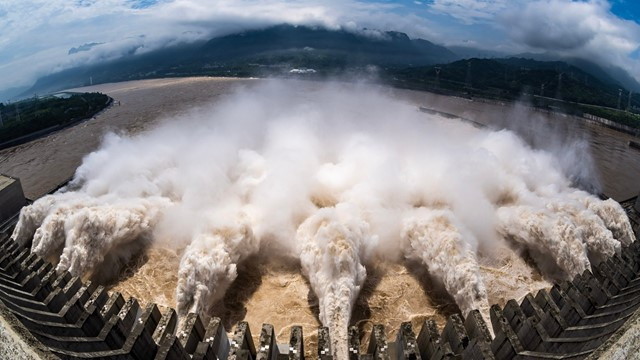
China’s plan to construct a massive hydropower dam on the Brahmaputra River near the Indian border has triggered serious concerns in New Delhi, with Indian officials warning of potential floods, droughts, and long-term threats to millions of lives and livelihoods downstream.
The controversy revives memories of China’s Three Gorges Dam, the world’s largest hydroelectric project, inaugurated in 2003 on the Yangtze River under President Xi Jinping’s administration. Built at a cost of nearly $320 billion, the project has long faced criticism from environmentalists and geologists. Some Western scientists have even claimed that the dam’s enormous water retention has marginally slowed Earth’s rotation by 0.06 microseconds per day, while environmental groups warn of severe climate and ecological consequences.
A Bigger Dam Near India’s Border
China is now planning a far larger dam—nearly three times the size of Three Gorges—on the Brahmaputra River, known in Tibet as the Yarlung Tsangpo, close to India’s Arunachal Pradesh. The project, called the “Great Bend” Dam, will be built in China-controlled Tibet, just a few miles from the Line of Actual Control (LAC).
Arunachal Pradesh Chief Minister Pema Khandu has described the proposed dam as a potential “water bomb”, warning that China could weaponize water flow to cause sudden floods or prolonged droughts in India’s northeastern states.
China has reportedly allocated $168 billion for the project, which is expected to generate up to 60,000 megawatts of electricity—almost three times the output of the Three Gorges Dam.
Strategic and Environmental Concerns
The Brahmaputra originates from the Chemayungdung Glacier near Mount Kailash in Tibet and flows through Arunachal Pradesh, Assam, and Bangladesh. Experts fear that any large-scale alteration of its flow could have devastating consequences for downstream regions.
According to reports based on open-source satellite imagery reviewed by CNN, construction activity has already intensified since July. China has begun building roads, bridges, and telecommunications infrastructure, while local villagers have reportedly been employed for the project.
Chinese engineers have chosen a dramatic section of the river where it plunges nearly 2,000 meters after flowing at a high elevation for about 50 kilometers—an ideal but extremely risky site for hydropower generation.
China’s Defense and India’s Skepticism
Beijing insists the project is based on decades of scientific research and will help combat climate change by reducing coal dependency. Chinese officials claim the dam will also regulate water flow, potentially reducing floods in India and Bangladesh.
India remains unconvinced.
“China says one thing and does another,” said Chief Minister Pema Khandu. “If this dam is built, the Siang and Brahmaputra rivers could dry up. At any moment, China could release water, causing catastrophic flooding and destruction of lives and property.”
No Water-Sharing Treaty
A major concern for India is that China has not signed any international water-sharing agreements, including the 1997 UN Convention on the Law of Non-Navigational Uses of International Watercourses, which China opposed.
This limits India’s legal options if China alters river flows.
China has previously faced allegations of using water as a geopolitical tool. In 2021, Beijing abruptly reduced Mekong River flows by nearly 50% without prior warning, affecting Cambodia, Laos, Myanmar, Thailand, and Vietnam. China later claimed the move was due to power-line maintenance.
Similarly, in 2017, sudden flooding of the Siang River in Assam occurred without any advance warning from China, despite an existing data-sharing agreement. The floodwaters reportedly carried unusually high levels of pollutants, raising further suspicion.
Seismic Risks Add to Fears
The dam site lies in a highly earthquake-prone zone. Just two weeks after China officially announced the project in 2024, a 6.8-magnitude earthquake struck Tibet, killing 126 people and injuring over 180.
Experts warn that a dam failure during the monsoon season could trigger unprecedented devastation across northeastern India and Bangladesh.
International Warnings
Professor Darrin Magee of Western Washington University has cautioned that the project poses “an extremely high-risk scenario” for India and could even backfire on China due to the region’s harsh geological conditions.
India’s Ministry of External Affairs spokesperson Randhir Jaiswal said New Delhi is closely monitoring the situation and will take necessary steps to safeguard national interests. However, diplomats and former military officials do not believe India is seeking military escalation over the issue.
For now, the proposed Great Bend Dam stands as a new flashpoint in already strained Sino-Indian relations—where water, geography, and geopolitics converge with potentially far-reaching consequences.