২২ আশ্বিন ১৪৩৩



Countries React After US Supreme Court Blocks Trump’s Global Tariff Move
23 February 2026 01:02 AM
NEWS DESK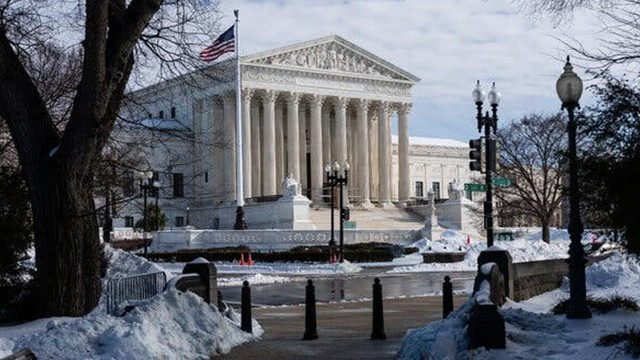
The Supreme Court of the United States has struck down President Donald Trump’s move to impose sweeping global retaliatory tariffs. In response, Trump announced a fresh 10 percent tariff—later raised to 15 percent—on imports into the United States.
Importers in the US will be required to pay the new duties, triggering renewed concerns and reactions from governments and markets worldwide.
Last Friday, Trump made the announcement on his social media platform, Truth Social, stating that he had signed an executive order to enforce the tariffs “immediately,” with implementation set for Tuesday.
Following the court’s ruling and Trump’s renewed tariff action, countries are now weighing their legal and economic options. Questions have arisen over the validity of previous tariffs, ongoing trade agreements, and the broader implications for global commerce.
Analysts warn that uncertainty may persist until the legal and commercial framework of the new 15 percent tariff becomes clearer.
South Korea
South Korea, one of Washington’s closest allies, responded cautiously. The presidential office, known as the Blue House, issued a statement saying the government would review its trade agreements with the US and act in line with national interests.
In November last year, following earlier tariff measures by the Trump administration, Seoul and Washington signed a new trade deal. Under that agreement, South Korea pledged $350 billion in investment in the US in exchange for a reduction in tariffs from 25 percent to 15 percent. The future of that agreement is now uncertain.
According to Al Jazeera correspondent Jack Barton in Seoul, the US Supreme Court’s ruling has been positive for South Korea’s large chemical, pharmaceutical, and semiconductor firms. Even if Trump reimposes a 15 percent tariff under “Section 122,” they would still face lower rates than before.
However, automakers remain under pressure. More than half of South Korean car exports go to the US and are still subject to a 25 percent tariff. Steel exports continue to face a 50 percent duty under “Section 232,” which was not affected by the court’s ruling.
With exports accounting for 85 percent of South Korea’s GDP, and the US as its second-largest export market, officials are expected to proceed with extreme caution.
India
India was among the countries hit hardest by earlier US tariffs under emergency trade powers. Initially, a 25 percent tariff was imposed on Indian goods, followed by another 25 percent penalty related to India’s imports of Russian oil—bringing total retaliatory tariffs to 50 percent.
Earlier this month, Washington and New Delhi reached a preliminary trade agreement. Trump said Indian Prime Minister Narendra Modi had agreed to stop purchasing Russian oil. In exchange, US tariffs on key Indian exports—including garments, pharmaceuticals, precious stones, and textiles—would be reduced to 18 percent. India also pledged to lower or remove tariffs on American industrial and selected agricultural goods.
M K Venu, founding editor of The Wire and a political economist, noted that critics believe New Delhi should have waited for the Supreme Court’s ruling before finalizing the interim deal. He said Trump had shown strong interest in sealing the agreement, which includes a commitment to import $500 billion worth of US defense, energy, and artificial intelligence products over five years.
While India welcomed the reduction to 18 percent and the withdrawal of punitive duties linked to Russian oil imports, uncertainty remains over the legal standing of earlier tariffs in light of the court’s decision.
China
China’s response has been relatively muted, partly due to the ongoing Lunar New Year holiday.
Al Jazeera correspondent Rob McBride in Beijing reported that the Chinese embassy in Washington issued a brief statement saying trade wars benefit no one. As a primary target of Trump’s tariff policy, China is widely expected to welcome the court’s decision.
Since April, China has faced multiple US tariff layers, including 10 percent duties on chemicals used in fentanyl production and 100 percent tariffs on electric vehicles.
Analysts estimate current US tariffs on Chinese goods stand at around 36 percent. That figure could drop to approximately 21 percent following the ruling—potentially offering relief to China’s economy, which has been under pressure from the pandemic aftermath, a prolonged property crisis, and declining exports. Exports to the US have fallen by nearly one-fifth over the past year.
Beijing has sought to offset losses in the US market by strengthening trade ties with Southeast Asian nations and negotiating agreements with the European Union.
Canada
Canada welcomed the Supreme Court’s decision but acknowledged ongoing challenges.
Dominic LeBlanc, Canada’s minister responsible for Canada–US trade, said much work remains, as tariffs under “Section 232” on steel, aluminum, lumber, and automobiles are still in place.
Provincial leaders, including Ontario Premier Doug Ford, described the ruling as a positive step but warned that uncertainty persists regarding Trump’s next move.
Mexico
Mexican President Claudia Sheinbaum said her government would closely review the Supreme Court’s ruling to assess its scope and impact.
According to Al Jazeera correspondent Julia Galiano in Mexico City, Mexico remains in a relatively competitive position compared to other countries. It is currently the United States’ largest trading partner and, along with Canada, is part of a major trilateral trade agreement that shields most goods from the so-called retaliatory tariffs.
While Mexico managed to suspend certain punitive tariffs related to fentanyl and migration issues through negotiations, duties on steel, aluminum, and auto parts remain unaffected by the court’s ruling.
A Landmark Constitutional Moment
A senior US legal expert described the Supreme Court’s ruling as a significant moment in the legal battle over Trump’s tariff authority.
Frank Bowman, emeritus professor at the University of Missouri School of Law, told Al Jazeera that the ruling focuses more on constitutional limits than economic policy.
“This is the first time in the past year that the Supreme Court has stepped in to push back against what it sees as broader challenges to the rule of law,” Bowman said. “The court did not rule on economic policy. It ruled that the president exceeded his constitutional authority.”
The decision marks a potentially pivotal moment in defining the limits of presidential power over trade and tariffs, with far-reaching implications for US economic policy and global markets.