১৯ আশ্বিন ১৪৩৩


Von der Leyen Signals Strategic Shift as Europe Reassesses Security Posture
17 February 2026 06:02 AM
NEWS DESK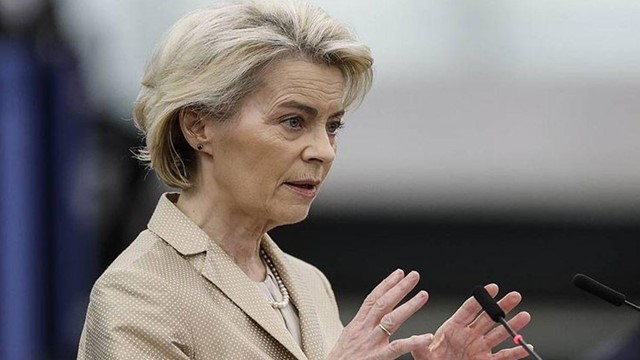
At the Munich Security Conference, European Commission President Ursula von der Leyen hinted at a major strategic shift among European leaders. Speaking on Saturday, she said certain boundaries had been crossed that “cannot be returned to the way they were before.”
Transatlantic relations between United States and Europe have faced mounting strain during the first year of President Donald Trump’s return to office. The Trump administration’s continued pressure to integrate Greenland into the United States has further fueled European doubts about Washington’s long-standing security commitments to NATO allies.
During the conference, U.S. Secretary of State Marco Rubio sought to reassure European partners, saying Washington remains interested in working with Europe. However, while he criticized aspects of European domestic politics, Rubio notably avoided detailed discussion of NATO and the ongoing Russia–Ukraine war.
As the war between Russia and Ukraine approaches its fifth year in February, European leaders have pledged to strengthen their own defense capabilities and reduce reliance on the United States—an approach that paradoxically aligns with Trump’s long-standing demand that Europe shoulder more responsibility for its security.
The Trump administration has indicated that Europe should assume primary responsibility for the continent’s conventional defense, while Washington would continue to provide a “nuclear umbrella” and uphold NATO’s mutual defense commitments.
At the conference, German Chancellor Friedrich Merz, French President Emmanuel Macron, and British Prime Minister Keir Starmer pledged to build a stronger “European pillar” within NATO. The aim is to ensure that Europe can protect itself even if a future U.S. administration declines to intervene.
Merz has already begun discussions with Macron on strengthening Europe’s nuclear deterrence. France remains the only European country with an independent nuclear deterrent, as the United Kingdom’s Trident nuclear missiles are manufactured and maintained in the United States.
Amid growing pressure from Russia and uncertainty surrounding U.S. policy, European nations have increased defense spending. NATO members have agreed to raise baseline defense expenditure from 2 percent of GDP to 3.5 percent by 2025.
European countries are also forming alliances to develop advanced weapons systems. France, Germany, Italy, Poland, and Sweden have signed a letter of intent to advance the European Long-Range Strike Approach (ELSA), a project aimed at developing deep-strike missile capabilities. Additionally, European coalitions have agreed to cooperate on four joint defense initiatives, including ballistic missile defense.
However, internal disagreements continue to hamper major pan-European projects. The French-German-Spanish future fighter jet program has stalled in recent months due to disputes among partner companies over work-sharing arrangements.
Debate also persists over whether European Union defense projects should be limited to EU-based companies or opened to external partners, further complicating progress on joint initiatives.