১৯ আশ্বিন ১৪৩৩



Trump Willing to Meet Iran’s Supreme Leader, Says Marco Rubio
17 February 2026 05:02 AM
NEWS DESK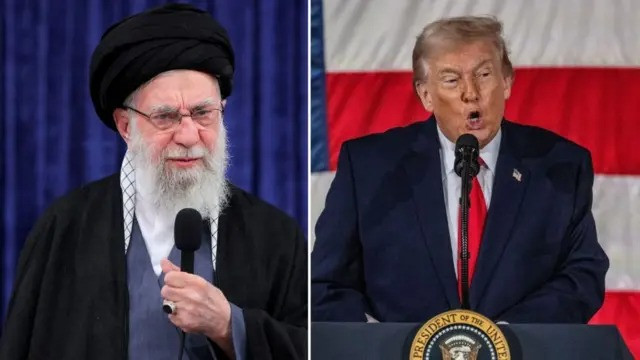
U.S. President Donald Trump is willing to hold a face-to-face meeting with Iran’s Supreme Leader Ayatollah Ali Khamenei, according to U.S. Secretary of State and National Security Adviser Marco Rubio.
In an interview with Bloomberg on Monday, Rubio said, “Nation-states need to interact with one another. I work in an administration led by a president who is willing to meet people and talk to them. There is no barrier in that regard.”
“I can confidently say that if the Ayatollah were to say tomorrow that he wants to meet President Trump, the President would meet him. There is no reason to assume that he agrees with the Ayatollah on every issue. He would meet because he believes this is how problems in the world are resolved,” Rubio added.
Rubio also reiterated that Iran will never be allowed to become a nuclear-armed state, emphasizing that the U.S. position has been clear from the beginning.
“Iran cannot be permitted to possess nuclear weapons. The United States has been clear on this from the start, because a nuclear-armed Iran would disrupt regional peace and global security. Beyond that, we are interested in resolving our other issues with Iran through diplomatic means,” he told Bloomberg.
Tensions between Iran and United States over Tehran’s nuclear program have persisted for nearly two decades. The situation intensified after Trump was first elected president in 2016.
Following Trump’s re-election in 2024, tensions between the two countries escalated further. In June 2025, the United States became involved in the Iran-Israel conflict. During that period, U.S. forces carried out “Operation Midnight Hammer” against Tehran.
Although a ceasefire has since been in place, diplomatic relations between the two countries have not yet normalized.
Tensions rose again in December after widespread anti-government protests erupted in Iran. The Islamic Republic government’s harsh crackdown prompted Trump to threaten military action, though no operation was ultimately ordered. The protests subsided by mid-January.
At the same time in mid-January, the United States deployed several naval assets, including the aircraft carrier USS Abraham Lincoln, to the Middle Eastern waters of the Arabian Sea. Currently, five U.S. aircraft carriers and hundreds of warships are patrolling the Arabian Sea, the Red Sea, the Persian Gulf, and the Strait of Hormuz.
Over the past two weeks, official representatives from Iran and Washington have been engaged in talks in Muscat, the capital of Oman. Responding to a question about the continued U.S. naval presence in the region despite ongoing dialogue, Rubio said, “Iran has repeatedly targeted American interests in the past. With that in mind, troop levels have been increased.”